


Changing location every few weeks and constantly accompanied by body guards, the head of a German startup supplying drones to Ukraine has been forced into hiding due to a suspected Russian assassination plot.
"Putin chose this path, and I have to accept that and respond accordingly," Stefan Thumann, CEO of German defence tech firm Donaustahl, told AFP in an interview from an undisclosed location.
The 39-year believes that the saga will only end one of two ways -- when "the Russian regime is toppled" or the Russians succeed in killing him, he said.
Thumann is an outspoken supporter of Ukraine's war against President Vladimir Putin and a supplier of attack drones to Kyiv. Authorities first warned him last December that he could be in danger, he said.
Soon after, "I was explicitly told that the threat comes from Russia and that a murder attempt on me is planned," he said.
His life has been turned upside down by being forced to go underground, although he still manages to oversee his company's work.
"I'm more or less completely isolated from the outside world," he said, adding that communication with family was "sporadic" and "only digital".
Contacted by AFP, the interior ministry of the southern state of Bavaria -- where Donaustahl is based -- said it was aware of the case but declined to comment further, noting that it was under investigation by federal prosecutors.
Defence firms across Europe appear to be increasingly in Russia's crosshairs as Western security services say Moscow is stepping up a campaign of sabotage across the continent, a charge Russia denies.
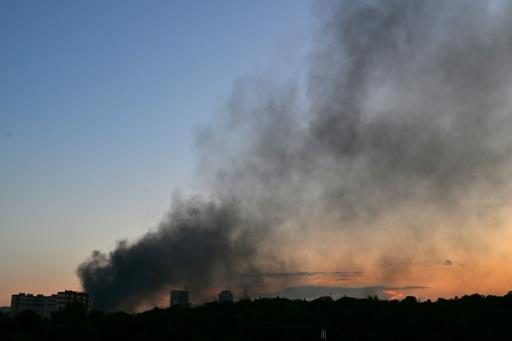
Last week firebombs were hurled outside a defence tech firm and near a drone maker in the Bavarian city of Munich, an arms industry hub. Two Bulgarian nationals were arrested.
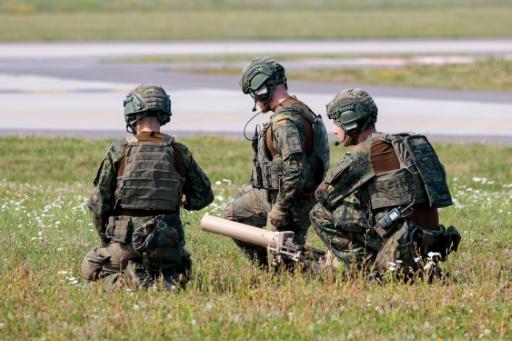
While no one has yet been blamed, the incident came days after Germany said Russia was responsible for an attempted attack using an explosive-laden drone at an airport in the eastern city of Leipzig, a key transport hub for military goods.
Thumann is also not the first defence executive believed to have become a target. In 2024 the United States foiled an alleged Russian plot to assassinate the boss of Rheinmetall, Germany's biggest defence group, CNN reported at the time.
Following the Leipzig incident, Chancellor Friedrich Merz said last month Germany was increasingly "in the crosshairs of hybrid attackers", and warned that perpetrators of such acts "will pay".
The term "hybrid attack" is used to refer to acts ranging from drone activities to sabotage and cyberattacks, which fall short of full-blown military assaults.
Russia has dismissed Berlin's accusation that it targeted Leipzig airport, and routinely rejects claims it is behind other incidents.
Thumann believes that "drone companies and every defence company in Europe, not only in Germany... are in danger".
"Every EU country is a target -- and every defence company is a target -- of Russian aggression," he added.
Two so-called "low-level agents" have so far been arrested in connection with the plot against Thumann, though he believes the danger remains.
Berlin accuses Russian intelligence of recruiting low-level, or disposable, agents, often through social media, to carry out "hybrid attacks", usually with little training and for relatively small sums.
While Donaustahl is a relatively small player in German defence, Thumann styles himself as a "disruptor" seeking to shake up a cumbersome industry which has been too slow to respond to the rapidly changing face of modern warfare.
He is an advocate of producing drones more cheaply and en masse -- which is what he believes placed him in Russia's crosshairs.
"The Russians aren't afraid of 10,000 drones produced by a large company," he said.
"They are afraid of a million drones developed by a small firm and manufactured by many companies across Europe."
Donaustahl's products include strike drones and warheads for interceptor drones -- UAVs that aim to counter attacks from other hostile drones.
The firm develops and sells the products, but outsources the large-scale production to larger partners.
For Thumann, it is high time that the German government confronts the reality that it is engaged in a conflict with Russia.
"In my view we are already in a real war," he said.
Russian Foreign Minister Sergei Lavrov echoed the language earlier this month, saying that Berlin's counter-measures to the Leipzig incident -- closing a Russian consulate and a cultural centre -- indicated the "start of a real war".
The Donaustahl boss urged politicians to accept that a conflict had already begun, and to "act decisively and not just engage in symbolic politics, but really do things that clearly set boundaries for Russia".
Latest stories

La Une Réseaux sociaux interdits aux mineurs dans un nombre croissant de pays
Comme l'Australie, qui interdit depuis fin 2025 les réseaux sociaux aux moins de 16 ans, ou tout récemment l'Etat de Californie, un nombre croissant d'autorités dans le monde bloquent ou prévoient...

France IA: après le "fait maison", le "fait par un humain" ?
Va-t-on bientôt afficher "fait par un humain" comme on affiche "fait maison" ? Face à la prolifération des contenus générés par intelligence artificielle, artistes et créateurs cherchent à valoriser l'origine humaine de leurs œuvres...
Société Venezuela: salles de classes désertes pour la rentrée après le tremblement de terre
Salles de classe désertes et cours sous des tentes: à La Guaira, la rentrée scolaire a été perturbée, plus de deux mois après les tremblements de terre qui ont fait...