


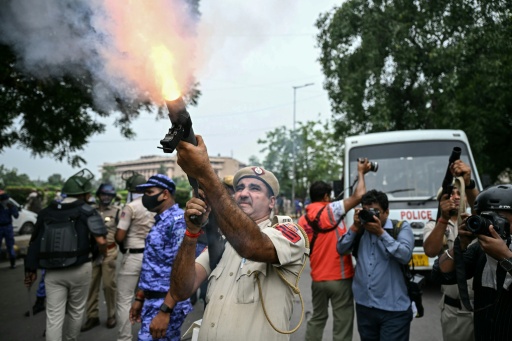
Indian police used excessive force, including electric shock devices and pellet guns, against youth-led protests that forced the education minister to resign last month, Amnesty International said Monday.
A report from the rights' group clashes with the police account that force was used only after protesters turned violent, and comes after India's Supreme Court set up a panel on Thursday to investigate violence by both police and demonstrators.
Demonstrations in the capital New Delhi, triggered by the leak of the national medical entrance test, turned violent on July 20 when thousands of protesters attempted to march towards parliament.
Amnesty said witness testimony and visual evidence it had verified confirmed the use of "pellet-firing shotguns, tear gas launchers, grenades, batons and electric shock devices against protesters" in Delhi and the eastern state of Bihar.
Amnesty said it had also verified two instances of a police officer "unlawfully using lethal force against a crowd" in Bihar's Siwan district. No one was killed.
"The weapons were deployed in a manner that breached international law and standards and domestic policing guidelines," it added.
Amnesty said that there were "isolated incidents of protesters throwing stones", but that the "heavy-handed response was state-sanctioned violence masked as crowd control."
Delhi Police said in a Supreme Court hearing last week they had used force only after protesters "resorted to violence".
They said anti-social elements "masquerading as aggrieved students" caused "grievous injuries" to security forces.
On Friday, opposition leader Rahul Gandhi staged a sit-in outside a Delhi police station with a 19-year-old protester who said he was injured by pellets during the July 20 demonstration.
Gandhi demanded a police investigation into the shooting, and officers later registered a case over the complaint.
Led by the online Cockroach Janta Party, the protests broadened from anger over exam irregularities into a wider movement over unemployment, opportunities for young people and what critics describe as Prime Minister Narendra Modi's increasingly authoritarian rule.
The protests proved to be the biggest challenge that Modi has faced after winning a third term in 2024.
Latest stories
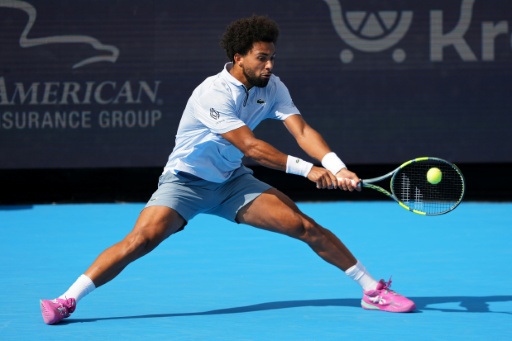
Sport Tennis: Arthur Fils sacré à Cincinnati avant l'US Open
Arthur Fils est arrivé à Cincinnati avec de l'ambition et repart avec une couronne bien méritée: le Français a dominé dimanche l'Américain Frances Tiafoe 6-3, 1-6, 6-0 pour s'offrir le plus beau titre de sa jeune carrière, un...
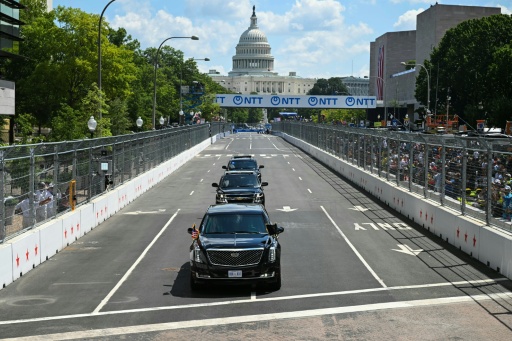
Monde Trump au premier rang d'un grand prix automobile dans les rues de Washington
Une course automobile inédite dans les rues de Washington, dont le coup d'envoi a été donné par le président américain, a clôturé dimanche les célébrations du 250e anniversaire des...
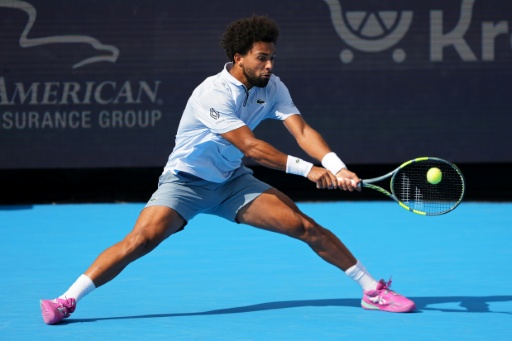
Sport Tennis: Arthur Fils remporte le Masters 1000 de Cincinnati à une semaine de l'US Open
Le Français Arthur Fils (21e mondial) a dominé dimanche l'Américain Frances Tiafoe (23e) 6-3, 1-6, 6-0 pour s'offrir le plus beau titre de sa jeune carrière, le Masters 1000 de...