


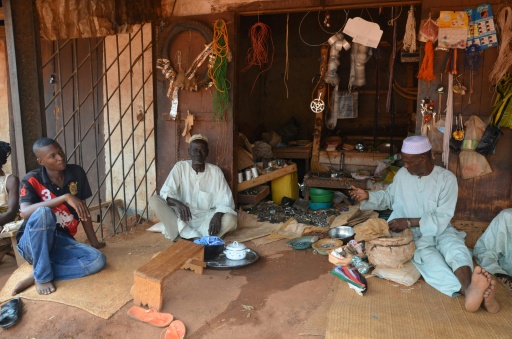
The Islamic call to prayer echoes once again across Sibut's rooftops -- a sign that peaceful coexistence has returned to the town in the mostly Christian Central African Republic (CAR) after years of civil war.
The conflict emptied the thriving market town around three hours' drive north of the capital Bangui of many of its Muslim residents.
They fled into exile when heavy fighting broke out between Muslim factions and Christian militias more than a decade ago.
But peace has gradually brought people like Muslim trader Idriss Elder back to Sibut, where he now runs a small food shop, chatting to customers and stacking his shelves as he did before 2014.
"Since there was no longer any understanding, it was better to flee and take refuge elsewhere," Elder, who went to live in Chad, said.
Once a symbol of social cohesion in the country of around 5.5 million people, Sibut still bears the scars of the violence that ripped through the CAR.
It lies at the end of a major highway linking Bangui to towns in the north and east.
With a population of nearly 40,000, Sibut was known for its markets and for its Christian and Muslim communities living harmoniously side-by-side.
But that was shattered when rebels from a Muslim-dominated coalition called Seleka stormed Bangui in 2013 and ousted president Francois Bozize, a Christian who had seized power a decade earlier.
The country descended into sectarian chaos, pitting Seleka rebels against vigilante self-defence groups from the Christian and animist majority known as anti-Balaka.
In Sibut, homes and businesses in the Adramane district where Muslims used to live were destroyed or abandoned and the central mosque was looted and destroyed.
Twelve years on, the neighbourhood is coming back to life -- but slowly.
From the recently rebuilt central mosque, the muezzin's vocal chant resonates again, calling the faithful to Friday prayers.
"What we are preaching here is living together, social cohesion and peace. All of us who have returned need peace," its imam Said Goni, dressed in a dark boubou robe, told AFP.
He, too, returned to Sibut from exile and now tries to persuade others to do the same.
"I think that those who don't want to come back are listening to rumours and they're afraid. But we reassure them regularly. We ourselves have gone back to where we lived before," Goni said.
Security has improved as the Centrafrican armed forces have taken back control of territory, helped by fighters from Russia's Wagner group, and thanks to the continued deployment of UN peacekeepers in Sibut.
"I'm not afraid anymore. There is security now and everything is back to normal," Elder, the trader, said.
A stone's throw from the mosque, traces of the devastation remain visible and the once lively market and shopping area is subdued.
"This neighbourhood wasn't like this before... Today, it's in ruins; the market isn't even operating normally, everything is at a standstill," Avenir Bissafi, who is Christian, said.
The Muslim community and its many business owners were at the heart of the town's economic activity.
Adramane needs its former Muslim residents to recapture its former vibrancy, Bissafi said.
"We're happy about the return of the Muslims. We're Christians. We have forgiven everything. We ask our Muslim brothers to return," he said.
Ousmane Chaibou, president of the local Islamic Council, affirmed that many original townsfolk still lived elsewhere.
"Some are in Chad, some in Kaga-Bandoro" in the CAR's east, he said.
In 2020, the UN refugee agency (UNHCR) estimated that neighbouring countries hosted nearly 800,000 Centrafricans and nearly 700,000 were internally displaced.
But fear is not the only obstacle to their return.
"The real problem is their destroyed homes. To this day, they have no home to live in. This affects their plans to return," Chaibou said.
Local authorities stress they want to help people come home to Sibut.
Rodrigue Leya, a senior Kaga regional official, visited the mosque to talk to people about their living conditions.
"After everything we've been through in terms of crises, some have already returned," he said.
But the CAR, a landlocked country that is one of the world's poorest, remains politically unstable and security is precarious.
Its mineral resources including uranium, lithium, diamonds, timber and gold are much coveted, while armed groups still roam, particularly along the borders with Sudan and the Democratic Republic of Congo.
Latest stories
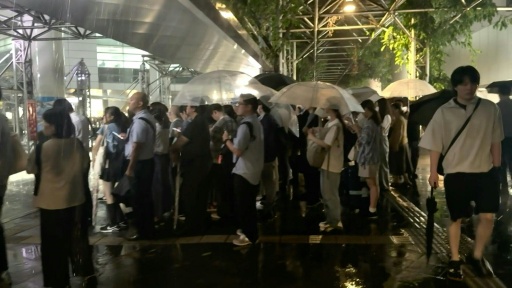
Monde Japon: quatre morts lors de pluies "sans précédent" près de Tokyo
Au moins quatre personnes sont mortes après des pluies diluviennes "sans précédent" à l'est de Tokyo, ont annoncé vendredi les autorités locales, tandis que les précipitations perturbent fortement les réseaux routier et ferroviaire et bloquent des milliers de personnes à...
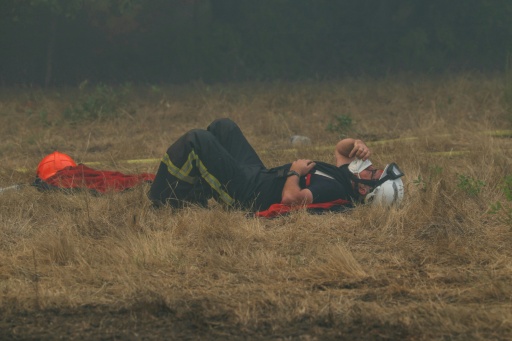
La Une Canicule : énième journée écrasée par la chaleur avant une amélioration progressive
La fraîcheur au bout du tunnel ? Une grande partie du pays fait face vendredi à une énième journée de canicule, qui met sous tension les corps et les esprits, asséchant aussi des territoires soumis au risque d'incendies...

Sport Euro de natation: après le relais, Marchand lance sa quête individuelle face à son ami Kos
Jamais titré au niveau continental, Léon Marchand fait son entrée en individuel vendredi aux Championnats d'Europe de natation de Paris avec les séries du 200 m papillon, amusé par la perspective d'affronter...