


A Hong Kong court handed three Tiananmen vigil activists jail sentences of between five and seven years on Friday for national security crimes, following a trial that has drawn international condemnation.
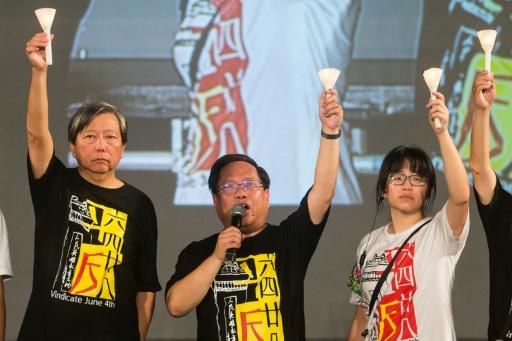
Lee Cheuk-yan, 69, Chow Hang-tung, 41, and Albert Ho, 74, have been behind bars since they were charged in 2021 -- and their sentences are expected to include time already served.
The United Nations, rights groups and foreign governments have condemned their convictions under a national security law that Beijing imposed on Hong Kong.
A court ruled in August that the activists had breached the Chinese constitution by calling for an "end to one-party dictatorship".
Lee and Chow, who pleaded not guilty, were sentenced to seven years and seven years and three months respectively, AFP journalists in court heard.
Ho, a former lawmaker who pleaded guilty in January, got five years and two months.
The verdict read that although the case did not involve violence, and the defendents had not put forward a specific timetable to carry out an "end to one-party dictatorship", their offence was still of "a serious nature".
Chow, a barrister who represented herself, told a hearing last month that she had "nothing to repent for".
She raised both arms and waved at supporters as she was escorted out by officers. Supporters hugged her mother outside the courtroom.
Lee crossed himself, smiled and bowed at his wife and supporters, including high-profile activist Cardinal Zen, who stood outside gripping each others' hands.
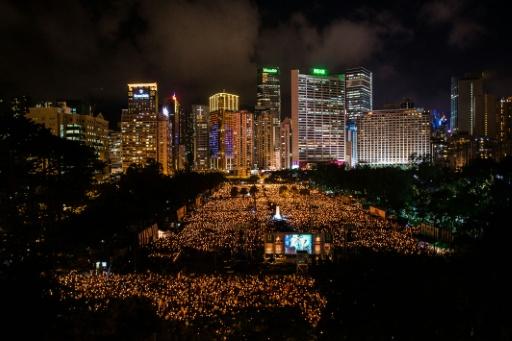
Hong Kong and Macau were formerly the only places on Chinese soil that permitted public vigils to mourn those killed on June 4, 1989, when Beijing sent troops and tanks to crush protests calling for political reform in and around the capital's Tiananmen Square.
But public commemoration has been effectively banned in Hong Kong since the Beijing-imposed security law took effect in 2020, following huge pro-democracy protests.
The trio were leaders of the now-defunct Hong Kong Alliance, the group that organised annual vigils in the city's Victoria Park.
International rights groups condemned the verdict.
Elaine Pearson, Asia director at Human Rights Watch, said the "harsh sentences" expose "the cruelty and insecurity of a government afraid of memory and the people".
"The Hong Kong High Cort has violated their rights to freedom of expression and peaceful assembly," she said in a statement.
Amnesty International said the sentencing "illustrates just how much Hong Kong has been transformed in the name of 'national security'".
"This sentencing is a triple tragedy: for the activists being unjustly punished; the survivors and victims of the Tiananmen crackdown itself; and the generations of Hongkongers denied the space to discuss one of the most consequential events in modern Chinese history," it said.
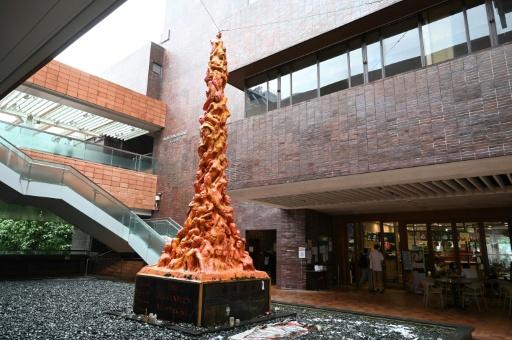
The Hong Kong Alliance group also operated a museum dedicated to the crackdown and held events, including a yearly washing of the "Pillar of Shame" -- a statue to mourn victims.
The statue was dismantled and removed from its long-time plinth at the University of Hong Kong in late 2021, and other local universities followed suit with similar objects.
Prosecutors argued that evidence in the case, including the statue and archives from the Hong Kong Alliance's museum, should be confiscated.
Judge Alex Lee said on Friday the fate of the statue would be decided after a decision was made on its ownership.
Ahead of Friday's sentencing, Chow said "the authorities' true intentions were finally laid bare".
"This prosecution is an attempt to erase memories, particularly those of June 4, by reading too much into certain slogans," she said.
The Danish artist behind "Pillar of Shame", Jens Galschiot, called the outcome of the trial and the statue's potential confiscation "outrageous".
"This is an attack on my private ownership... if they confiscate it," he told AFP.
The statue tells the story of Tiananmen, said Galschiot, who has for years sought to reclaim his work.
If it were destroyed, that would also "destroy the story that everybody should know".
Latest stories

La Une Hong Kong: des militants de la mémoire de Tiananmen condamnés à entre 5 et 7 ans de prison
Trois militants qui organisaient des veillées en souvenir de Tiananmen ont été condamnés à des peines comprises entre cinq et plus de sept ans de prison vendredi à Hong Kong, au terme d'un procès critiqué par plusieurs pays...

Monde A Dallas, Vance traite les démocrates de "parti de la haine"
Offensif devant son camp républicain réuni à Dallas (Texas), le vice-président américain JD Vance a qualifié jeudi les démocrates de "parti de la haine" et exhorté les électeurs à les "envoyer paître" lors des...

Sport US Open: Sabalenka encore en finale, contre Rybakina ou Gauff
Elle va tenter le triplé à New York: la double tenante du titre Aryna Sabalenka, N.1 mondiale jusqu'à lundi, s'est qualifiée jeudi en finale de l'US Open, où elle disputera le titre à...