



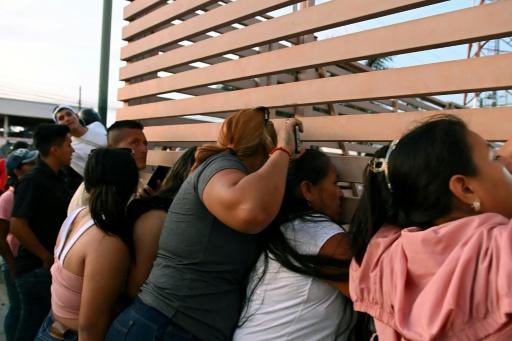
Ecuadoran fisherman Eduardo Holguin was aboard the "Conquista 2" when a joint US-Ecuadoran operation forcibly removed him and his crewmates from the boat before sinking it.
The 41-year-old told AFP he and his crewmates had nothing to do with drug trafficking before they were intercepted at sea September 2.
A speedboat "full of soldiers" pulled up "close to the boat" and "they were aiming at us" with their weapons, Holguin said. "That's when the ordeal began for us."
"They took our boat away, brought us to the patrol boat, and blew it up," said Holguin.
The crew was eventually released without facing any criminal charges.
Joint US-Ecuador counter-narcotics operations in the Pacific have seen the destruction of four Ecuadoran vessels since August 28,
The US military's Southern Command says the boat was used to support drug trafficking by Ecuadoran crime syndicate Los Choneros.
The operations come after publication of a report by Human Rights Watch alleging at least eight people went missing when three Ecuadoran vessels were attacked by US forces between January and March this year.
Washington denies any involvement in the disappearances.
Holguin said once he and the crew were detained on the patrol boat, there was an interpreter and "gringos." Then "they put a hood over my head" and "earmuffs," Holguin said.
Holguin said he and his crewmates were given food, but "with everything that was happening, we didn’t feel like eating."
The crew members were then handed over to the Ecuadoran navy, which transported them to Manta, the main fishing port in southwestern Ecuador.
Fishermen on other intercepted vessels have had similar experiences.
For Juan Carlos Posligua, a crew member on the "Conquista 2," the last few days have been hard.
"I haven't slept or eaten for three days," said the 44-year-old.
After arriving on land, the crew was taken to a police station, then released a day later without charges.
"We weren't doing anything illegal. We're just ordinary fishermen who went out to work to bring home our daily bread," Posligua said.
The operations have made fishermen in Manta and nearby towns deeply uneasy.
Holguin and Posligua are unsure about going back to fishing.
"If this keeps up, maybe not. I don't know what I'm going to do from here on out," lamented Posligua, who has been fishing for 28 years.
But the lack of other options will likely drive them back out onto the ocean.
"It's tough, there are no jobs right now. And if we have to do it, we'll have to. What else can we do?" Holguin said.
Latest stories

France La France accueille un sommet international inédit sur l'avenir du cinéma
Des poids lourds de l'industrie mondiale du cinéma et de l'audiovisuel se retrouvent lundi à Saint-Paul-de-Vence (sud) pour un sommet inédit initié par la France, qui espère "de nouvelles alliances" et des "actions concrètes" pour soutenir le...

Sport US Open: Alcaraz et Shelton ont rendez-vous en quarts, Sabalenka avec Noskova
De retour d'une longue blessure au poignet droit, le N.3 mondial Carlos Alcaraz, tenant du titre à New York, a rendez-vous en quarts de finale avec l'Américain Ben Shelton (9e) pour un premier choc entre...

Monde Le chancelier Merz dans la tourmente après un triomphe électoral de l'extrême droite
Le chancelier allemand Friedrich Merz est au défi lundi de réagir au triomphe électoral de la formation anti-immigration et prorusse AfD en Saxe-Anhalt, un scrutin qui place l'extrême droite en position favorable pour diriger une...