


A river port in the Amazon has emerged as a new battleground in the Latin American drug trade as Brazilian gangs cross into neighboring Bolivia to battle for control of cocaine supply routes.
The Mamore river, one of the largest tributaries of the mighty Amazon, forms a natural border between Bolivia, the world's third-largest cocaine producer, and Brazil, a key exit point for drug shipments to Europe.
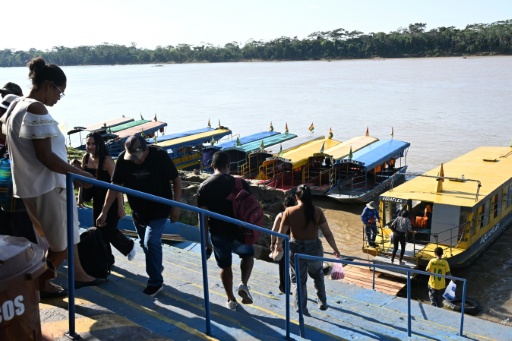
Travelers pour off boats crossing from the Brazilian border city of Guajara-Mirim to the Bolivian town of Guayaramerin and stream past an immigration office in the port terminal without so much as giving it a second glance.
"Nobody ever checks (papers)," Donald Somoza, a 75-year-old retired bricklayer, mused as he relaxed in a nearby park.
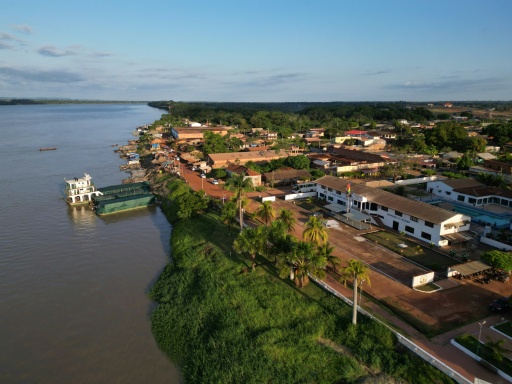
Guayaramerin, a town of 40,000 people with dusty streets of red earth that contrast sharply with the vivid green of the jungle, survives off trade with Brazil.
It appears peaceful during the intense heat of the day, but residents say they are living in fear.
Guayaramerin, like other towns along Bolivia's 3,423-kilometer (2,172 miles) border with Brazil, has been infiltrated by Brazil's two most powerful organized crime groups: the Primeiro Comando da Capital (PCC) and Comando Vermelho (CV).
A dozen murders on the Bolivian side of the border have been linked in recent weeks to the two groups, both designated terrorist organizations by the United States.
The massacre of a family, the discovery of decapitated bodies and the murder of a police officer have shocked Bolivia, a country largely spared from mafia violence.
Somoza, the retiree, said he was a witness to the recent killing of a Brazilian man in Guayaramerin's main square.
The man was shot more than 80 times, in what appeared to be score-settling between Brazilian drug traffickers.
This is "a fairly new phenomenon in Bolivia," a "very safe country until a few years ago," Joaquin Chacin, an investigator specializing in organized crime, told AFP.
In the past, the state largely turned a blind eye to drug trafficking, worried that by confronting them it could provoke an outbreak of violence.
A "mafia peace" prevailed, said Chacin.
"And this has somehow been broken."
Between January and September 2025, 774 homicides were reported in Bolivia, compared to 325 during the same period of the previous year, according to official data -- an increase of 138 percent.
Guayaramerin residents also report an increase in armed robberies, kidnappings, and other crimes.
Currency trader Adhemar Zapata, who changes money on the sidewalk near the port, was attacked recently on the street by two men, one of them Brazilian.
"They pointed their gun at me to subdue me and to take the money I have for my work, along with my motorcycle, my cell phone, and all of that," he said.
The government of center-right President Rodrigo Paz accuses the socialists -- who ruled for two decades before being voted out last year -- of allowing crime to flourish.
Since Paz took office in November 2025, 17 international crime bosses have been captured, his administration said.
They include Uruguayan drug trafficker Sebastian Marset, one of South America's most-wanted men and a top PCC commander, Gerson Palermo.
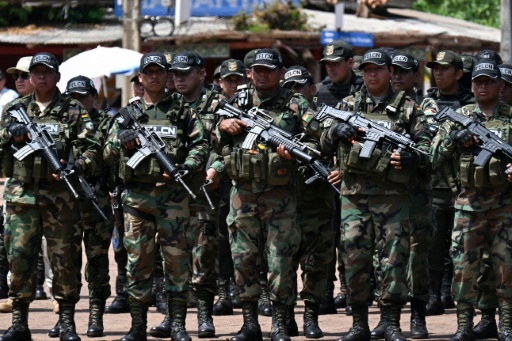
On a visit to Guayaramerin last week, Paz announced plans to deploy more police to the border and boost intelligence sharing with Brazil.
Chacin said the expanded police presence could help stem violence, but that tackling organized crime required, above all, following the money -- investigating how the proceeds are laundered and who is benefitting most.
"A serious plan is needed, but we don't hear of anything like that being worked on," he said.
Paz, on his Amazon visit, also announced plans to build a bridge across the river in Guayaramerin, as part of a planned road corridor that would extend from Brazil all the way to the Pacific coast in Peru.
Many locals, like money changer Zapata, have mixed feelings about the project.
They know that a bridge would boost cross-border trade, but they also worry it will act as a criminal thoroughfare.
Yestin Duran, a 31-year-old beverage vendor, said she feared that "gangsters and robbers can cross over" more easily from Brazil.
Guayaramerin's police chief Johnny Rivas acknowledged the risks.
Violence "will increase" and "will require us to increase our personnel," he predicted.
Latest stories

La Une Le prince Harry et Meghan vont revenir vivre au Royaume-Uni
Six ans après leur rupture fracassante avec la famille royale et leur installation en Californie, le prince Harry et son épouse Meghan vont revenir vivre au Royaume-Uni...

Monde Crash d'hélicoptère au Kenya: le chef du renseignement de l'Equateur et cinq Américains tués
Le chef du renseignement de l'Equateur, Michele Sensi-Contugi, son épouse, ainsi que cinq ressortissants américains, sont morts mercredi dans un accident d'hélicoptère au Kenya, ont...

La Une Trump annonce une "guerre économique" inédite contre l'Iran
Donald Trump a menacé mercredi de "terribles" mesures économiques "tout pays" qui aiderait l'Iran dans son effort de guerre, une intensification de la pression exercée par Washington sur son...