


Venezuela's interim government and opposition representatives on Wednesday wrapped up a first round of talks aimed at reconciling the nation following the US ouster of longtime leader Nicolas Maduro.
A joint statement issued by the two sides highlighted agreement on two topics after several days of discussion: reforming the judiciary, and seeking access to frozen funds to aid in earthquake recovery efforts.
Both sides committed to "initiate a process that contributes to the transformation of the justice system," including "Reforms to the Organic Law" of Venezuela's top court, the Supreme Tribunal of Justice (TSJ).
The TSJ notably validated Maduro's 2024 reelection, despite serious allegations of fraud and no public release of the official results.
The document did not mention the National Electoral Council, another body the opposition hopes to overhaul after it also upheld Maduro's disputed victory.
In light of the devastating twin earthquakes on June 24, which have left over 6,300 people dead, both sides also agreed to work toward the release "Venezuela's international reserve assets held at the Bank of England."
Under Maduro, Venezuela had tried repeatedly and unsuccessfully to access the funds.
The joint statement also called for the establishment of "mechanisms for transparency, traceability, and auditing" to make sure the funds are properly used.
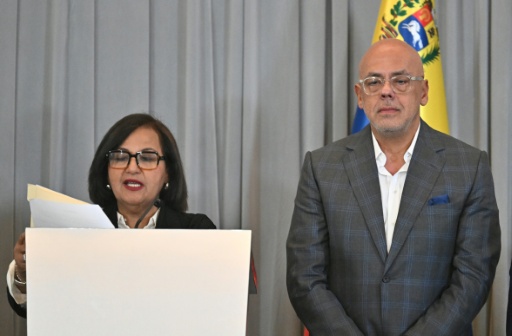
Interim president Delcy Rodriguez's government was represented at the talks by her brother Jorge Rodriguez, who is also the head of Venezuela's National Assembly.
Delcy Rodriguez was Maduro's vice president, but has nonetheless led the country with Washington's blessing, and has won praise from US President Donald Trump for acceeding to his administration's desires.
The opposition was meanwhile represented by Dinorah Figuera, leader of the political bloc that won a majority in the 2015 National Assembly, the last legislature elected in a vote widely recognized by the international community.
Notably absent from the table is exiled opposition leader and Nobel Peace Prize laureate Maria Corina Machado, who has said she will not stand in the way of the process.
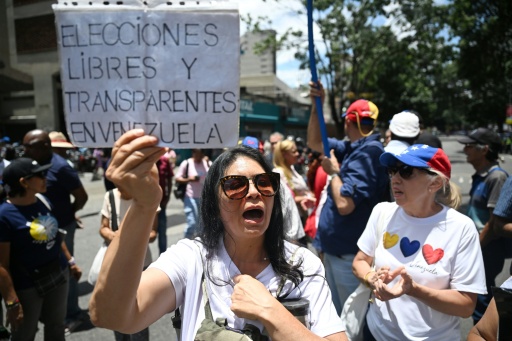
Many Venezuelans are hopeful that the transition talks will lead to democratic elections.
Over the last six days of talks, Figuera met separately with representatives of political prisoners, retirees and media workers and promised to advocate for their demands.
"We are in this process to achieve a democratic and free Venezuela," the politician wrote on X on Tuesday.
Dozens of opposition supporters gathered outside the hotel in Caracas where the talks were being held.
A source from the opposition delegation, who requested anonymity, compared the interim government to Nicaragua's oppressive administration, which the United States considers a dictatorship.
"There is no naivete on the part of the opposition delegation," the source said, adding that it "must take advantage of this window of opportunity."
Elections will only be announced after the reforms give way to a new Electoral Council, the source believes, adding that laws regulating terrorism and dissent need reforms due to their past use to persecute political prisoners.
The source told AFP the delegation viewed Machado as "the leader of the Venezuelan opposition...she is the voice that Venezuelans identify as their own."
Some commentators believe that US President Donald Trump has vetoed Machado's return to Venezuela, which Washington denies.
The US leader has repeatedly voiced satisfaction with Rodriguez's administration.
Latest stories

La Une Mineurs et réseaux sociaux: le jury californien désigné pour le procès de Meta, débats le 18 août
Le procès de Meta, accusé par des procureurs généraux américains d'avoir caché les dangers d'Instagram et Facebook pour les adolescents tout en concevant ses applications pour les retenir, s'est ouvert mercredi en...
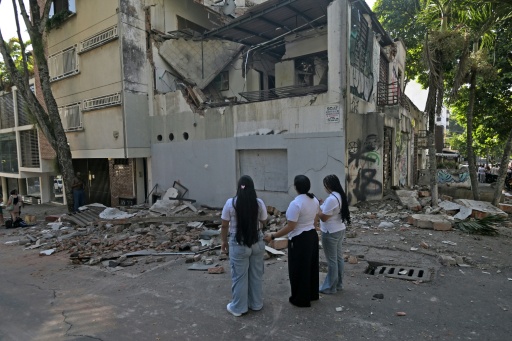
La Une Colombie: le séisme a fait 265 morts, la recherche de survivants dans une phase décisive
Les opérations de recherche des survivants en Colombie ont atteint mercredi une phase décisive, après le puissant séisme qui a frappé l'ouest du pays lundi, faisant 265...

Sport Foot: Le PSG lance sa saison en remportant la Supercoupe d'Europe contre Aston Villa (2-1)
Déjà un premier titre européen pour le Paris Saint-Germain: en battant Aston Villa (2-1) malgré une prestation poussive mercredi à Salzbourg, le club de la capitale a lancé idéalement une saison où il...