


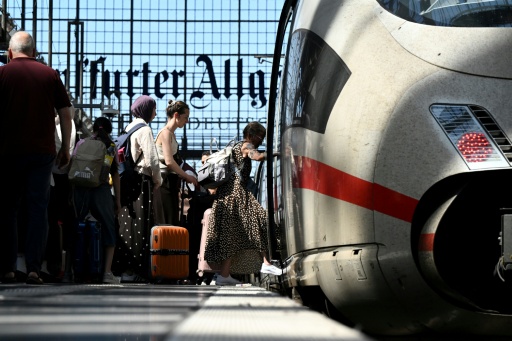
Germany's new transport minister experienced firsthand Monday the problems plaguing the country's rail network -- being forced to change train carriages during a trip after the air conditioning broke down.
Steffen Bilger was named to the post in a cabinet shuffle last month after his predecessor was sacked by Chancellor Friedrich Merz for insufficient progress on overhauling Germany's dilapidated infrastructure.
A key part of his role is turning around state-owned operator Deutsche Bahn and the rail network, which has faced mounting complaints in recent years due to dismal punctuality, breakdowns and poor service.
On a two-day trip, Bilger plans to gather information in northern Germany on train safety and station cleanliness.
But at the start of the journey, he had to change carriages in a train taking him from Berlin to Hamburg after the air conditioning stopped working, a transport ministry spokesman told AFP.
The breakdown, which came as Germany bakes in soaring summer temperatures, led to the carriage being closed off and forced passengers to find seats elsewhere on the train.
At the weekend, Bilger reportedly announced that bonus payments for Deutsche Bahn managers would be tied to targets set by the government, including on punctuality.
Latest stories
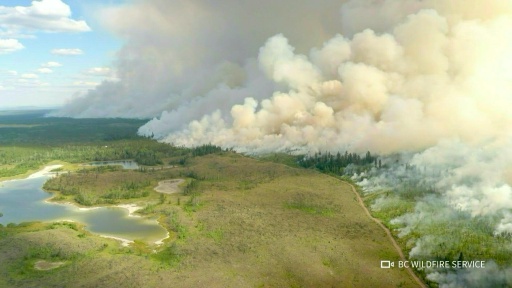
Vidéos Monde Feux de forêt dans l'ouest du Canada: l'état d'urgence déclaré
Les autorités canadiennes ont déclaré samedi l'état d'urgence dans la province occidentale de la Colombie-Britannique où plus d'une...
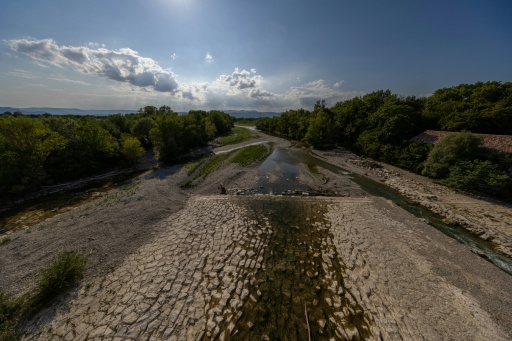
Planète Sécheresse: près de 70% de la France sous des mesures de restrictions d'eau
Près de 70% de la France fait actuellement l'objet de mesures de restrictions des usages de l'eau, sous l'effet d'une sécheresse qui s'accentue en raison des vagues de chaleur à répétition qui affectent le pays depuis trois mois, a indiqué lundi...
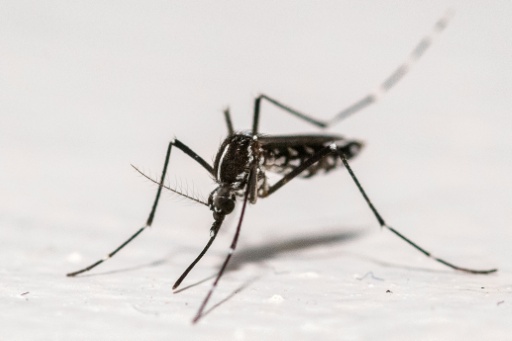
Planète Climat: le moustique tigre pourrait se répandre dans presque tout l'Hexagone d'ici un demi-siècle
Sous l’effet du réchauffement climatique, le moustique tigre devrait se répandre dans quasiment toute la France hexagonale d’ici 2085, zones montagneuses exceptées, et le risque de transmission autochtone de dengue pourrait concerner une part significative...