
Jolted by Ebola, countries try again to finish pandemic treaty


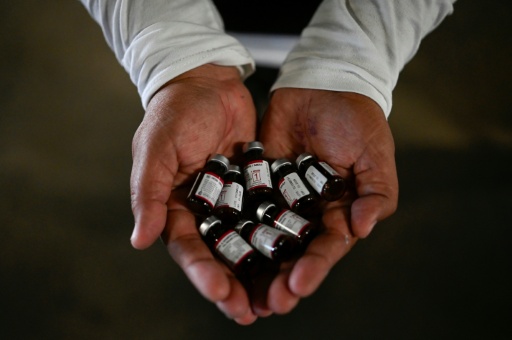

WHO member states kicked off one more attempt at finalising the missing piece of the pandemic treaty on Monday, with the Ebola outbreak injecting a fresh sense of urgency.
Wealthy countries and developing nations are at loggerheads in talks at the World Health Organization's headquarters over how the pandemic agreement, adopted last year, will work in practice.
Though the treaty was agreed in May 2025, how its key mechanism would operate was left out to get the deal over the line.
The agreement's Pathogen Access and Benefit-Sharing (PABS) system deals with sharing access to pathogens with pandemic potential, then sharing benefits derived from them such as vaccines, tests and treatments.
It was meant to be finalised long before May 2026, but progress has been agonisingly slow.
Negotiations have often gone late into the night, producing miniscule advances and leaving diplomats drained -- especially those from small countries with only a handful of staff in Geneva covering every branch of the UN.
This two-week session until July 17 is the seventh such round of talks.
WHO chief Tedros Adhanom Ghebreyesus urged countries to grasp the nettle.
"You could have given up," saying "that we will never agree", Tedros told countries as the talks opened.
However, "you said we don't agree yet, but we believe we can."
"Please keep the destination in sight," urged the UN health agency's director-general.
"A future in which pathogen samples and information move quickly, without needless delay; and in which the benefits that come from them reach the people who need them most, fairly and in time."
- 'Danger can emerge from anywhere' -
The Ebola outbreak in the Democratic Republic of Congo, declared in mid-May, is a reminder that the next pandemic threat could spring up from anywhere, Tedros said.
There have been 1,528 confirmed cases, including 492 confirmed deaths, in DR Congo, and the outbreak has spilled over into neighbouring Uganda.
"Ebola may not be the next pandemic. But it is a reminder, a painful one, that the threat never truly goes away," said Tedros.
The deadly hantavirus outbreak on a cruise ship, declared over on Thursday, also shows "danger can emerge from anywhere, at any time, in ways we don't always expect".
The outbreak on the MV Hondius, sailing the Atlantic Ocean, led to a global health alert affecting 33 countries and territories.
"Every month that this annex remains unfinished is a month the world stays less prepared than it could be. It is people -- real people, real families -- left less safe than they deserve to be," said Tedros.
The pandemic agreement was struck after more than three years of negotiations sparked by the shock of Covid-19.
The accord aims to prevent a repeat of the disjointed international response that surrounded the coronavirus crisis, by improving global coordination, surveillance and access to vaccines.
Only once the PABS annex is complete will countries be able to start ratifying the treaty.
rjm/ag/rlp
© Agence France-Presse
Latest stories
Galerie Photos - Canadair -
Un avion bombardier d’eau Canadair CL-415 des services de la Sécurité civile française survole un incendie de forêt dans le département des Pyrénées-Orientales, près de la commune...

Galerie Photos - Calcinés -
Des arbres brûlés dans le département de l’Hérault, près de la commune de Carlencas-et-Levas, le...

Galerie Photos - Sauts -
Des adolescents sautent dans le canal Saint-Martin, en plein centre de Paris, le...