


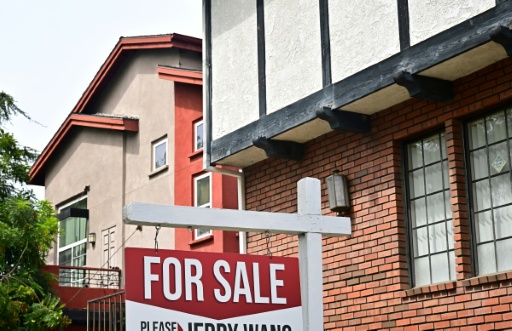
A landmark bipartisan housing bill is set to become US law on Saturday without President Donald Trump's signature, after he said he would refuse to sign one of Congress's rare victories on the cost of living in protest over a stalled voting restrictions package.
The 21st Century ROAD to Housing Act cleared both chambers by overwhelming margins, giving the majority Republicans and opposition Democrats a significant affordability achievement to promote ahead of November's midterm elections.
But Trump abruptly cancelled a planned signing ceremony last month and dismissed the measure as "a yawn," demanding that senators instead approve his election legislation.
He doubled down on Friday, posting on social media: "I will not sign the Housing Bill...in protest over the fact that the United States Senate is not capable of passing the SAVE America Act."
Trump's bill would require proof of citizenship to register to vote and photo identification at polling places, while imposing new limits on mail-in ballots.
Democrats call it an assault on voting rights, noting that foreigners voting is already illegal and almost never happens, while Senate Republican leaders have acknowledged it lacks the support needed to advance.
The housing bill's quiet enactment would mark an unusual conclusion to months of cross-party negotiations, as a significant congressional accomplishment that the president declined to celebrate, but chose not to stop.
Under the US Constitution, legislation becomes law after 10 days if the president neither signs nor vetoes it while Congress remains in session.
Trump could still issue a last-minute veto, although House Speaker Mike Johnson has indicated that he does not expect the president to block the measure.
The housing package contains nearly 60 provisions intended to boost supply, reduce regulatory barriers and improve access to mortgages and home ownership.
It would offer federal incentives to communities that build more housing, make manufactured and modular homes easier to develop and help convert underused properties into residences.
The legislation also imposes the first federal restrictions on purchases of single-family homes by large corporate investors, targeting firms that already own hundreds of properties.
Its impact is likely to take time, since many zoning and construction rules are controlled by state and local governments.
But it arrives as housing costs remain a major source of financial pressure. The median price of an existing US home reached a record $440,600 in June, while the average 30-year mortgage rate stood at 6.49 percent.
ft/acb
© Agence France-Presse
Latest stories

Business and Economy Commerzbank staff's legal bid against UniCredit rejected
German prosecutors said Friday they had rejected a complaint filed by Commerzbank's staff over alleged market manipulation by Italy's UniCredit in its hostile takeover...

Digital World Nasdaq dips as SK hynix arrives in NY
Global stock markets mostly rose on Friday as investors digested a wave of corporate announcements, but the Nasdaq dipped as shares of South Korean chip titan...

Video Japanese school kids get up-close lessons on wild bear threat
Schoolchildren in Ina, Japan, handle the real fur and skull of an Asian black bear during a safety class on living alongside the animals, as fatal bear attacks rise elsewhere in the country. No deaths have been reported in this region of Japan, but sightings are common. "I am convinced it's safe to live with them as...