


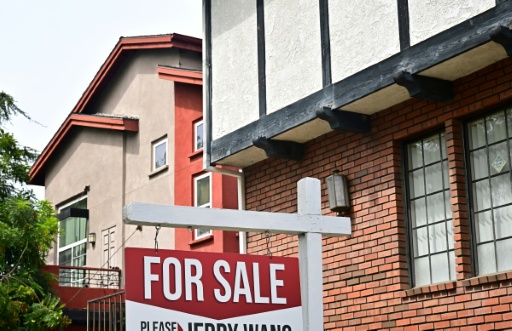
A landmark bipartisan housing bill is set to become US law on Saturday without President Donald Trump's signature, after he said he would refuse to sign one of Congress's rare victories on the cost of living in protest over a stalled voting restrictions package.
The 21st Century ROAD to Housing Act cleared both chambers by overwhelming margins, giving the majority Republicans and opposition Democrats a significant affordability achievement to promote ahead of November's midterm elections.
But Trump abruptly cancelled a planned signing ceremony last month and dismissed the measure as "a yawn," demanding that senators instead approve his election legislation.
He doubled down on Friday, posting on social media: "I will not sign the Housing Bill...in protest over the fact that the United States Senate is not capable of passing the SAVE America Act."
Trump's bill would require proof of citizenship to register to vote and photo identification at polling places, while imposing new limits on mail-in ballots.
Democrats call it an assault on voting rights, noting that foreigners voting is already illegal and almost never happens, while Senate Republican leaders have acknowledged it lacks the support needed to advance.
The housing bill's quiet enactment would mark an unusual conclusion to months of cross-party negotiations, as a significant congressional accomplishment that the president declined to celebrate, but chose not to stop.
Under the US Constitution, legislation becomes law after 10 days if the president neither signs nor vetoes it while Congress remains in session.
Trump could still issue a last-minute veto, although House Speaker Mike Johnson has indicated that he does not expect the president to block the measure.
The housing package contains nearly 60 provisions intended to boost supply, reduce regulatory barriers and improve access to mortgages and home ownership.
It would offer federal incentives to communities that build more housing, make manufactured and modular homes easier to develop and help convert underused properties into residences.
The legislation also imposes the first federal restrictions on purchases of single-family homes by large corporate investors, targeting firms that already own hundreds of properties.
Its impact is likely to take time, since many zoning and construction rules are controlled by state and local governments.
But it arrives as housing costs remain a major source of financial pressure. The median price of an existing US home reached a record $440,600 in June, while the average 30-year mortgage rate stood at 6.49 percent.
ft/acb
© Agence France-Presse
Latest stories

Espanol Hong Kong permite la entrada de perros a restaurantes
Por primera vez en décadas, los restauranhtes de Hong Kong habilitaron que los perros puedan acceder a restaurantes junto a sus dueños. Una medida que busca impulsar un sector que todavía no se...

Espanol La IA "no puede crear nada", dice el cineasta Christopher Nolan
La inteligencia artificial (IA) puede proporcionar "herramientas útiles" para el cine pero "no puede crear nada", afirmó a la AFP el cineasta Christopher Nolan, que está a punto de estrenar...

Espanol Justicia de Colombia ordena confiscar una casa del icónico portero Higuita vinculada a Escobar
Un juzgado en Colombia ordenó el embargo de una casa del legendario exportero de la selección de fútbol René Higuita, al determinar que la propiedad fue adquirida con dinero del cartel de Pablo Escobar antes...