


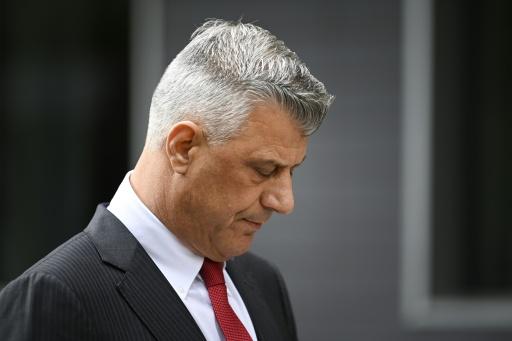
The long-awaited verdict in the war crimes trial of former Kosovo President Hashim Thaci and three senior ex-guerrilla leaders will be handed down in The Hague on Wednesday.
After a three-year trial, judges will decide whether the men, all former Kosovo Liberation Army (KLA) figures, bear criminal responsibility for war crimes and crimes against humanity allegedly committed by KLA members during the 1998-1999 independence war with Serbia.
Prosecutors have requested 45-year prison sentences for each.
Thaci and the other former high-ranking guerrillas, Jakup Krasniqi, Rexhep Selimi and Kadri Veseli, have all pleaded not guilty.
"I expect to be acquitted of every charge," Thaci, the former KLA political leader, told a Kosovo outlet in late August.
For many inside Kosovo, Thaci and the KLA are symbols of its independence movement.
After the war, Thaci remained a central political figure and was instrumental in its 2008 declaration of independence.
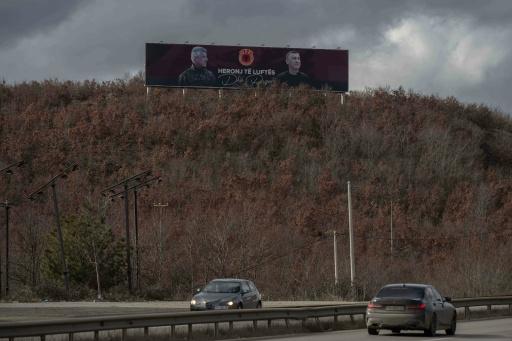
Throughout the trial, images of the 58-year-old, who also served as prime minister, have regularly appeared on huge billboards around the country.
"Our war was just, a war of liberation," Prime Minister Albin Kurti said ahead of the verdict.
"We believe and hope," he added, "that the KLA leaders will return free to their country and to their families."
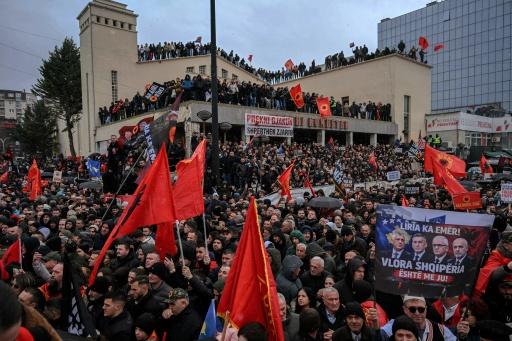
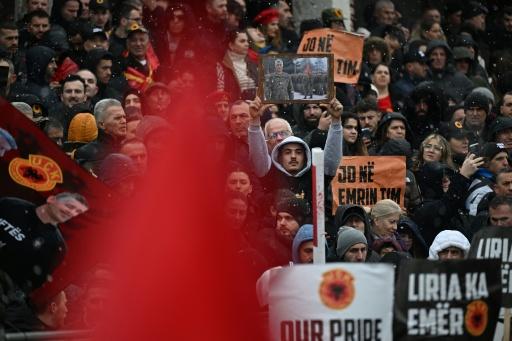
On Saturday, tens of thousands gathered in the capital, Pristina, to call for their acquittal in the latest of several rallies since the trial began.
"They should definitely be released because they fought for the freedom of Kosovo and did not commit any crimes. They are liberators," Shyhrete Kelmendi, a high school economics teacher, told AFP.
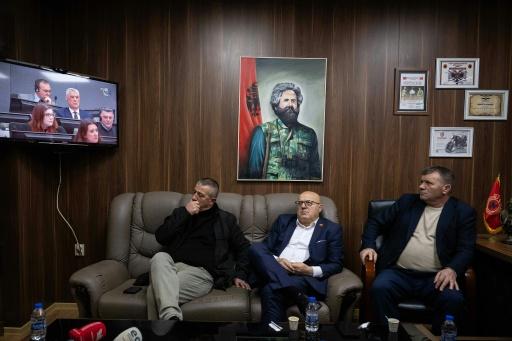
Despite the seriousness of the charges, which include killings, torture, and other abuses allegedly committed by guerrillas, supporters of Thaci expect him and his co-accused to be released, with preparations for a possible return already underway.
Countdown clocks have been set up in city squares, ticking down to the verdict due to be delivered at 0800 GMT in The Hague, while thousands are expected to gather to watch proceedings on a livestream.
Kosovo police are preparing to secure large gatherings, while the US embassy in Pristina has advised its personnel "to avoid all unnecessary travel in the vicinity of the demonstrations".
The Kosovo Specialist Chambers (KSC), although based in the Netherlands and staffed by international judges, was established under Kosovo law specifically to prosecute alleged crimes committed by KLA members during the war.
Before the court was established, earlier cases in Kosovo largely failed because of alleged witness intimidation and political interference.
Deeply unpopular from its foundation, the court's use of evidence supplied by Belgrade, which still refuses to recognise its former province's independence, has further inflamed accusations of political bias.
Prosecutors have tried throughout the trial to distinguish between the country's independence struggle and the men on trial.
They say all four men are responsible for crimes committed against prisoners held at KLA detention facilities in Kosovo and neighbouring Albania, as well as the politically motivated murders of Serb, Albanian and Roma civilians.
The alleged crimes were committed during and just after the Kosovo war, which claimed some 13,000 lives.
In response, the men's lawyers have argued that the KLA lacked a strict command structure and the senior figures could not control or be held responsible for fighters who committed crimes.
Regardless of Wednesday's verdict, Thaci still faces a second trial over alleged obstruction of justice.
That could mean he remains in custody even if acquitted in the war crimes case.
Thaci resigned as president and surrendered to the court after his 2020 indictment. He has remained in detention in The Hague ever since.
Latest stories

Jornal OpenAI, Anthropic e Google buscam criar órgão de supervisão de riscos da IA
OpenAI, Anthropic e Google DeepMind trabalham na criação de um órgão de supervisão dos riscos relacionados à inteligência artificial (IA), informou a OpenAI à AFP nesta terça-feira (15), em meio a apelos...

Jornal Fluminense perde para Platense (2-1), mas avança à semifinal da Libertadores
O Fluminense se classificou para a semifinal da Copa Libertadores apesar da derrota por 2 a 1 para o Platense nesta terça-feira (15), em Buenos Aires, depois de ter vencido o jogo de ida na...
Jornal EUA prepara pacote de armas bilionário para Israel (imprensa)
O governo dos Estados Unidos está prestes a aprovar um pacote de armas de US$ 2,8 bilhões para Israel, um dos maiores pacotes de munições vendidos nos últimos anos...