


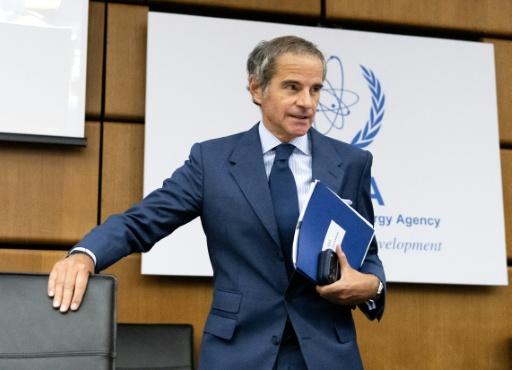
The UN nuclear watchdog's board of governors on Wednesday decided to close a long-time probe against Syria launched under ousted leader Bashar al-Assad after the country's new authorities led agency experts to key nuclear sites.
Inspectors from the International Atomic Energy Agency (IAEA) last month visited two sites, one in Deir Ezzor and a second in an undisclosed location identified to them by Syrian authorities.
IAEA head Rafael Grossi said on Monday that a near-complete nuclear reactor found in Deir Ezzor and built secretly during the rule of al-Assad would have been able to produce material to make nuclear weapons.
The IAEA board "adopted by consensus" a text stating that a 2011 resolution finding Syria in non-compliance with its obligations was "terminated", noting the current government's cooperation, two diplomats told AFP.
The Syrian foreign ministry on X hailed the decision as "an important diplomatic and legal achievement for Syria", adding it "opens new horizons for an international cooperation for peaceful uses of nuclear energy and technologies".
The resolution, seen by AFP, was submitted by Egypt, Jordan, Morocco and Saudi Arabia and "encourages Syria to continue its cooperation with the agency, including the excavation work at the Deir Ezzor site".
It also "requests the director general to update the board, as appropriate, on the outcomes of ongoing activities of the agency" in Syria.
Assad was toppled in December 2024 and the current Islamist government came to power.
Grossi said on Monday that it was "obvious that the previous government was pursuing a number of clandestine" activities.
Besides the reactor under construction at the Deir Ezzor site, the IAEA found a fuel fabrication plant where nuclear fuel for the reactor was manufactured, and a location where nuclear fuel as well as uranium scrap and waste were stored.
In a confidential report seen by AFP last week, the IAEA said it found around 73 tonnes of natural uranium metal.
Grossi has praised Damascus's "courageous decision" to report the undisclosed site.
The UN atomic watchdog had declared in 2011 that the location was "very likely" to host a nuclear reactor, adding that its information suggested it was being built with North Korean assistance.
Last month, Grossi visited the site in Deir Ezzor in the east, which has been shut for 18 years.
In 2018, Israel admitted carrying out a top-secret air raid on the site 11 years earlier.
In 2008, less than a year after the strike, US officials accused Syria of having sought to build a secret nuclear reactor and acknowledged that Israel had destroyed it in the raid.
Robert Kelley, a former director of IAEA inspections and now an associate fellow of the Stockholm International Peace Research Institute, told AFP following the IAEA report that there was "no evidence of any weapons programme" in Syria.
Instead the aim before the site was destroyed may have been to produce plutonium for North Korea, possibly to sell to a third party, he added.
Latest stories

Jornal Relatórios alertaram para risco de 'fluxos maciços' antes da chegada de imigrantes a Ceuta
Relatórios de inteligência e segurança desclassificados pelo governo espanhol nesta quarta-feira (9) alertaram para o risco de "fluxos maciços" de imigrantes a Ceuta horas antes de milhares deles entrarem no enclave norte-africano vindos do Marrocos...
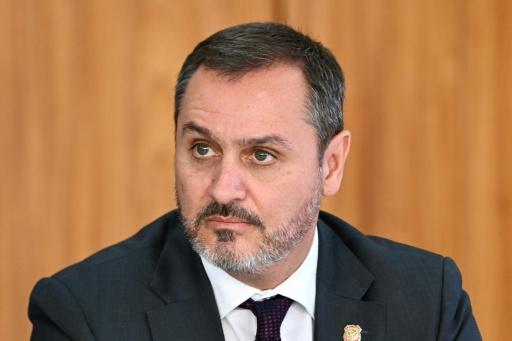
Jornal Crise no STF: Flávio Dino reintegra diretor-geral da PF no cargo
O ministro do Supremo Tribunal Federal (STF) Flávio Dino reintegrou, nesta quarta-feira (9), o diretor-geral da Polícia Federal, Andrei Rodrigues, que tinha sido afastado do cargo na véspera pelo ministro André Mendonça, em uma crise sem precedentes...
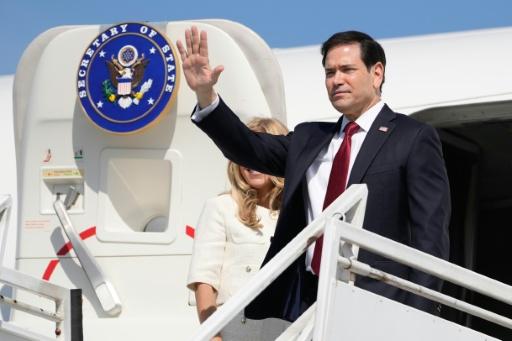
Jornal Rubio chega ao Equador, fiel aliado dos EUA na guerra às drogas
O secretário de Estado dos Estados Unidos, Marco Rubio, desembarcou nesta quarta-feira (9) na capital do Equador para se reunir com o presidente Daniel Noboa, um aliado fiel do presidente...