


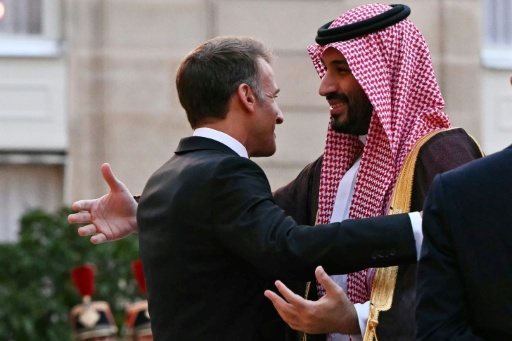
Saudi investment in France reflects the fast-growing rapprochement between Paris and Riyadh as power dynamics are reshaped across the Middle East, with the kingdom seeking to diversify its partnerships without jeopardising its strategic alliance with the United States.
The visit to Paris by Saudi Arabia's de facto ruler, Crown Prince Mohammed bin Salman, provided the occasion on Monday to announce 21 agreements and memorandums of understanding between the two countries.
They spanned sectors from defence and health to artificial intelligence, emerging technologies and entertainment, crowned by a six-billion-euro ($7-billion) investment to create three theme parks in the Paris suburbs.
The on-again, off-again war launched in February by the United States and Israel against Iran, which has reverberated across the Middle East, exposed to Gulf monarchies the limits of American commitment.
The war "has accelerated Saudi Arabia's need to diversify its partnerships because the prevailing feeling in the region is that the US contribution to the protection and defence of Gulf countries will never again be at the same level", said Yasmine Farouk, Gulf and Arabian Peninsula project director at the International Crisis Group.
"What Saudi Arabia is looking for is a powerful partner capable of distancing itself from the United States on certain issues without breaking ties with it," she added.
Investment in France fits "directly into the continuity of Vision 2030", the sweeping reform programme launched by Mohammed bin Salman in 2016 to diversify Saudi Arabia's oil-dependent economy, said Camille Lons, deputy head of the Paris office of the European Council on Foreign Relations.
Saudi security expert Hesham Al-Ghannam told AFP that investments such as the amusement park projects, including one expected to be manga-themed, "represent a core pillar" of Vision 2030 by diversifying the economy beyond oil while projecting "a confident modern national image".
Beyond investment, the goal is also to strengthen the defence partnership.
"For the Saudis, France is an important and useful power," said Lons. "It is a nuclear power. It is a permanent member of the UN Security Council. That is not insignificant."
Paris has been eyeing closer ties with Riyadh for years, she said, as France seeks to adjust its Gulf policy by "not putting all its eggs in one basket", at a time when the United Arab Emirates, a key French ally in the Gulf, has come under fire in some quarters for playing a destabilising role, notably in war-torn Sudan.
Until recently, "Paris struggled to deepen this partnership with Riyadh", she said, but the Iran war has acted as a catalyst.
Mohammed bin Salman's visit itself underscored the importance both sides attach to the relationship. Paris noted it was the crown prince's first such foreign trip in almost a year.
It also sparked protests in France and questions over entrusting megaprojects to Riyadh despite criticism of its human rights record.
French President Emmanuel Macron's office responded, "At no point, when we attract a project, do we seek to lecture others".
Washington remains indispensable, Farouk said, but Paris and Riyadh are betting on a partnership "capable of filling, here and there, the gaps left by American disengagement, while relying on what remains of the US role".
The strengthening Franco-Saudi partnership will depend on France's ability to shoulder "greater political costs and risks in the region, particularly on the Palestinian and Iranian files, to offer a genuine strategic alternative to the United States on specific issues in both cases", Farouk added.
France showed its value last year in mobilising support for international recognition of a Palestinian state, "something the Americans did not want to offer Saudi Arabia", she said.
But Paris now must put words into action at a time when the creation of a Palestinian state appears increasingly remote.
"The Americans are present on the ground. They are paying a political and military price," Farouk said.
"The Europeans, including France, also need to get their hands dirty."
"The risk has to be shared," she added, as France faces criticism for not imposing tougher economic sanctions on Israel in response, notably, to violence by settlers against Palestinians in the occupied West Bank.
For now, Paris and Riyadh have stressed their desire to coordinate more closely on Lebanon, Syria and Middle East security, while reaffirming their support for the Lebanese armed forces.
Latest stories
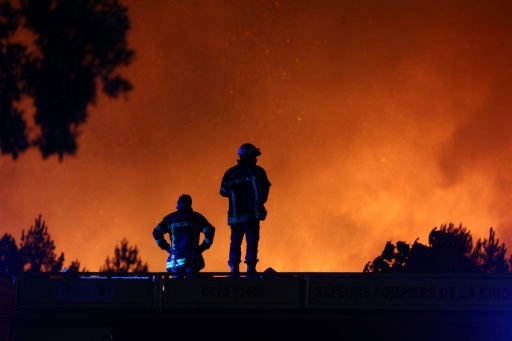
Meio Ambiente Verão transforma mudança climática em realidade infernal para europeus
Por muitas gerações, o verão na Europa foi sinônimo de leveza, descanso e dias ensolarados. Em 2026, porém, a dura realidade da mudança climática destruiu essa imagem...

Meio Ambiente Dez crocodilos-do-nilo nascem na França devido ao calor acumulado
Dez crocodilos-do-nilo nasceram em um parque de animais na França sem intervenção humana, em uma eclosão natural inédita, devido ao calor acumulado no solo durante o verão e às ondas de calor, informou nesta quarta-feira (26) o diretor...
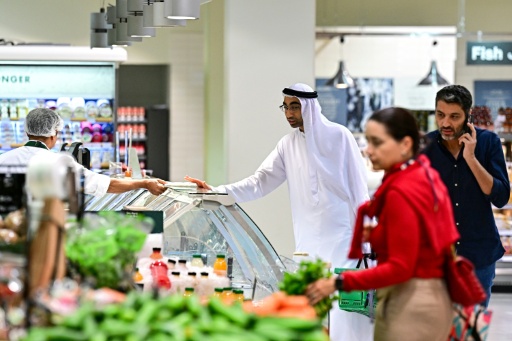
Jornal Trabalhadores estrangeiros do Golfo permanecem apesar da guerra: 'Não tenho outra opção'
Apesar de uma guerra que já dura quase seis meses, com toda a angústia que ela traz, a maior parte dos trabalhadores estrangeiros nos países do Golfo prefere ficar, em vez de voltar à difícil...