

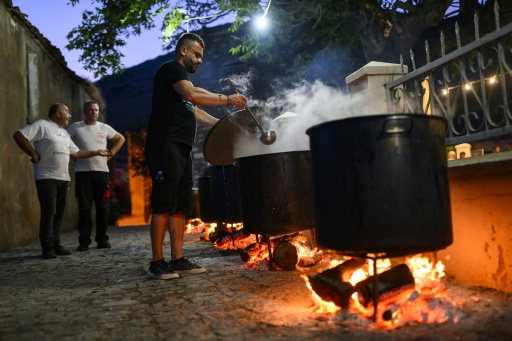
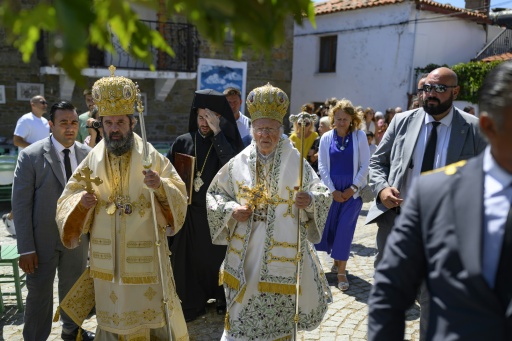
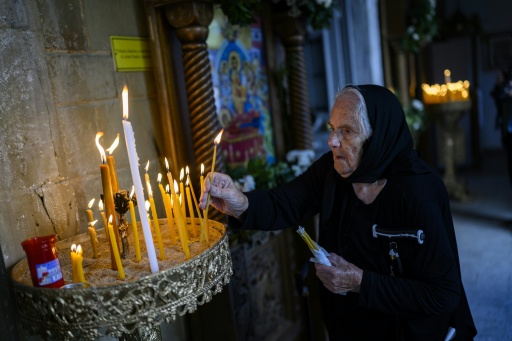
It's festival day and Dino Haimandos is savouring the sight of Gokceada's streets filled with Greek Orthodox icons for a parade led by Ecumenical Patriarch Bartholomew I, who was born on this Turkish island.
Now 77, Haimandos returns every summer to the village where he grew up on this island off Turkey's Aegean coastline, which he reluctantly left in 1964 following clashes between Greek and Turkish communities over Cyprus.
Every August 15, hundreds return for the Feast of the Virgin Mary on Gokceada, led by the island's most famous son, Bartholomew I, the 86-year-old spiritual head of the world's 260 million Orthodox Christians.
The island is known as Imbros to Greeks, who were once a majority here before fleeing to Athens, Thessaloniki and beyond.
Now, many fear the culture of the island's Greek population risks disappearing.
Under the 1923 Treaty of Lausanne, signed a year after the end of a three-year Greek-Turkish war, Athens and the nascent Turkish nation did a sweeping population exchange.
But the Greek-speaking Christian population of Istanbul, along with Imbros and the neighbouring island of Tenedos (Bozceada in Turkish), were exempted from the swap, along with the Turkish-speaking minority in the Thrace region.
Around 1.5 million people were forced to leave lands they had called home -- many after years of neighbourly relations, though in some places, intercommunal tension escalated into massacres.
On Imbros and Tenedos, coexistence was never a problem, but "politics is another matter", said Kristo Vogiatzis, a 59-year-old businessman from Athens.
Following escalating intercommunal violence over Cyprus in 1964, Ankara retaliated by closing the Greek schools on Gokceada and setting up an open prison on expropriated land by Derekoy, its biggest village.
Spooked by the move, many families packed up and left.
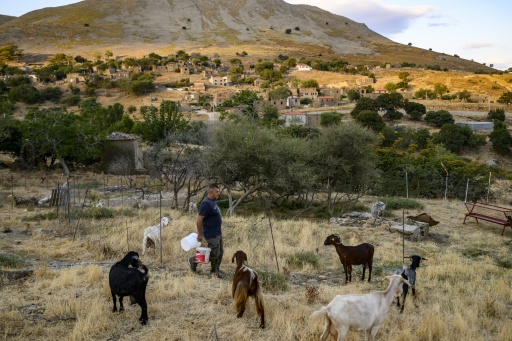
"Prisoners would turn up looking for alcohol and there were thefts and murders... I don't like remembering it," said Yorgi Baki, a shepherd in his 60s whose cousin was murdered.
By then, the atmosphere had changed, said Vogiatzis.
"Once you send the signal it's acceptable to target Greeks, there will always be people willing to attack them," he told AFP.
"It was so sad," said Haimandos, who left for Istanbul at 13 then moved to Sydney five years later but has kept strong ties to Gokceada.
"I was born here and I still feel at home. I love the streets, the people. I was at school with them, we got on well."
The departures sped up after 1974, when Turkey invaded the northern third of Cyprus in response to an Athens-engineered Greek Cypriot coup seeking unification with Greece.
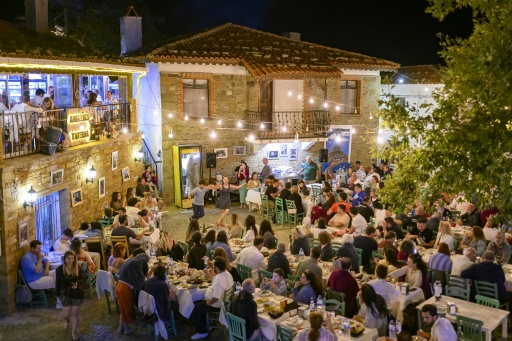
For everyone, August 15 is when they reunite each year and the sounds of church bells and Greek greetings fill the air.
Bartholomew I comes every year to deliver a three-hour liturgy.
Stelyo Berber, a 52-year-old island-born singer, is hoping to revive both the Greek spirit and the community that once called this place home.
Every evening, he and his wife Pelin perform well-loved songs of "rebetiko" -- the so-called Greek "blues" of exile, lost homelands and unrequited love -- inside the stone tavern they run in Zeytinlikoy, the patriarch's home village.
Switching between Greek and Turkish to charm his clients, Berber -- who grew up in Istanbul and Ankara -- returned to live on the island five years ago.
With the 2013 opening of a Greek school at the EU's encouragement, "around 600 Greeks returned to live here", boosting the numbers from less than 70 in 2005, he said.
But it remains a modest number on an island of 7,000 residents whose population swells to 30,000 in the summer months.
Despite his efforts to bring people back, time is working against him. "Our culture is dying out," he said.
Vogiatzis says his children have no interest in taking his house on the island, saying: "It's not our history. We are Greek."
And his Istanbul friends are all asking if and when he plans to sell. "Prices are soaring, everyone wants a stone house," he said.
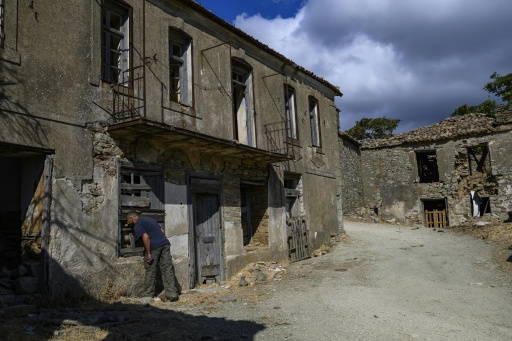
Only Derekoy -- once the richest place on the island -- remains abandoned and in ruins, left to the goats of Yorgi, the shepherd.
Similar stories played out on neighbouring Tenedos, where only 15 Greeks remain, all of them elderly. A three-hour drive from Istanbul then a 30-minute ferry ride, it's even more popular with mainland tourists.
Hakan Guruney moved to Tenedos from Istanbul in the 1980s and has spent decades trying to preserve its memories through a small private museum.
There he showcases everyday mementoes, from sweet wrappers to lacework, prayer books and postcards from French soldiers stationed there during the 1915 Dardanelles campaign.
"We drove the Greeks out and now we play their songs in our restaurants," he sighed as the voice of legendary Greek actress and singer Melina Mercouri drifted up from a street cafe.