


Ukraine has stepped up its targeting of Crimea, the Black Sea peninsula annexed by Russia from Ukraine in 2014, seeking to cut it off from Russian supplies.
Here are five things to know about Crimea, a strategic area of outstanding beauty that has played a central part in the conflict between -- and history of -- Russia and Ukraine.
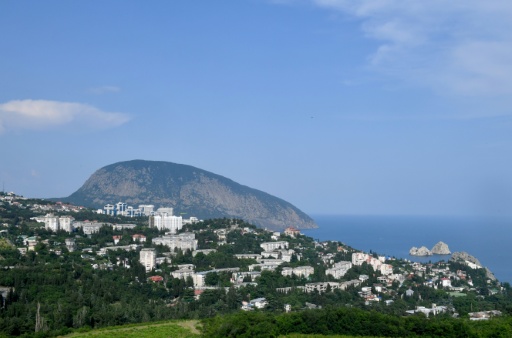
Crimea is a peninsula jutting out into the Black Sea that is known for its natural beauty -- seaside cliffs, green mountains, pebbled beaches and rich soil -- and distinctive culture.
Its strategic location has been the envy of European navies and the subject of wars over the centuries.
It became part of the Russian Empire under Catherine the Great in the 1780s after victories over the Ottoman Empire.
It was during Catherine's trip to inspect Crimea that the legend of Potemkin villages took root -- Prince Potemkin was said to have built fake portable village fronts to make the empress believe the area she was seeing on the way to the peninsula was rich.
In World War II, Crimea was occupied by the Nazis and in early 1945 hosted the Yalta Conference between the leaders of Britain, the United States and the Soviet Union -- Winston Churchill, Franklin D. Roosevelt and Joseph Stalin -- during which they divided Europe into spheres of influence.
At the start of the Soviet Union, Crimea was part of the Russian Soviet Federative Socialist Republic (RSFSR), before being transferred in 1954 to the Ukrainian Soviet authorities in what was largely a symbolic move that took on huge significance after the USSR fell apart.
When the Soviet Union collapsed in 1991, Crimea became part of an independent Ukraine.
Under several 1990s deals, Russia retained the right to station its Black Sea Fleet in the port of Sevastopol.
The regional capital is Simferopol, which lies inland. The ports of Sevastopol, Yalta and Yevpatoriya are important urban areas.
Amid Kyiv's 2014 pro-EU revolution, which saw Moscow-backed President Viktor Yanukovych overthrown, Russia seized Crimea.
Masked gunmen without insignias took control of government buildings and strategic areas.
Moscow then organised what it called a referendum on joining Russia, with the vote held under gunpoint.
It was denounced by Ukraine and the West as a sham and they imposed sanctions on Russia.
The March 2014 annexation was followed by war in eastern Ukraine, where pro-Russia separatists, backed by Moscow, took up arms against Kyiv.
The war killed thousands between 2014 and 2022, when Moscow launched its full-scale offensive against Ukraine.
Crimea is seen internationally as part of Ukraine, with Russia's annexation only recognised by a handful of countries such as North Korea and Venezuela.
The annexation was a turning point for President Vladimir Putin's rule, marking a break of relations with the West and followed by a ramping up of repression at home.
Many who did not want to live under Moscow fled.
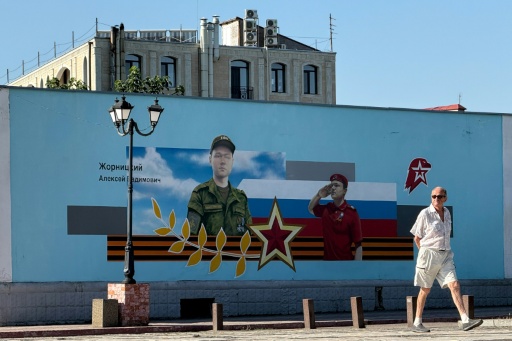
Moscow tightly controls life there, banning Ukrainian symbols and essentially requiring locals to get Russian passports.
Russia has been accused of orchestrating repressions against Crimean Tatars, a majority-Muslim ethnic group historically living on the peninsula.
The Turkic-speaking Tatars were deported en masse from Crimea by Soviet dictator Joseph Stalin, mostly to Central Asia, and began returning to their homeland in the 1980s.
After the 2014 annexation, Moscow banned their governing body, the Mejilis, which moved to Kyiv, and held a series of high-profile trials against Crimean Tatars.
In February 2022, Russia attacked Ukraine from the north, east and south -- including from Crimea, where it had built up troops and equipment for months.
During the war, Crimea has been a constant target for Ukraine, with drones and missiles launched by Kyiv regularly hitting the peninsula in what Kyiv says are justified retaliatory attacks on military sites, energy facilities and supply routes.
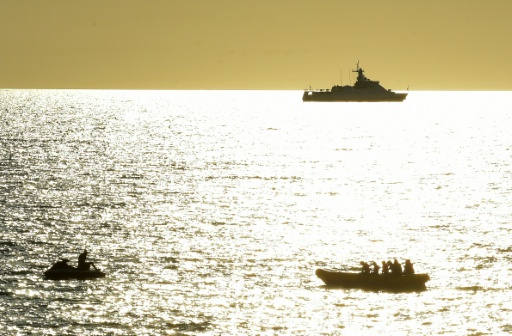
Ukraine -- not a major naval power, unlike Russia --- has also seen military successes in the Black Sea, with its naval drones sinking several Russian ships.
In September 2023, Kyiv hit the headquarters of Moscow's Black Sea Fleet at Sevastopol with a massive attack, killing a top commander and officers.
As part of billions that were poured into the peninsula, Moscow spent years building a bridge linking Crimea to Russia, inaugurated by Putin in 2018 in a symbolic demonstration of the Kremlin's rule over the peninsula.
The 19-kilometre (12-mile) road-and-rail link also served as a key logistics route for the Russian army when it launched its Ukraine attack.
In October 2022, Kyiv blew up part of the bridge in a major attack claimed by its security services.
Moscow sentenced eight men to life over the 2022 attack, who have said they were innocent or used
Latest stories
Jornal Exército dos EUA lança represália 'potente' contra o Irã
Os Estados Unidos lançaram nesta quinta-feira (30) uma série de bombardeios contra o Irã, em retaliação a ataques contra suas bases na Jordânia, em meio a um conflito renovado no Oriente Médio, que...
Jornal Agressor de Salman Rushdie é condenado nos EUA por 'ato de terrorismo'
Um júri federal dos Estados Unidos condenou nesta quarta-feira o agressor do escritor Salman Rushdie por "cometer um ato de terrorismo" relacionado ao ataque de agosto de 2022 em...
Jornal Justiça ordena prisão de Morales por protestos que paralisaram a Bolívia
O Ministério Público da Bolívia ordenou nesta quarta-feira (29) a prisão do ex-presidente Evo Morales, investigado por suspeita de liderar protestos contra o governo que paralisaram o país por mais...