
'No rest': Indonesians overworked and abused on foreign fishing vessels


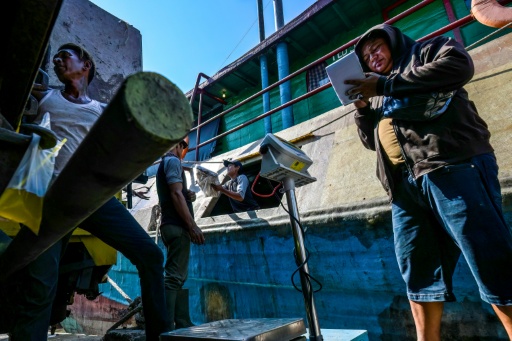
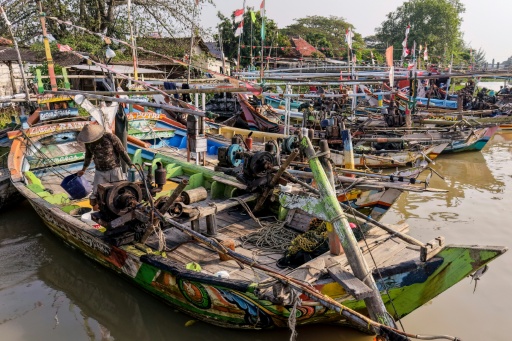
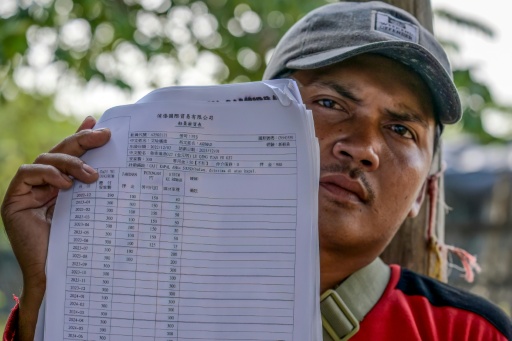
Lured by promises of good money working aboard a foreign fishing vessel, Akhmad left Indonesia and headed out to sea, enduring months of abuse and exploitation while being cut off from the world.
Indonesia is one of the top contributors of labour for the global fishing industry with several hundred thousand migrant workers, according to government figures.
Many are recruited online and assigned to foreign-flagged ships without being properly informed about their rights, leaving them vulnerable to abuse, experts say.
Akhmad, 25, who left Cirebon on Indonesia's Java island in 2022, told AFP he would get as little as four hours of rest a day while working on a Chinese-flagged tuna fishing vessel.
"There was no rest. (We) must keep working," said Akhmad, who like many Indonesians goes by one name.
"It was very tiring. My eyes hurt... If I was slightly sleepy, I was ordered to wake up and work."
Crew members had little communication with the outside world and faced regular verbal and physical abuse on board, Akhmad said, recalling the captain once beating a colleague accused of stealing fish they had caught.
In addition to tuna, Akhmad said the crew would also catch sharks, cutting off their fins before throwing them back into the ocean.
The practice known as finning is mostly banned across many fishing zones and countries, including the United States and the European Union, but remains a lucrative business activity in some parts of the world.
Jamaludin, an Indonesian man who worked on a different Chinese-flagged vessel between 2018 and 2020, said he was forced to follow the captain's orders to harvest shark fins despite knowing that it could be illegal.
The 29-year-old said the captain would hurl verbal abuse at him for a delay in installing fishing gear, for example, or if any tool was missing.
Jamaludin said he once saw the captain ordering a fellow crew member to resume work despite an injury to one of his hands that exposed his flesh and bones.
"I was stressed, (but) what can I do? I'd already gotten here," he said.
Jamaludin's passport was withheld by the captain, and he feared he would face a penalty for quitting early, leaving him little choice but to see out the remainder of his contract.
- 'No way out' -
Both Jamaludin and Akhmad were working on vessels operating off West Africa which unloaded fish in Senegal's capital Dakar.
The port on the Atlantic coast has served as a regional finning hub in recent years, according to a report issued Thursday by London-based NGO Environmental Justice Foundation (EJF).
The organisation's CEO Steve Trent said that abuse and mismanagement were "systemic" across the Chinese distant-water fishing fleet, and to a lesser extent the Taiwanese one, which together dominate the sector.
Migrant fishers easily find themselves in debt before beginning work, effectively trapped in bonded labour, said EJF's head of research, Callum Nolan.
Limited access to the outside world while at sea makes it difficult to seek help, he added.
"It's an exception to us if we read an experience of an Indonesian fisher or a Filipino fisher who hasn't had to pay a fee to be recruited, hasn't had disproportionate deductions from his salaries," Nolan said.
"These men who are working on these boats in just desperate conditions, but they essentially have no way out."
Indonesian fishing crews usually come across job opportunities on foreign vessels through social media, leaving them vulnerable to exploitation, said Muhammad Kafandi, head of PSP Indonesia, a labour rights group supporting fishing workers.
- Oversight -
Many are driven to work abroad because of the lack of opportunities to become "prosperous" at home, said Kafandi.
And while Indonesia has regulations in place to protect prospective migrants from exploitation by crewing agencies, enforcement is generally weak, he added.
The Indonesian government is working to improve oversight of recruitment and pre-departure orientation, said secretary-general of the migrant protection ministry, Dwiyono.
He said the ministry's information campaigns aim at ensuring that "ship crew candidates choose official agents.... understand their rights and obligations, and do not depart through non-procedural channels".
There are around 300,000 Indonesians working on foreign-flagged vessels, the foreign ministry's citizen protection director Heni Hamidah said, citing a transportation ministry estimate.
For workers like Jamaludin, at the bottom line, higher income than what he would have earned in Indonesia outweighed the risks or labour abuse.
"It's better to just go abroad and earn, for example, 10 million rupiah (around $550 a month), and then have some extra to save," he said.
bfm-mrc/ami
© Agence France-Presse
Latest stories

Jornal UE impõe ao Google novas medidas para abrir o Android à concorrência
Bruxelas impôs ao Google, nesta quinta-feira (16), medidas para fomentar a concorrência nos serviços de busca e abrir o Android às inteligências artificiais de seus rivais...

Jornal Reino Unido pede à Fifa investigação sobre faixa evocando as Malvinas na semifinal da Copa
O secretário de Negócios e Comércio do Reino Unido, Peter Kyle, afirmou nesta quinta-feira (16) que a Fifa deve investigar o comportamento dos jogadores argentinos, que exibiram uma faixa com a frase "As Malvinas são argentinas", após derrotarem...

Jornal Presidente eleito da Colômbia prevê abrir uma embaixada em Jerusalém
O presidente eleito da Colômbia, o ultradireitista Abelardo de la Espriella, prevê abrir uma embaixada em Jerusalém como parte de seu plano de retomar e estreitar os laços com Israel...