


The US Federal Reserve is expected to hold interest rates steady on Wednesday, but with surging inflation fueled by President Donald Trump's war on Iran, analysts say some policymakers will dissent in favor of a rate hike.
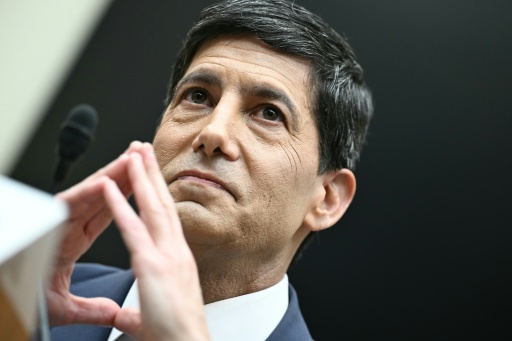
The Fed's open market committee (FOMC) began its second day of closed-door sessions on Wednesday morning, a central bank's spokesperson said, and will announce its decision at 2:00 pm (1800 GMT), followed by a press conference by Chairman Kevin Warsh.
Most investors expect the Fed to hold rates at 3.50-3.75 percent for the fifth straight meeting, according to CME's FedWatch monitoring tool -- but bets on a rate-hike have been rising.
Consumer inflation eased to 3.5 percent year-on-year last month, but is expected to rise again on the back of seesawing oil prices from Trump's war on Iran, which saw renewed fighting in recent weeks.
The uncertainty around the outcome of the meeting is unusual, and is fueled by Warsh's refusal to publicly share his views on the economic outlook, part of his proposed reforms to reduce the amount of forward guidance the central bank offers.
"This is a highly unusual meeting in the sense that we don't really know what the Fed chair's current thinking is," said Gregory Daco, chief economist at EY-Parthenon.
In his few public appearances since taking office, Warsh has said the committee is committed to delivering price stability, but has not elaborated on how it would do so or when it may intervene.
"(Other policymakers') patience is running thin when it comes to inflation, and most, if not all, stand ready to act if inflation does not soon move back towards two percent," Daco told AFP.
Since the Fed's last meeting six weeks ago, a number of policymakers have been vocal in their concern about inflation, which has remained above the Fed's long-term two-percent target for more than five years.
Since March, it has surged in the wake of Trump's war on Iran, which has sent global energy and fertilizer prices skyrocketing and seen some of those price increases bleed into other goods.
The Fed "has to be ready to tighten monetary policy to prevent a repeat of the 2021-to-2022 inflation episode," said Fed Governor Christopher Waller on July 13.
"Sternly staring at inflation until it melts before our withering gaze is not an option."
Since taking over, Warsh has called for policymakers to engage in a "good family fight" when deciding interest rates.
At this week's meeting, he may get what he asked for.
"I don't expect a rate hike, but I do expect dissents," said Diane Swonk, chief economist at KPMG.
"We may have a new chairman, but the old guard is now worried about where the economy has moved since the beginning of the year."
Swonk argued that the "hawks" at the Fed -- those policymakers who consider it appropriate to raise interest rates to combat high prices -- were multiplying.
"The hawkish core of the Fed has not only hardened but it's broadened," she said.
The lower consumer inflation figure for June gave policymakers enough "room to breathe" for now, but with further price rises expected Swonk was penciling in two rate hikes for later this year.
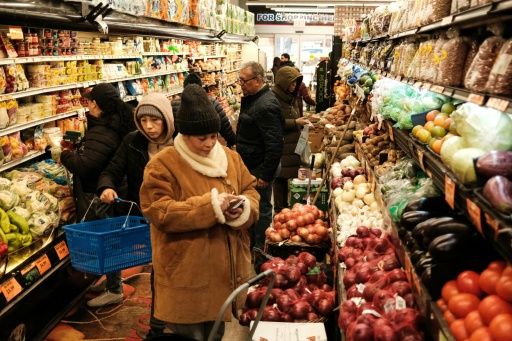
She highlighted how "corrosive" inflation can be, affecting lower-income households much harder than those with higher incomes, whose consumption has remained robust despite the surging inflation.
"It hits those who can afford it least the most," she said. "And it's moving up the food chain."
US inflation has been fueled in recent months by the Iran war, but it has also been driven by the repeated shocks of the pandemic, the Russia-Ukraine war and Trump's disruptive tariff policies.
Latest stories
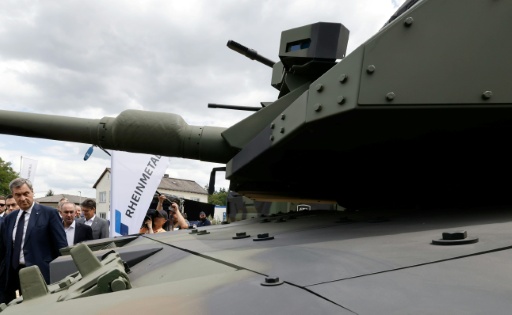
Business and Economy Rheinmetall shares surge after armsmaker reports record profit
German weapons manufacturer Rheinmetall on Wednesday reported record second-quarter core profit, beating analyst expectations, sending shares in the firm...

Arts and Entertainment French DJ Kavinsky, famed for 'Nightcall', found dead in Paris
French DJ and musician Kavinsky, known for his electronic classic "Nightcall", has been found dead at his home in Paris...
Europe UBS second-quarter net profit up 17% to $2.8 billion
Swiss banking giant UBS reported Wednesday that net profit rose 17 percent to $2.8 billion in the second quarter...