


US Democrats voted Tuesday in their marquee primary in Michigan, choosing between a left-wing insurgent and an establishment-backed congresswoman in a contest that has become a proxy war over Israel, electability and the future of the national party.
The winner will face former Republican congressman Mike Rogers in November for the seat being vacated by retiring Democratic Senator Gary Peters, a race central to the party's difficult effort to win control of the Senate.
Democrats must defend Michigan while gaining four Republican-held seats to control the upper chamber, making the primary more than an ideological exercise in a state that has swung between the two parties in recent national elections.
Analysts say the results will show whether a current leftist surge among Democrats can move beyond party safe seats and win in battlegrounds with national consequences -- or whether Michigan's Democratic establishment can still hold the line.
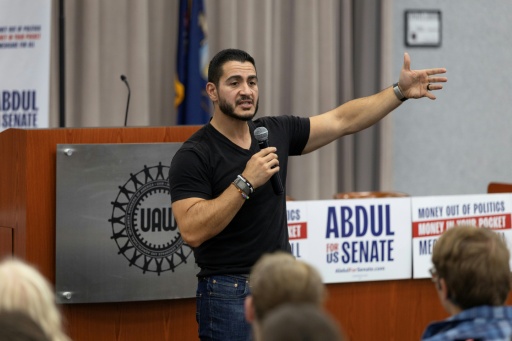
Abdul El-Sayed, a former Wayne County health director backed by leftist leaders Bernie Sanders and Alexandria Ocasio-Cortez, has cast himself as a working-class fighter willing to confront corporations, party leaders and increasingly unpopular pro-Israel donors.
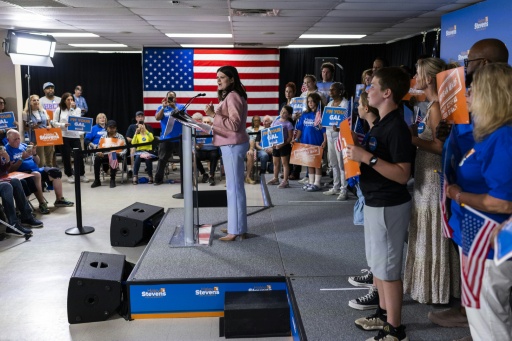
Haley Stevens, a four-term lawmaker from the Detroit suburbs, has built her campaign around experience, manufacturing and electability. She is supported by establishment figures from Senate Democratic leader Chuck Schumer to Michigan Governor Gretchen Whitmer.
Several recent polls have shown El-Sayed ahead, raising the prospect of the left's biggest victory yet in a primary season marked by a series of anti-establishment wins.
His allies say the campaign's volunteer energy proves progressives can build a statewide coalition without relying on Washington's traditional donor network.
Stevens is counting on support that she says may be underrepresented in opinion polls -- from Black voters, older Democrats and people without college degrees.
"We're still getting a ton of votes. We're firing people up," she told reporters after casting her ballot in Birmingham, a half-hour drive northwest of Detroit.
"My phone's been ringing off the hook with people who are excited to go to the polls, to see a campaign like mine go forward for November."
The bitterest divide has been over the United States' deep support for Israel.
Stevens has defended continued military backing for the country and rejected accusations that Israel committed genocide in Gaza.
El-Sayed has called for an end to unconditional US aid, attacked the influence of the American Israel Public Affairs Committee (AIPAC) lobby group, and said Israel should not exist specifically as a Jewish state.
AIPAC spending and outside advertising totaling $90 million -- in a state with a large Arab American population and deep anger over the Gaza war -- has made Michigan another national test of the pro-Israel lobby's ability to shape Democratic primaries.
The candidates have traded increasingly personal attacks, with El-Sayed calling Stevens "the least capable candidate in America," while she has accused him of blaming his problems on Jewish Americans.
Congresswoman Debbie Dingell, who has remained neutral, warned that the "brutality" and "ugliness" of the campaign could make it harder for Democrats to unite afterward.
Both camps insist their candidate offers the stronger path against Rogers.
Stevens points to Michigan's tradition of electing pragmatic Democrats while El-Sayed argues that a candidate powered by grassroots enthusiasm is more likely to turn out working-class and younger Democrats.
Michigan voted narrowly for President Donald Trump in 2024, even as Democrat Elissa Slotkin edged Rogers in that year's Senate race, underscoring both the state's competitiveness and the risks of a divided party.
Latest stories

Sports Reusser romps to overall lead at Tour de France Femmes
Marlen Reusser took the overall lead in the Tour de France Femmes on Tuesday, after a carefully executed plan to win the 21km...
Health WHO pleads for more support to tackle Ebola outbreak
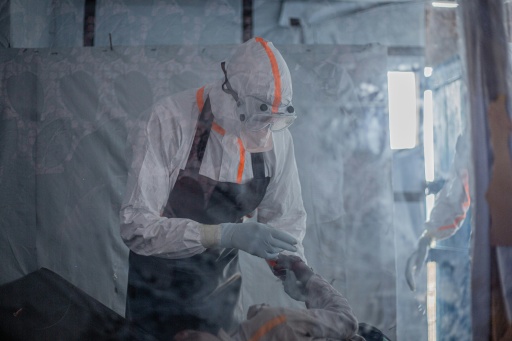
The World Health Organization called Tuesday for more support across the board to combat the Ebola outbreak raging in the Democratic Republic of Congo, which...

Latin America Brazil police probe plot to carry out election attacks
Brazilian security officials said Tuesday they were investigating eight suspects of plotting on Telegram to carry out attacks in the capital during October's elections, in which President Luiz Inacio Lula...