


Sachi Nishiyama spent two years in temporary housing after twin quakes devastated southwestern Japan in 2016. This week, after another deadly jolt, she slept in her car which offers air conditioning and privacy, but is "exhausting".
Temperatures were set to hit at least 35C on Thursday in the Kumamoto region, two days after a 7.1-magnitude earthquake wreaked major damage and killed at least 28 people.
Power and water outages have affected tens of thousands of buildings, leaving residents sweltering and thirsty as they fear another big quake -- like the one 10 years ago.
"When this quake hit, I immediately knew the epicentre was close," 30-year-old Nishiyama told AFP.
"I didn't think this was going to happen here again."
In April 2016, a 7.3-magnitude earthquake struck Kumamoto two days after a magnitude 6.5 tremor. Together those quakes killed 273 people.
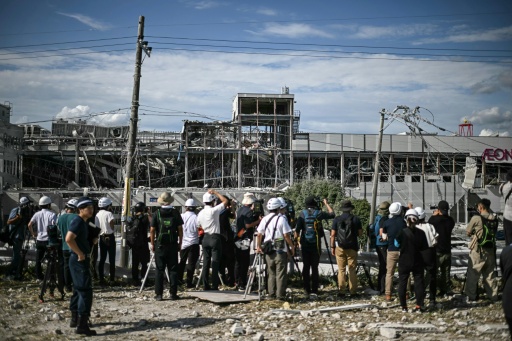
The Aeon shopping mall was renovated extensively to make it stronger and safer after suffering severe damage in the 2016 disaster.
The sprawling complex had reopened gleaming following another makeover in June this year, promising a place where generations could "share smiles" a decade on.
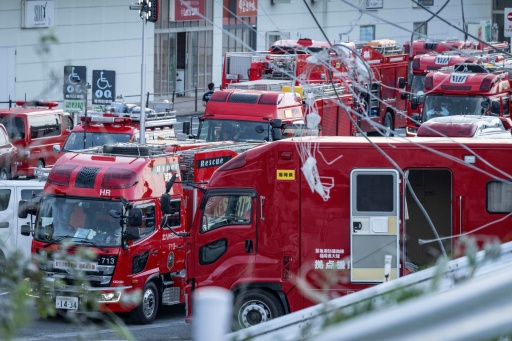
But a suspected gas explosion, around an hour after Tuesday's quake, has left the facility -- which housed global fashion brands, a cinema and a food court -- in ruins, with four people confirmed dead there.
Businessman Fumihiko Matsuura, 56, watched the latest "Toy Story" movie at the mall around a week ago.
"I was just here," he told AFP. "It's like I narrowly escaped the danger."
Aftershocks rattle the area a few times an hour throughout the day.
"I have bottled water and other supplies," Matsuura said, adding he would "stay scared and cautious for the next few days" in case another big quake strikes.
"You know -- what happens twice will happen three times," he said, using a Japanese saying.
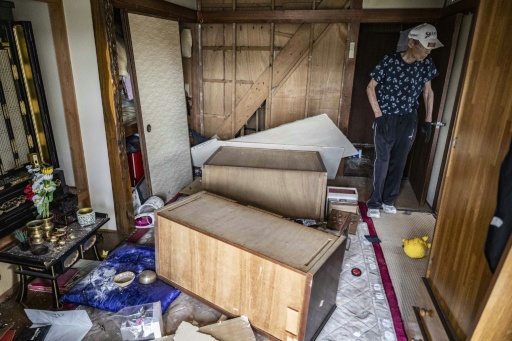
Masao Mitsunaga, 57, was playing on his computer in his home office on Tuesday when his home, which he shares with his mother and brother, began shaking violently.
"I couldn't stand up. It was definitely bigger than 10 years ago. No comparison. I thought my house was going to collapse," he told AFP.
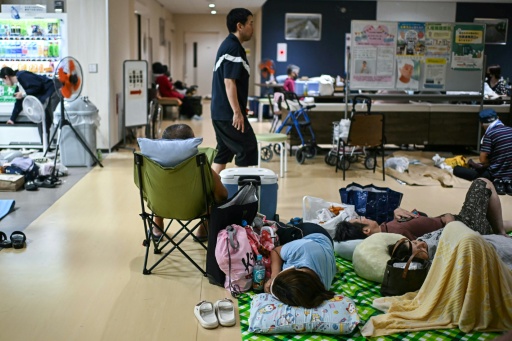
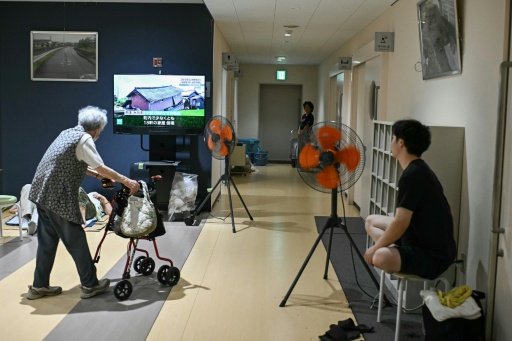
A power outage then hit in the early hours of Thursday, so the family came to an emergency shelter to escape the intense heat, forecast to reach 38C this weekend.
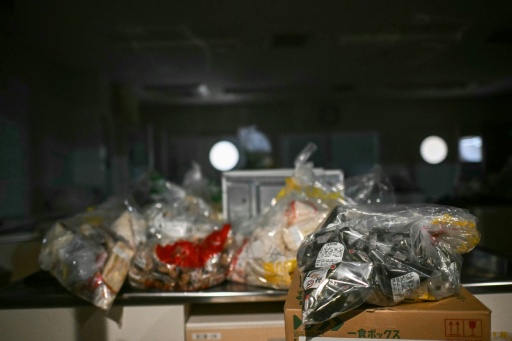
Convenience stores in Kumamoto remain open and brightly lit, although some shelves for fresh food like rice balls sit empty.
But "the lack of key lifelines -- water, power" has hit locals hard, said Hiroyuki Matsushima, 53, who works at a supermarket in Yatsushiro, one of the districts where shaking was strongest.
"In this heat, if you don't have electricity and air conditioning, it's very tough," the father-of-four said.
Some people have braved the high temperatures to tidy up the mess in their houses from the quake and put workplaces back in order.
But many older and unwell residents -- in a country with the world's second-oldest population -- are taking shelter in school gyms and municipal offices.
Hundreds of older people slumbered on thin mats the hard lobby floor at a community centre in Uki city.
They slept between tables and chairs, where others congregated to watch news about the earthquake or wait in line for a warm meal.
"Thank God for these shelters," said one woman, who declined to give her name.
She had tried to stay home, or rest in her car, "but it's too hot and there are too many mosquitoes".
Marie Ryuzaki, 60, said the windows of her second-floor apartment had shattered.
"I saw my appliances fly," she said, adding that the shelters were helpful, but it was difficult to relax with so many people around.
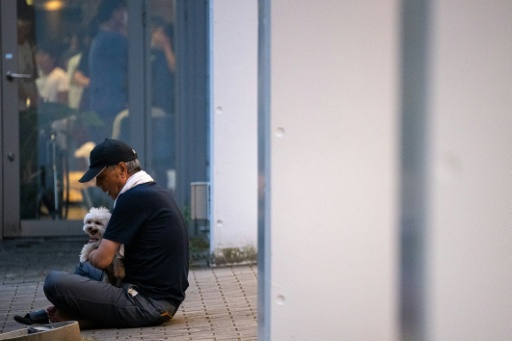
As for Nishiyama, she said she needed to stay home to be with her cat, which she did not feel comfortable bringing to a shelter.
To get bottles of fresh water, she had travelled 30 minutes each way to the Uki city hall, making the trip twice on Wednesday.
She said many residents were choosing to sleep in their cars for privacy.
"At shelters... there are no walls or partitions between people. It's very congested."
Latest stories
Arts and Entertainment BTS pulls out of Grammys after Asian pop category introduction
Global K-pop sensation BTS said Wednesday they will not submit their music for next year's Grammy Awards, after the Recording Academy introduced a new Asian pop category criticised for...

Sports Ngumoha scores as Liverpool beat Wrexham 1-0 in New York friendly
Liverpool won their second straight match under new coach Andoni Iraola as they beat Wrexham 1-0 in a pre-season friendly at Yankee Stadium...
Asian Edition Samsung quarterly operating profit up 1,800% on AI boom
South Korean technology giant Samsung Electronics posted on Thursday a massive 19-fold jump in second-quarter operating profit from last year, buoyed by frenzied demand for memory...