


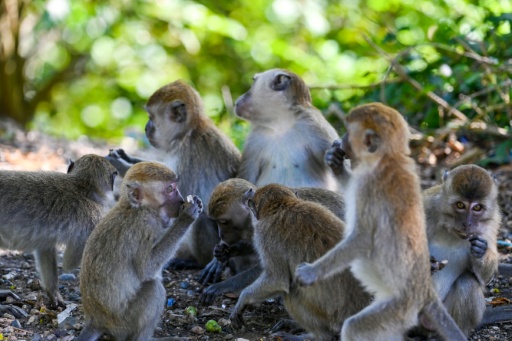
Animal trappers have cut short the two-week rampage of a monkey that randomly attacked 18 people on Indonesia's Sumatra island, prompting dozens of schools to close in fear.
The animal, an adult long-tailed macaque, wounded 18 residents of the town of Tembilahan, biting and clawing at its victims -- most of whom it targeted when they were alone.
Those hurt included children and elderly people.
"As of today, there were 19 attacks, with 18 victims. One victim was attacked twice," Tembilahan fire and rescue service head Junaidy Ismail told AFP on Friday.
Some required more than a dozen stitches and a rabies shot.
The monkey was caught on Thursday in a trap set in town, and the rescue service issued a video on Friday showing it alive, seemingly stressed, in a cage.
Town official Ari Syuria urged residents to remain cautious because the monkey could have operated as part of a gang.
"The concern is that there may be other monkeys attacking people," Ari said in an Instagram post.
Forty schools remained closed on Friday, with three days of online learning ordered for hundreds of Tembilahan pupils.
Doors will reopen next Monday if it is deemed safe, the local government said in a statement.
The monkey has been transferred to Pekanbaru, the capital of Sumatra's Riau province, where the nature conservation agency will carry out blood and observational tests.
"We want to establish whether the monkey is carrying any diseases," agency official Ujang Holisudin told AFP.
Human-animal conflicts are common in the vast Southeast Asian archipelago, especially in areas where the clearing of rainforest to make way for palm oil plantations is shrinking the habitats of animals such as monkeys, elephants and tigers.
Puji Rianti, a biology lecturer at IPB University south of Jakarta, said some monkeys have also learnt to associate humans with food.
"It's not easy to look for food in the forest... It is easier to get food by living near humans... by stealing," she told AFP by telephone.
It was also possible that the rampaging monkey was a former pet released into the wild, Puji said.
Latest stories

Business and Economy Oil extends gains and stocks mostly down on fresh Hormuz worries
Oil prices extended gains and most stocks fell further on Friday amid fading optimism over a deal to reopen the Strait of Hormuz, as reports said Iran was planning to block US and Israeli ships from the...
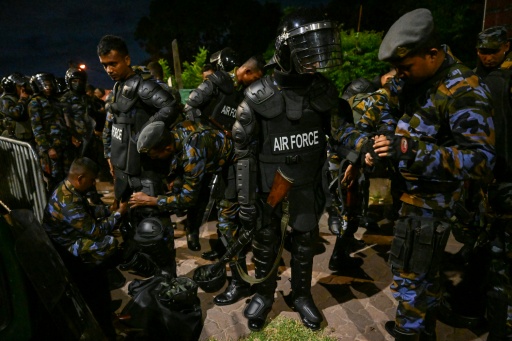
Asia Pacific News Sri Lanka deploys troops to contain growing prison unrest
Sri Lanka deployed troops to its main maximum-security prison in Colombo and two other jails on Friday, following unsuccessful breakout attempts in which three inmates were killed and...
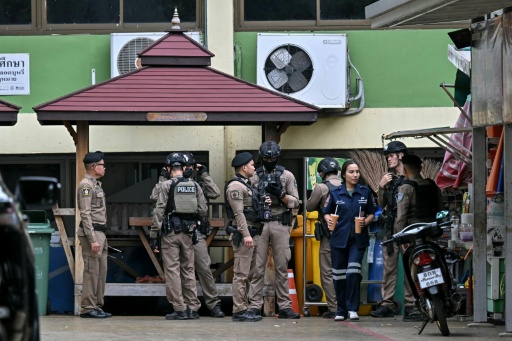
Society Eight dead, including teen suspect's grandparents, in Thailand shooting
A teenage suspect killed his grandparents before shooting dead at least six more people at a school near...