


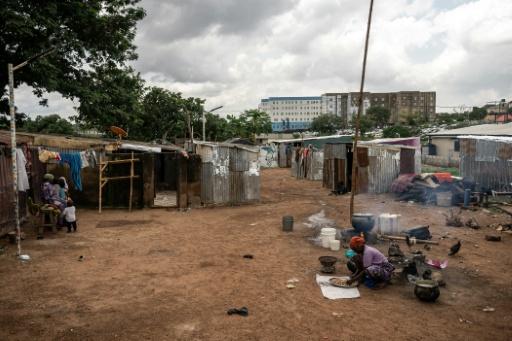
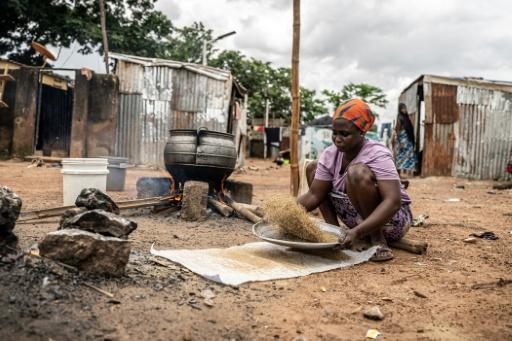
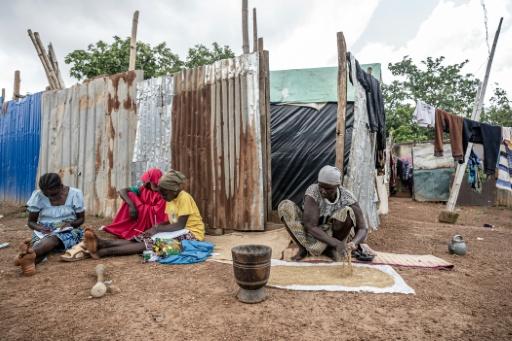
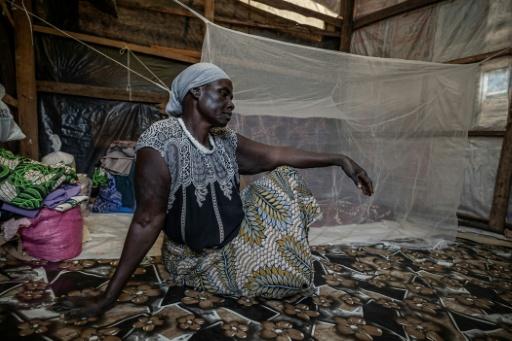
Paved roads give way to a dirt path choked with overgrown shrubs, the barbed wire-topped walls of housing estates swapped for one-room shacks built from corrugated iron sheets and wooden planks.
Tucked among the suburbs of Abuja, Nigerians chased from their homes by a jihadist insurgency have been living in this makeshift internally displaced persons (IDP) camp for 15 years, with little to show for it.
As presidential elections loom, many carry voters' cards and intend to use them against the government.
The country is gearing up for a January poll defined by a tough economy and rising insecurity -- and camp residents were bearing the brunt of both during a recent visit by AFP journalists to the settlement, just down the road from an expensive, highly secured international school.
"We want change. We have suffered under (President Bola) Tinubu," said Hawa Usman, 37, who fled with the surviving members of her family from Borno state, the epicentre of jihadist violence since Boko Haram's 2009 uprising.
Liyatu Ayuba Yusuf, a community organiser who liaises with politicians on behalf of women in the camp as well as 17 others in the wider Federal Capital Territory, has successfully organised her fellow displaced Nigerians as a bloc before.
"Our vote is powerful," said Yusuf.
There are 3,800 internally displaced people (IDPs) in Yusuf's camp. Others in the capital number closer to 6,000, among roughly 3.7 million IDPs across the country, per UN figures -- up from 3.1 million in 2022.
Yusuf, 56, is a registered party member with Tinubu's All Progressives Congress and says she can deliver the women for the president, who is seeking re-election.
But prices throughout the economy have skyrocketed since Tinubu cut a costly fuel subsidy in 2023 -- a move praised by economists who likened Nigeria's system of exporting crude oil, importing gasoline, and then subsidising its domestic sale to an unsustainable house of cards.
While the reforms -- including liberalising the exchange rate of the naira and overhauling the tax code -- have won the hearts of investors, their fruits have not trickled down to the average Nigerian, critics say.
On security, a major operation with the United States killed a top Islamic State leader in May, and Tinubu has promised to raise military salaries and reform the police.
But jihadists have continued to spread to northwest and north-central Nigeria, areas where militants from the Sahel are also making inroads.
Armed groups netted nearly $6 million in kidnapping ransoms between July 2025 and June 2026, according to Lagos-based consultancy SBM Intelligence.
The second quarter of 2026 was the most violent since US-based conflict monitor ACLED began tracking Nigeria in 1997.
"Our kinsmen are being killed. We are seeing gory (online) images which frighten us," said Zainab Bukar, 50, sitting outside a one-room house built from wooden planks holding up tarpaulin walls.
She previously voted for Tinubu, but "this time around we will vote for someone else".
Opposition candidates are seeking to capitalise on the discontent.
"People are kidnapped every day," said Dengiyefa Angalapu, an analyst at the Centre for Democracy and Development.
And since the removal of the fuel subsidy, "the common Nigerian has not been able to meet up with the demand of daily life".
Veteran opposition candidate Atiku Abubakar, a former vice-president under Olusegun Obasanjo, has called for re-instating a "targeted" subsidy.
Another opposition candidate, Peter Obi, who has repeatedly spoken out on insecurity, won the Federal Capital Territory in the last election.
But with Abubakar and Obi running on separate tickets, some foresee repeat of the 2023 election -- when Abubakar notched 29 percent, Obi nabbed 25 percent and Tinubu won with 36.6 percent.
The camp is just 15 kilometres (nine miles) from the presidential villa but government presence is non-existent.
Earlier this year, developers razed the homes of more than 2,000 people without warning or compensation, residents said. The camp's school is run by a charity.
"The only thing we get from the government is demolition of our shelters," said Bukar.
Latest stories
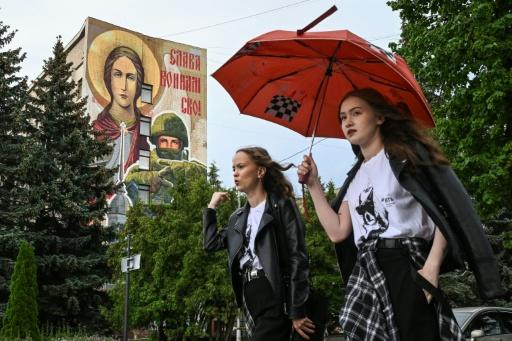
Mundo Rusia celebrará unas elecciones sin suspenso bajo la marca de la guerra en Ucrania
Rusia celebra esta semana unas elecciones legislativas fuertemente controladas que el Kremlin considera un barómetro de la opinión pública sobre la guerra con Ucrania, que...

Espanol "Widow's Bay" y "The Pitt" triunfan en los Emmy
La serie de terror "La maldición de Widow's Bay" y el drama hospitalario "The Pitt" se impusieron este lunes en la 78ª edición de los premios Emmy...
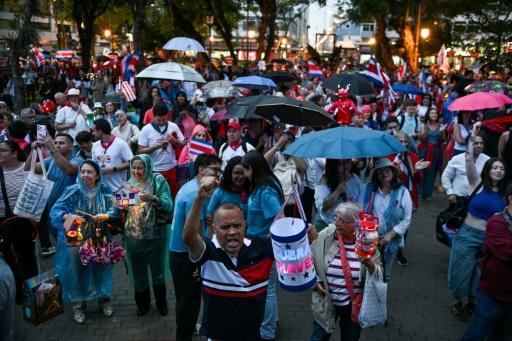
Mundo Protestan en Costa Rica por supuesta amenaza de la presidenta a la democracia
Miles de costarricenses protestaron el lunes contra una supuesta amenaza de la presidenta Laura Fernández al sistema democrático, uno de los más estables de Latinoamérica, debido...