


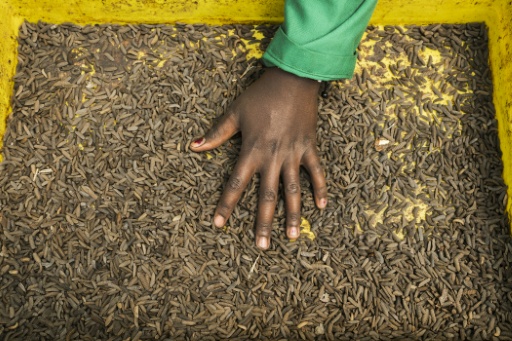
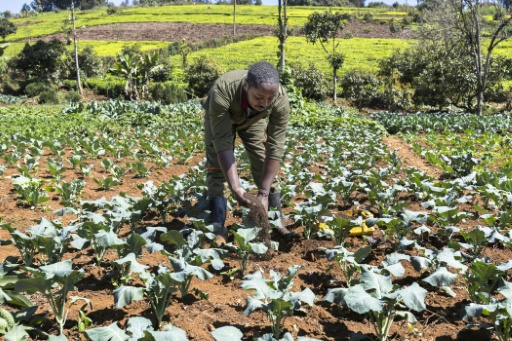
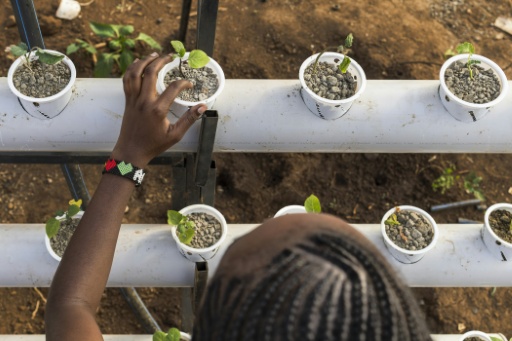
Kenyan farmer George Muturi says the stinky wooden shack teeming with redworms has helped rescue his land from the soil degradation caused by chemical fertilisers.
Agriculture is vital to east Africa's economy, but a 2025 soil report by the Heinrich Boll Foundation, a German think tank, found that more than 40 percent of the region's soils were degraded -- in part by overuse of chemical fertilisers -- costing more than $65 billion a year in lost productivity.
Fertiliser prices have also increased this year due to the war in the Middle East, driving a search for alternatives.
In Kenya, 32 percent of cropland was classified as strongly acidic in the soil report. Changing climatic conditions and overly intensive farming practices are among the causes, but Muturi says moving away from chemical fertilisers has boosted his harvests at his farm in Lari, about 50 kilometres (30 miles) from the capital, Nairobi.
He switched to "vermicompost" -- using redworms that turn food and crop waste into a natural, nutrient-rich form of fertiliser.
"Vermicomposting was a breakthrough for us... our soil is much better in a way that we can be able to plant and sustain the crop even during dry season," the 31-year-old farmer told AFP during a visit to his farm.
About 70 beds, each filled with at least 5,000 redworms, hold layers of food and crop waste mixed with cow dung that the worms break down over six weeks, to create vermicompost.
Multiple studies have shown that vermicompost can improve soil structure, organic matter and water retention.
Muturi acknowledges that it is some way off being used on an industrial scale, since very large quantities are needed to match the effects of synthetic fertilisers.
But he says he has seen positive results on his vegetables and has started selling the compost to other farmers around the country.
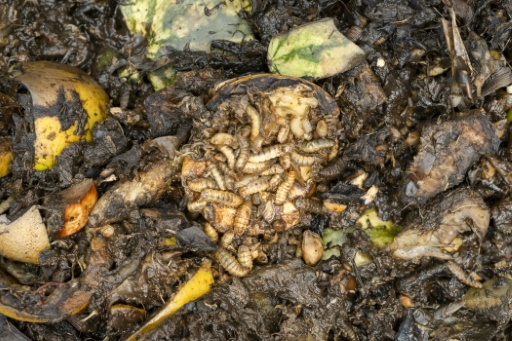
About 200 kilometres away in Nakuru County, Robert Mwangi has taken a similar approach with the larvae of black soldier flies.
He collects waste from the city's main market and feeds it to the larvae, which break it down into frass, an organic fertiliser. The mature larvae are dried and used as animal feed.
In a nylon structure, a pungent smell hangs over drums of shredded food waste, which are emptied into plastic boxes where the larvae feed for about two weeks before the frass is harvested.
"With conventional fertilisers, the more you use it, the more the productivity of the soil goes down, because (it) creates an acidic environment which is not good for the microbes that are responsible for maintaining and improving the soil fertility," Mwangi said.
"The organic fertiliser is a very good soil amendment so farmers are able to experience increased productivity over time and improved soil fertility which reduces their cost of production," he said, adding that it also helps deal with food waste.
As global and domestic demand for organic food grows, Kenyan farmers are seeking alternatives to chemical fertilisers.
Mwangi processes about 10 tonnes of food waste per week, selling the resulting compost to farmers across the country.
"The demand has overwhelmed what we can produce," Mwangi said.
Latest stories

Mundo Ucrania recibe a sus aliados europeos en contexto de intensos ataques
Ucrania celebra este lunes una reunión de sus principales aliados europeos, a quienes reclama los equipos de defensa antiaérea que necesita con urgencia, así como mayor presión sobre Rusia, en momentos que los ataques...

Montevideo Nueva Zelanda estudia prohibir el acceso de los menores de 16 años a las redes sociales
El gobierno de Nueva Zelanda presentó el lunes un proyecto de ley para prohibir el acceso de los menores de 16 años a las redes sociales, siguiendo el ejemplo de otros países que buscan restringir el uso de plataformas como...

Montevideo El gigante del comercio digital Shein busca recaudar 1.700 millones de dólares con su salida a bolsa
La cadena digital de moda ultrarrápida Shein tendrá su debut en la Bolsa de Hong Kong el 1 de septiembre, con la expectativa de recaudar 1.700 millones de...