


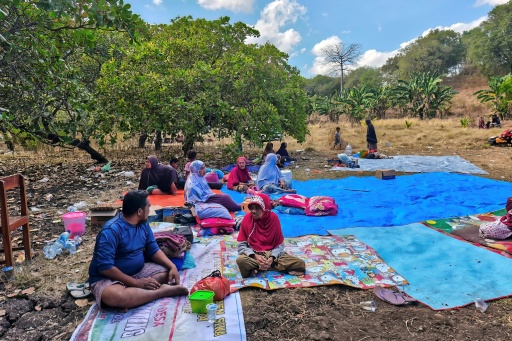
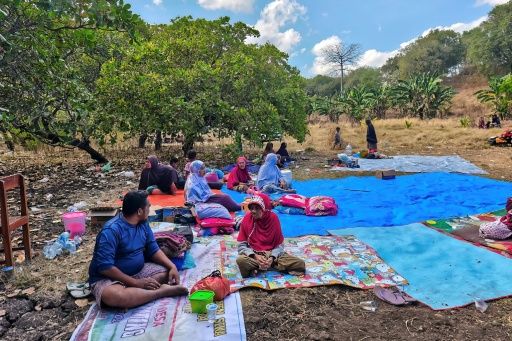
Help could not come soon enough on Sunday for thousands of evacuees on Indonesia's Flores island after a powerful earthquake killed 53 people, injured dozens and damaged hundreds of houses and buildings.
Some 5,000 people fled their homes as the 7.7-magnitude quake hit the island early Saturday, followed by nearly 1,000 aftershocks of varying intensities in the hours that followed, officials said.
People in some areas were left without electricity and telecommunications and at least one emergency access road remained inaccessible.
"We need food, drink, medicines and diapers for the children," Umri, a resident of Nangahale village on the north coast of Flores, told AFP on Sunday morning.
The 55-year-old, who like many Indonesians uses one name, has been hiding out on a hilltop for 24 hours with others afraid to return home.
At Kisol village a few hours away, Bertolomeus Tiga, 42, told AFP his house was one of several collapsed by the quake that also brought down part of the local church.
"The police came yesterday and collected all the data, but there's no aid yet. The most important thing is probably staple foods. Food and drink... medicine," he said.
Bertolomeus said villagers were afraid to return to compromised homes and buildings.
"For the time being, we're still taking refuge outside. We're still living outside."
The head of Indonesia's BNPB national disaster agency, Suharyanto, said at least five helicopters, several planes, a naval vessel and search and rescue ships were on their way to help.
The agency upped the death toll late Sunday to 53 from 47 the day before, with 135 people injured.
There were no reports of missing persons.
Survivors were in urgent need of assistance in the form of emergency tents, food, medicines, blankets, camp beds, mats, clean water and electricity generators, according to rescue officials.
The epicentre of the shallow quake was located just off the north coast of the island, geological authorities said.
The affected areas have few, if any, high-rise buildings.
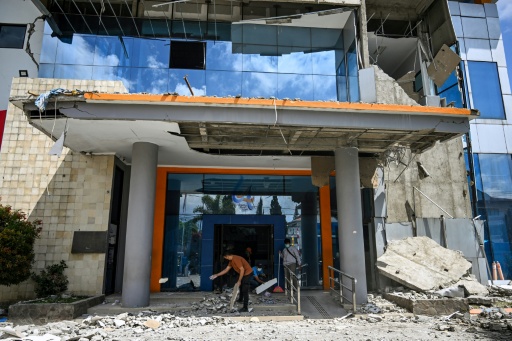
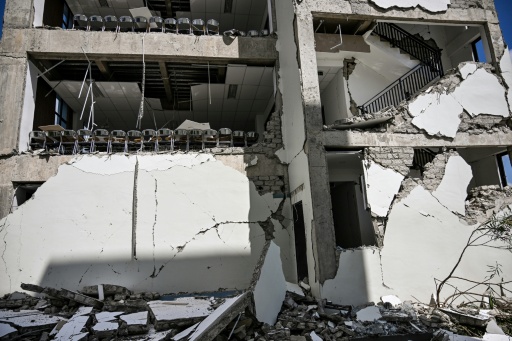
BNPB spokesman Berton Suar Pelita Panjaitan said at least 914 houses on the island were severely damaged and hundreds of others to a lesser degree.
Dozens of public buildings were also affected, including 93 educational and 36 health facilities and 38 government offices.
The International Federation of Red Cross and Red Crescent Societies said Saturday preparations were under way to bring aid to thousands in temporary shelters.
The government sent 50,000 aid packages weighing a total of 275 tonnes to the area, and European Union chief Ursula von der Leyen offered help from the bloc's Copernicus Earth observation satellites.
In Ruteng, a town about 200 kilometres (124 miles) from the worst-hit part of the island, AFP saw heavy machinery clearing rubble from the street on Sunday.
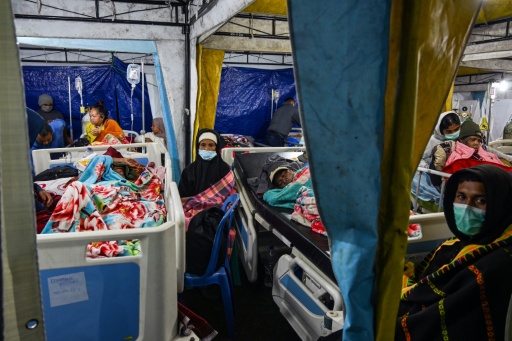
The local hospital had been badly damaged, and patients were evacuated to tents erected outside.
A woman underwent an emergency C-section in an intact storage room converted into a temporary operating theatre, hospital spokeswoman Yohana Raisita Damalia Mari said.
"Thank God, the surgery went smoothly and both the patient and her baby are safe," she said.
Herybertus Geradus Laju Nabit, mayor of the Manggarai regency, told AFP it was impossible to predict when the aftershocks would end.
"Therefore, our first appeal is: be vigilant. Stay alert," he said.
After Saturday's quake, Flores residents ran for the hills as the sea retreated, a possible sign of an approaching tsunami.
A tsunami warning was later lifted, but authorities urged people not to return to damaged buildings for fear that aftershocks may bring them down.
Waves of up to 1.6 metres (5.2 feet) were reported in some coastal regions, according to Indonesia's BMKG geological agency.
Indonesia experiences frequent earthquakes due to its location in the Pacific "Ring of Fire", an arc of intense seismic activity stretching from Japan through Southeast Asia and across the Pacific basin.
Flores was struck by a 7.7-magnitude earthquake in 1992 that triggered a tsunami and killed about 2,500 people.
A devastating 9.1-magnitude tremor in 2004 struck off the coast of Sumatra and triggered a tsunami that killed 220,000 throughout the region, about 170,000 of them in Indonesia.
It was one of the deadliest natural disasters in recorded history.
Latest stories
Mundo Europa se debate con los incendios, que castigan con dureza a Bélgica
Europa vive este domingo otra jornada difícil con importantes despliegues en España, un gran incendio en una zona de difícil acceso en Bélgica y evacuaciones en...
Mundo Miles de damnificados aguardan ayuda tras el terremoto de Indonesia
Miles de evacuados aguardan ayuda el domingo en la isla de Flores, en el este de Indonesia, tras un potente terremoto que mató a 53 personas, hirió a decenas y...

Mundo Al menos 12 muertos en ataques cruzados entre Ucrania y Rusia
Los ataques entre Ucrania y Rusia la madrugada del domingo dejaron al menos 12 muertos, en plena ofensiva cruzada con drones y misiles, que golpearon infraestructuras civiles...