


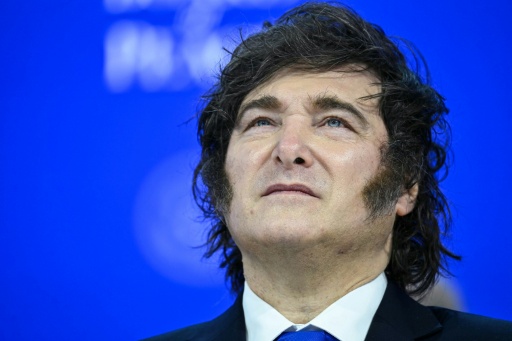
Argentine President Javier Milei on Thursday imposed a bar on foreigners who express "hate" toward the Latin American country, which he claims is the target of a sinister campaign.
Experts have cast doubt on the legal feasibility of the emergency decree, which is already in force but requires parliamentary approval to remain law.
The measure bars or expels foreigners deemed to have "spread or incited hate messages" against the country or its people.
In a statement, Milei said the measure was in response to "recent displays of hostility against the Argentine republic and Argentines."
The ultraliberal leader appeared to be referring to public reactions to Argentina's recent World Cup final loss against Spain.
The decree follows his claims on Sunday that leftist administrations elsewhere in the Americas were leading an "anti-Argentine campaign."
It states that it does not impinge on constitutionally protected rights to express political, academic or ideological disagreements.
A parliamentary committee will review the urgency of the measure, which will then be examined by both deputies and senators and will only be thrown out if rejected by both chambers.
Lucia Galoppo, an international law specialist at the Center for Legal and Social Studies (CELS), said the measure "leaves too many grey areas."
"It does not specify what constitutes hate speech, how it will be defined, on what criteria, or how those who produce such speech will be identified," she told AFP.
It also runs counter to a long history of immigration in Argentina, which has one of the world's most lenient constitutions in this regard, according to sociologist Ivan Schuliaquer.
"Argentine history is very rich in the sense of being a country that has historically received immigrants from everywhere," he told AFP.
"We are not anti-immigrant," said Schuliaquer, who believes Milei "is taking advantage of a climate in society to capitalize on something that, generally speaking, has not been part of his political project."
The president appears to be hurting over Argentina's World Cup loss and events that followed the football final.
On Sunday, he lashed out at Brazil, Mexico and the US Democratic Party over what he claimed was an "anti-Argentine campaign" -- apparently in reference to widespread criticism of the national team's performance in the last match.
Global football body FIFA is investigating the behavior of several Argentina players in the loss, including alleged assault and unsporting behavior.
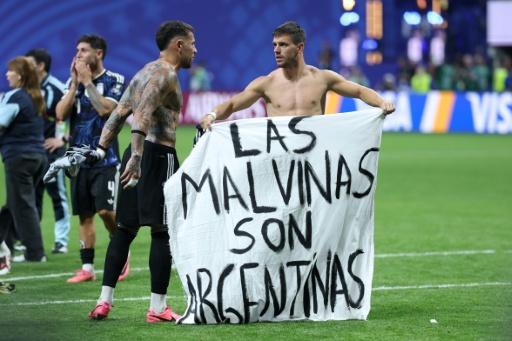
FIFA will also investigate an incident following Argentina's 2-1 semi-final victory over England in which players held up a banner that read: "Las Malvinas son Argentinas" (The Falklands are Argentine).
Latest stories
Montevideo La Concacaf rechaza el proyecto de la FIFA de apertura a inversores privados
Las 41 asociaciones miembro de la Concacaf rechazaron este jueves de forma unánime el proyecto de la FIFA de vender una participación en las operaciones...

Mundo Dictan 15 años de prisión al padre de adolescente que mató a cuatro personas en EEUU
El padre de un adolescente que mató a tiros a cuatro personas en una escuela de Estados Unidos fue condenado este jueves a 15 años de prisión, un caso poco frecuente de una persona declarada...

Montevideo Rusia incluye al fundador de Telegram, Pavel Durov, en lista negra de "terroristas"
Rusia incluyó este jueves al fundador de Telegram, Pavel Durov, en una lista de "terroristas y extremistas", días después de anunciar que emitió una orden de búsqueda internacional y acusarlo de permitir que los...