


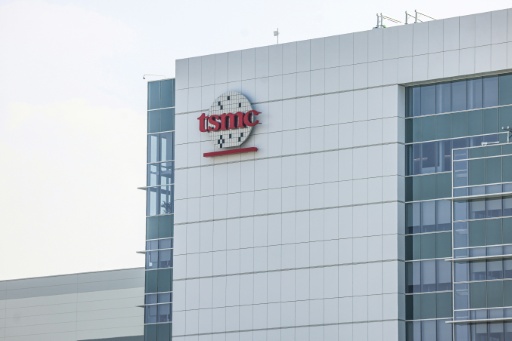
Taiwanese chipmaker TSMC will invest an additional $100 billion in the US state of Arizona, the company said Thursday, as it reported a record quarterly net profit on the back of massive demand for AI hardware.
TSMC, the biggest contract maker of microchips used in everything from Apple phones to Nvidia processors, has been a major beneficiary of the global AI race.
Governments and tech giants are pouring huge sums into building data centres that can train and run AI tools such as chatbots, image generators and agents that can execute tasks.
This has turbocharged business for chipmakers such as TSMC, creating shortages and sending prices soaring.
"The AI megatrend continues to drive the need for more and more computation," chairman CC Wei told an earnings call.
"We now expect our full-year 2026 revenue growth to be slightly above 40 percent year-over-year in US dollar terms."
TSMC's net profit for April to June surged 77.4 percent year-on-year to NT$706.6 billion (US$22 billion), smashing analyst estimates of NT$624.4 billion.
The result also beat its previous quarterly record of NT$572.48 billion in the first three months of 2026.
Quarterly revenue rose 36 percent to NT$1.3 trillion.
TSMC will spend an additional $100 billion building "four or more" fabs in Arizona, taking the company's total investment plans in the United States to $265 billion.
"This is to build several or more semiconductor logic wafer fabs for 2-nanometer and below technologies as well as advanced packaging fabs," Wei said.
Chief financial officer Wendell Huang said TSMC will increase its 2026 capital expenditure budget to between $60 and $64 billion "as we continue to invest heavily to support our customers' growth".
Ahead of the results, Counterpoint Research senior analyst William Li said TSMC's surge in revenue showed "AI infrastructure investment remains exceptionally strong despite macro uncertainty."
"Demand for AI GPUs, AI ASICs and advanced packaging continues to exceed expectations," Li told AFP.
Li said: "EUV (extreme ultra-violet lithography tools) supply constraints and overseas fab investments may limit capacity expansion and weigh on margins in the near term."
Concerns about overstretched valuations in the tech sector have fuelled fears of a market bubble, along with questions over when the eye-watering sums being spent on AI will reap returns.
But Omdia principal analyst Simon Chen said those fears were "overstated".
"The demand we see is structural, backed by massive, tangible capital expenditures from hyperscalers," Chen said.
amj/fox
© Agence France-Presse
Latest stories
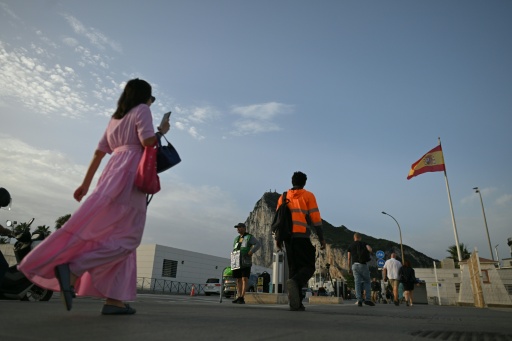
Mundo Primer día de cruces sin controles fronterizos entre España y Gibraltar
Un flujo constante de peatones y vehículos cruzaba el miércoles la frontera entre España y el pequeño enclave británico de Gibraltar, tras la entrada en vigor a medianoche del acuerdo que permite la libre circulación...

Mundo Siria detiene a un excoronel especialista en armas químicas durante el gobierno de Asad
Siria anunció este miércoles la detención de un exoficial, especialista en armas químicas, a quien acusa de haber supervisado la fabricación de bombas de gas sarín utilizadas contra civiles bajo...
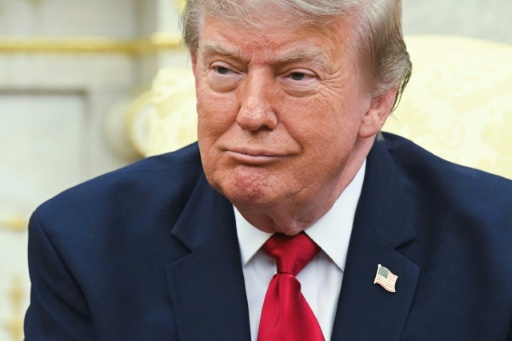
Mundo Trump dice que la policía migratoria debe continuar con los controles en carretera
La policía migratoria estadounidense (ICE) debe continuar con sus controles en carretera para luchar contra la inmigración ilegal, afirmó este miércoles el presidente Donald Trump, luego de la suspensión de esa...