
MSF Ebola training in Kenya prepares doctors for 'intense' job


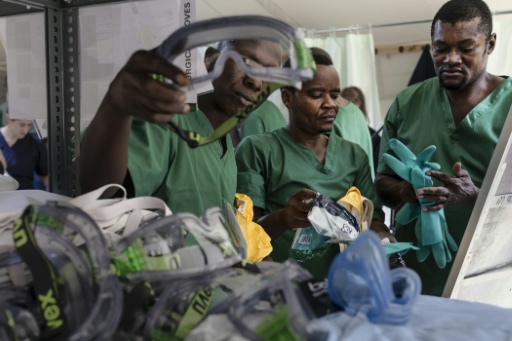
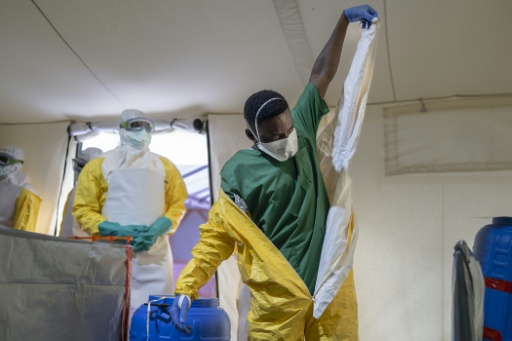
An Ebola training facility set up by Doctors Without Borders in Kenya is a chance for health workers to prepare for one of the most complex emergencies they are ever likely to face.
The outbreak in Democratic Republic of Congo (DRC) is the fastest growing ever, according to African health officials, and has claimed at least 600 lives since it was declared in mid-May.
It is happening in a region plagued by extreme poverty and multiple armed groups, while misinformation about the disease has led some locals to avoid treatment, ignore safeguards, and even attack health workers.
Health workers make up 112 of the 1,759 confirmed cases in DRC, and 35 have died.
To help prepare for this extremely challenging environment, global charity Doctors Without Borders (known by its French acronym MSF) has set up a training centre on the outskirts of Nairobi.
Equipped with beds, mannequins, a mock laboratory, and protective gear, the simulation centre prepares doctors, nurses, and clinicians for deployments in DRC, or from regional countries at risk from the spreading disease.
"Often, you come from a hospital and a university, you have knowledge and you think you can handle it," said one of the trainees, Cisse Papa Ndiaga, 43, an MSF community health worker from Senegal, soon to be deployed in DRC.
"But once you're in PPE (personal protective equipment), it's a different story," he said.
- Community engagement -
Trainees learn how to deal with the community -- who are often scared by the sudden influx of health workers in full protective gear -- as well as how to conduct safe funerals, and prevent the stigmatisation of those who have recovered.
"We need to put more attention on the acceptance of these centres in the communities -- it's something so bizarre for a community to see people dress the way that we're dressed," said Diana Corben, 37, a doctor with MSF's mission in Central African Republic.
"One of the key things is to be able to get the communities to engage, to understand. But also to make sure that we have empathy and we... take the time to sensitise them," she added.
It is also about knowing your own limits, said Corben.
"We need to be very much aware of how much we can tolerate... what we're going to be put through," she said.
"This is a simulation... the reality is going to be that much more intense."
The centre began training in mid-June, and is running through to August and perhaps beyond, training around 100 people per month.
Most have been MSF staff so far, but the centre will also train Kenyan Ministry of Health officials and staff from other NGOs.
Ndiaga said he was somewhat more confident about his imminent deployment after the training.
"I'm not sure I'm ready... but I'm less scared," he said.
jcp/er/
© Agence France-Presse
Latest stories
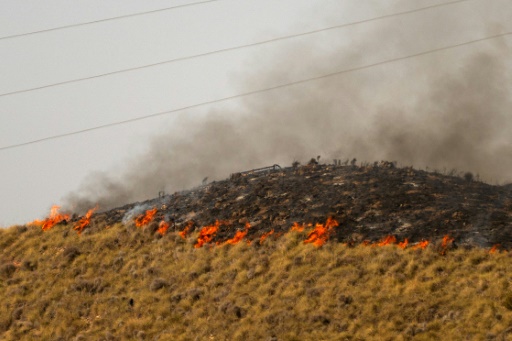
Mundo El incendio del sur de España presenta evolución "favorable" tras quemar 6.600 hectáreas
El mortífero incendio que arde desde el jueves en el sur de España, y que dejó al menos 12 fallecidos en la provincia de Almería, arrasó 6.600 hectáreas pero tuvo una evolución nocturna "favorable", según indicó el responsable regional de...
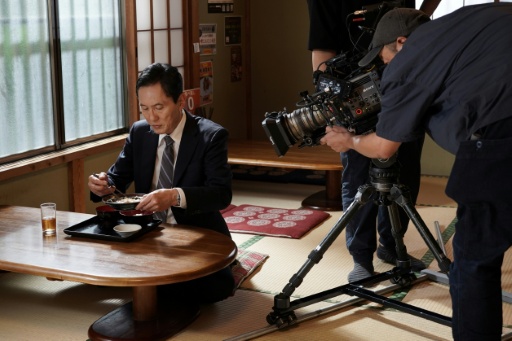
Mundo "El gourmet solitario", una oda japonesa a los pequeños restaurantes que trasciende fronteras
Un empresario entra en un restaurante y disfruta en soledad de su comida. Este concepto, aparentemente minimalista, ha conquistado a millones de espectadores con la serie japonesa "El gourmet solitario", que combina el descubrimiento...
Mundo Con miles de evacuaciones, Taiwán se atrinchera ante la llegada del tifón Bavi
Más de 14.000 personas fueron evacuadas de sus hogares en Taiwán y muchos comercios cerraron sus puertas ante la llegada este sábado del tifón Bavi, que...