


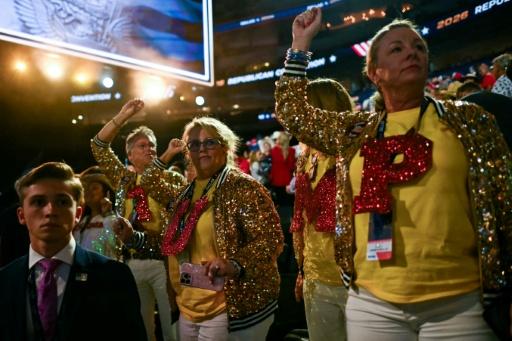
Republicans gathered in Dallas this week to rally behind President Donald Trump ahead of November's US midterms -- even as an unavoidable conundrum loomed beyond the election: who inherits the movement when he is gone?
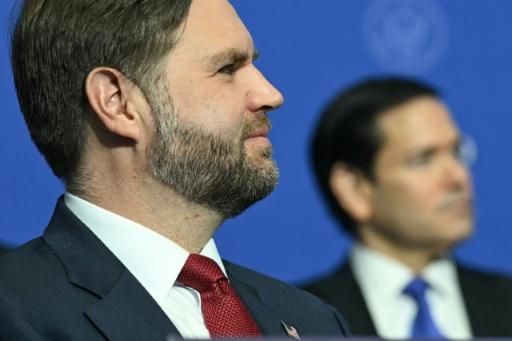
In the halls and corridors of the downtown convention center, that question repeatedly produced the same two names: Vice President JD Vance and Secretary of State Marco Rubio, the leading contenders to carry the party into its post-Trump era.
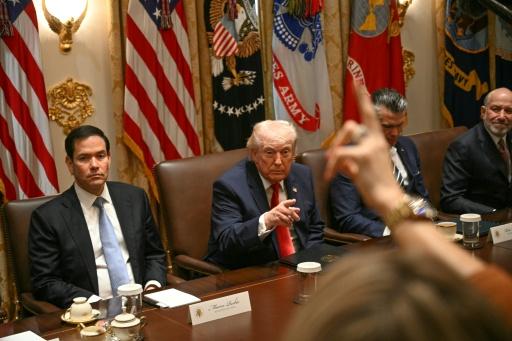
Trump, 80, remains the Republican Party's dominant figure and has not endorsed a successor.
But the US Constitution bars him from seeking a third elected term, and the looming midterms are already being viewed as an important test of which potential heirs can best defend his record -- and which parts of his political movement survive him.
"I think it's going to be between Rubio and Vance," said Susan Kokinda, 77, a conservative podcaster from Michigan.
"Or maybe the two of them will just team up and flip a coin and decide who's first."
Vance appears to hold the early advantage.
A Focal Data/Financial Times poll in August put him on 42 percent among Republicans, well ahead of Rubio on 18 percent, while other surveys have shown the two much closer.
Trump himself has publicly encouraged speculation, calling a Vance-Rubio ticket a potential "dream team" while stopping short of backing either man.
Vance's supporters see him as the more natural ideological heir: younger -- he is just 42 -- closely tied to the MAGA grassroots and steeped in the economic nationalism that has reshaped Republican thinking on trade, immigration and working-class politics.
"He's the closest to the president," Tom Hoffman Jr, 62, a New York businessman attending the convention, told AFP.
"I think he's been a great running mate and he's been a great vice president so far, and I think he's earned it."
Rubio offers a different proposition.
The former US senator from Florida has built a profile as one of Trump's most prominent foreign-policy lieutenants and is viewed by supporters as a more experienced and polished political performer.
Kyle Hermann, a 29-year-old teacher from California, praised Rubio's "charm and his wit" and said he hoped both men could emerge from any primary battle without damaging each other.
"I think the eyes of the world are pretty much on Vance and Rubio," Hermann told AFP. "I don't even necessarily want one of them to lose."
But Rubio, 55, has repeatedly played down speculation about another presidential run, and the field is not necessarily limited to two.
Senator Ted Cruz, who ran against Trump in 2016, has been making increasingly conspicuous moves toward another presidential bid, including repeated trips to Iowa and outreach to potential supporters.
Cruz recently insisted that Republicans had not coalesced around Vance and said he would be "part of the discussion" over the party's future.
Defense Secretary Pete Hegseth has also been floated as a possible contender, although he has described reports that he is considering a run as "100 percent false."
Florida Governor Ron DeSantis, Donald Trump Jr and others remain in the wider conversation.
What makes the succession question unusually complicated is that Republican voters are not simply choosing a candidate; they will eventually have to decide which version of Trumpism they want to preserve.
For some delegates, however, neither leading contender could fully replace Trump.
"They can't fulfill what Trump started," said Angie Fisher, 54, an appliance-store buyer from South Carolina.
Vance, who delivers the keynote at the Republican convention's closing night Thursday, is closely associated with the party's nationalist-populist wing, while Rubio is generally regarded as more conventional on foreign policy and international alliances.
The war with Iran, tariffs and Trump's broader approach to intervention abroad have already exposed tensions within the coalition.
Those disagreements could become sharper if Republicans perform badly in November, when Trump's approval ratings and voter frustration over living costs threaten the party's congressional majorities.
For all the successsion talk, some activists in Dallas were not ready to give up on Trump -- and said they'd back him again in 2028 if he were allowed a third elected term.
"Unfortunately, I wish that he could, but I don't think that can happen," said Rosie Swanson, 72, a retired Dallas resident.
"If he did, I'd vote for him."
Latest stories

Topthemen Ukraine meldet mindestens fünf Tote bei russischem Angriff auf Einkaufszentrum
Bei einem russischen Angriff auf ein Einkaufszentrum in der ostukrainischen Stadt Pawlohrad sind nach Regierungsangaben mindestens fünf Menschen getötet worden. Weitere 67 Menschen seien verletzt worden, erklärte Regionalgouverneur Oleksandr Hanja am Donnerstagabend. Bei dem Angriff...
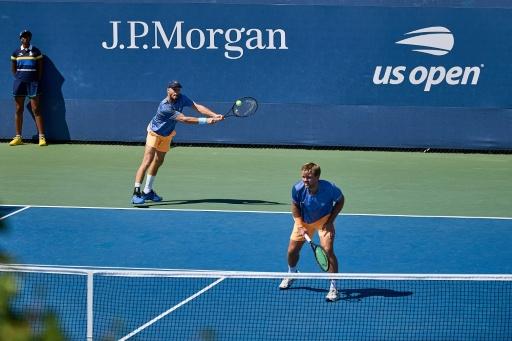
Sports Krawietz/Pütz im US-Open-Finale
Kevin Krawietz und Tim Pütz greifen bei den US Open nach ihrem ersten gemeinsamen Grand-Slam-Titel. Das deutsche Davis-Cup-Doppel gewann auch sein Halbfinale gegen Rajeev Ram (USA) und Joe Salisbury (Großbritannien) mit 6:3, 6:4 und zog zum zweiten Mal ins Finale von New York ein. 2024 hatten...
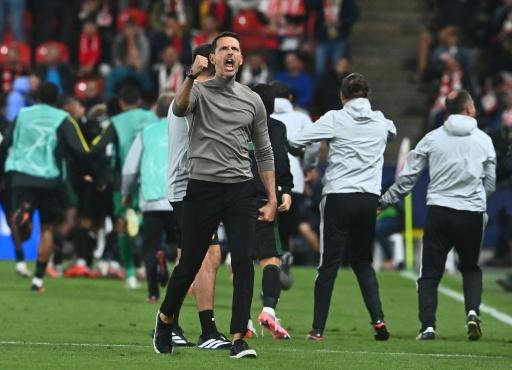
Sports 3:2 nach 1:2: Toppmöllers Lens dreht Spiel in der Nachspielzeit
Trainer Dino Toppmöller hat bei seinem Champions-League-Debüt mit dem RC Lens eine Achterbahnfahrt der Gefühle durchlebt. Beim Underdog Slavia Prag drehte der französische Pokalsieger am ersten Spieltag der Königsklasse einen 1:2-Rückstand in der Nachspielzeit noch in ein 3:2 (0:0). Dabei sah lange Zeit alles nach einer Blamage...