


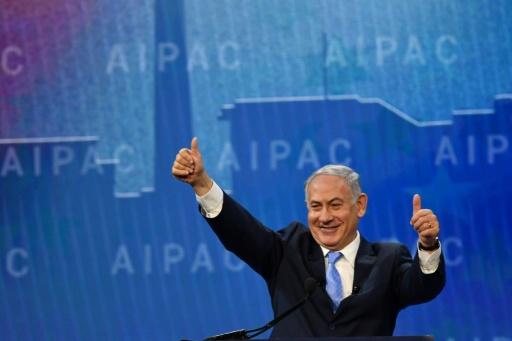
The most powerful pro-Israel lobby in the United States is spending more than any other outside group on the 2026 midterms -- even as its once-coveted backing becomes an increasingly potent weapon for political opponents.
The American Israel Public Affairs Committee (AIPAC) has poured tens of millions of dollars into races nationwide through its main election-spending vehicle, the United Democracy Project (UDP).
The so-called "super PAC" -- a group allowed to lavish unlimited sums to influence elections, provided it operates independently of candidates -- has spent $54 million on congressional races, according to campaign finance monitor OpenSecrets.
That has made it the single largest outside spender of the cycle, OpenSecrets said, while the wider pro-Israel donor network spent $71 million -- placing it second only to the cryptocurrency industry.
The extraordinary financial firepower underscores AIPAC's continued influence in Washington -- but also a growing backlash over US policy toward Israel and the role of wealthy interest groups in American elections.
AIPAC has concentrated much of its spending on Democratic primaries, supporting candidates strongly committed to Israel and trying to defeat critics of unconditional US military aid.
It didn't respond to a request for comment, but it has rejected suggestions that its influence is collapsing, saying hundreds of candidates it backed have won their primaries.
Its money has indeed delivered victories this year, but also some expensive failures.
In Michigan, AIPAC and allied groups spent around $30 million in an unsuccessful effort to prevent progressive former health official Abdul El-Sayed from winning the Democratic Senate nomination over establishment-backed Congresswoman Haley Stevens.
Progressives have also defeated candidates supported by AIPAC-linked money in congressional contests in California, Illinois and New York, often turning the group's spending itself into a campaign issue.
Eli Clifton, of US foreign policy think tank the Quincy Institute, said UDP was the biggest spender in Michigan, although 97 percent of its large contributions came from outside the state -- and its biggest donors are Republican billionaires.
"This is a special interest that participates outside of the partisan framework, and it's really all about advancing the interests of a foreign country," he told AFP.
Unease over the group is no longer confined to Democrats.
Allies of Mike Rogers, the Republican Senate nominee in Michigan, recently asked AIPAC not to run advertisements publicly on his behalf, US media reported, fearing its overt involvement would benefit El-Sayed in the Arab-American heartland.
The discomfort reflects a broader transformation in US attitudes toward Israel following years of war in Gaza and widening conflict across the Middle East.
A June Quinnipiac University poll found 48 percent of American voters believed Washington was too supportive of Israel, including 66 percent of Democrats -- the highest overall figure in nine years of the survey.
The change has been clearest on the Democratic left, where candidates increasingly portray AIPAC as too closely aligned with Israeli Prime Minister Benjamin Netanyahu and emblematic of big-money interests overwhelming ordinary voters.
But criticism has spread to the populist right, where some "America First" conservatives have attacked Washington's support for Israel and blamed pro-Israel lobbying for drawing the United States deeper into foreign conflicts.
AIPAC's financial strength, meanwhile, continues to grow. OpenSecrets says the organization itself has contributed $30 million to UDP.
And its political power remains formidable, with US military aid to Israel continuing to attract broad support in Congress.
But the primaries have demonstrated that record spending cannot guarantee victory -- and a once-prized endorsement can now, in some races, be something candidates would rather their opponents talked less about.
"That's precisely why they never mention US foreign policy and Israel in their ads," Casey Kennedy, co-founder of the Track AIPAC advocacy platform, told AFP.
"AIPAC knows AIPAC is toxic, and the more they spend, the more toxic they become with voters across the political spectrum."
Latest stories
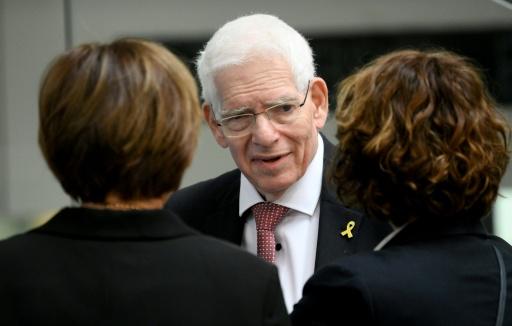
Topthemen Zentralratschef Schuster warnt eindringlich vor AfD-Wahlsieg in Sachsen-Anhalt
Der Präsident des Zentralrats der Juden in Deutschland, Josef Schuster, hat mit Blick auf die bevorstehende Landtagswahl in Sachsen-Anhalt eindringlich vor der AfD gewarnt. Der dortige Urnengang am 6. September werde "für das demokratische Zentrum unseres Landes zur Bewährungsprobe", sagte Schuster dem RedaktionsNetzwerk Deutschland (RND). AfD-Politiker wie der dortige Spitzenkandidat Ulrich Siegmund...

Topthemen Peking: Hohes Risiko für neue Überflutungen in Grenzgebiet zwischen Tibet und Nepal
Nach der verheerenden Sturzflut im nepalesisch-chinesischen Grenzgebiet sehen die chinesischen Behörden ein "hohes Risiko" für erneute Überflutungen. Der See, der sich durch die Sturzflut gebildet habe, könne angesichts anhaltenden Regens in den kommenden drei Tagen auf ein Volumen von rund drei Millionen Kubikmeter anwachsen, berichtete die amtliche Nachrichtenagentur Xinhua in...
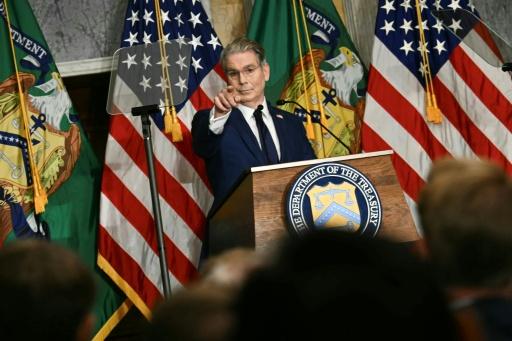
Topthemen US-Finanzminister will G20-Vorsitz für Durchsetzung von Sanktionen gegen Iran nutzen
US-Finanzminister Scott Bessent will die wirtschaftliche Isolation des Iran kommende Woche als Gastgeber bei Beratungen der führenden Industrie- und Schwellenländer (G20) vorantreiben. Wie ein Vertreter von Bessents Ministerium am Donnerstag vor Journalisten sagte, will die US-Seite bei dem Treffen der G20-Finanzminister und -Zentralbankchefs am Montag und Dienstag im Bundesstaat North Carolina...