


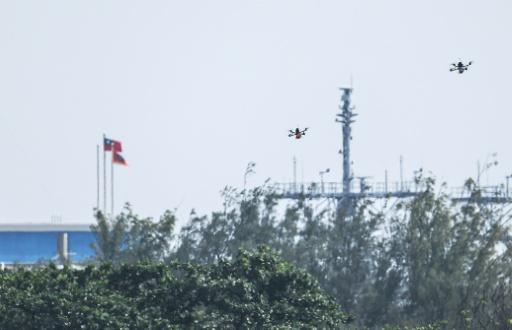
Lawmakers in Taiwan approved a $7.6 billion budget for locally made drones on Thursday as the island democracy seeks to strengthen its defences against a potential Chinese attack.
Taiwan has ramped up military spending in recent years and is building up its defence industry to make more equipment and ammunition on the island, which China claims is part of its territory and has threatened to seize by force.
A spending proposal backed by the opposition parties -- Kuomintang (KMT) and Taiwan People's Party (TPP) -- cleared the parliament after a plan submitted by President Lai Ching-te's government was rejected.
Lai's government wants Taiwan to be able to produce enough drones on its own to repel a potential attack from China.
But the government has repeatedly clashed with the opposition, which hold the most seats in parliament, over how much to spend on improving the island's defences and how it should be funded.
Lai's government wanted to allocate up to NT$210 billion ($6.6 billion) in a special budget for Taiwan-made unmanned vehicles, including coastal surveillance, attack and surface drones.
The spending would have been spread out over more than five years and overseen by the defence ministry.
The KMT, which favours closer ties with China, and the TPP instead backed a proposal for NT$240 billion in spending over six years that would be included in the annual budget.
"As we promote the development of the drone industry, we must genuinely encourage localisation and domestic production," KMT lawmaker Hsu Chiao-hsin said ahead of the vote.
"We need to support reputable manufacturers that can deliver non-red (non-Chinese) supply chains, ensure a certain level of cybersecurity and maintain stable growth."
The government has already finalised its 2027 general budget.
The 2026 annual general budget was passed by lawmakers this month after a record delay.
Taiwan "urgently needs to build up drone and counter-drone capabilities" to respond to China's grey-zone activities -- coercive actions that fall short of an act of war -- as well as potential military threats, Vice President Hsiao Bi-khim told the government-funded Central News Agency in an interview published Wednesday.
"We must not allow the regime in Beijing to miscalculate Taiwan's determination to defend itself," Hsiao said.
Taiwan remains heavily reliant on US arms sales to deter China and is under pressure from Washington to cough up more for its own security.
The war in Ukraine has shown Taiwan how smaller and more nimble weaponry, including drones, can be critical in waging asymmetric warfare against a mightier military.
Lai's government has earmarked a record NT$1.1 trillion in defence spending for 2027, which accounts for more than three percent of GDP.
Latest stories
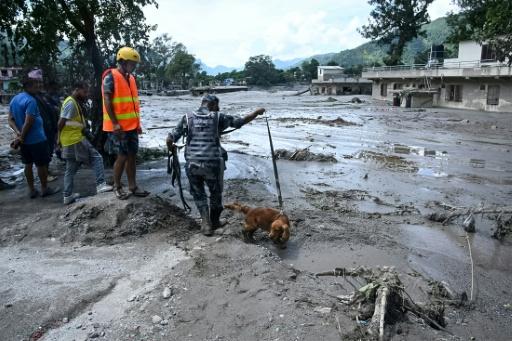
Topthemen Suche nach mehr als 1300 Vermissten nach Sturzflut am Himalaya - Acht Deutsche vermisst
Nach den verheerenden Sturzfluten im Himalaya suchen Rettungskräfte in Schlamm und Geröll nach mehr als 1300 Vermissten, darunter mindestens acht Deutsche und hunderte weitere Touristen aus aller Welt. Bis Donnerstag wurden mehr als 270 Tote geborgen, die weitaus meisten davon...
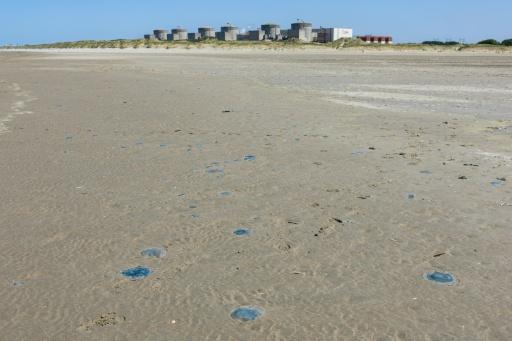
Wirtschaft Quallenplage in Frankreich führt erneut zu Atomreaktor-Abschaltung
Das größte Atomkraftwerk Europas im nordfranzösischen Gravelines ist erneut Opfer einer hitzebedingten Quallenplage: Ein erst vor einer Woche wieder hochgefahrener Atomreaktor wurde erneut vom Netz genommen, weil zahlreiche Quallen das Filtersystem zu verstopfen drohten, wie der Energiekonzern EDF am Donnerstag...
Deutschland ARD richtet anstelle von Generalsekretariat dauerhafte Geschäftsstelle ein
Im Zuge ihres Reformprozesses organisiert die ARD die Administration ihres Vorsitzes neu. Anstelle des bisherigen ARD-Generalsekretariats wird zum 1. Januar eine dauerhafte Geschäftsstelle in Berlin eingerichtet, wie der Senderverbund am Donnerstag in Berlin mitteilte. Der turnusmäßig zwischen den ARD-Anstalten wechselnde Vorsitz muss anders als bisher damit künftig nicht mehr das...