


UK Prime Minister Andy Burnham called for "reflection" Saturday after the death of Cambridge academic Jason Arday as his family denounced what they called years of harassment amid accusations of plagiarism.
Arday, 41, was found dead Friday, just over a week after he quit as a Cambridge University professor and Jesus College fellow after both institutions announced probes into various allegations that sparked racism claims.
In an overnight statement, his family said he had been "subjected to a campaign of sustained abuse for more than three years since he accepted the role of professor at Cambridge University".
Others highlighted that as a man diagnosed with autism when he was a boy, he had been vulnerable.
Arday, who became Cambridge's youngest black professor in 2023, had himself alleged a "racially motivated" campaign against him.
Speaking to reporters in southwest England, Burnham said it was "not a moment for any rushing to judgement".
"It's a tragedy on so many levels, but particularly just for everybody who knew Jason, his family obviously, his friends -- we think of them today," he said.
"It's a moment for reflection ... reflecting on how things came to this."
The scandal erupted last month after some academics and media reports accused Arday of plagiarising parts of his doctoral thesis and embellishing his life achievements.
The allegations have been seized on by British right-wing newspapers and commentators, who claimed he unfairly benefited from diversity, equality and inclusion (DEI) policies.
In a letter posted online when he resigned August 5, Arday said the move was "the only way" to end a "difficult period", but it should not be "mistaken for an acceptance of the narratives that have surrounded me".
Arday was discovered unresponsive on Friday afternoon at an address in south London, according to the capital's Metropolitan Police, which has not confirmed the identity of the deceased person.
However, within hours Cambridge University's top administrator, Vice-Chancellor Deborah Prentice, confirmed his death with a brief statement that said the prestigious British institution was "desperately saddened" by the "tragic news".
Police have said the death was "being treated as unexpected, but is not believed to be suspicious".
While the circumstances of Arday's death remain unclear, police are preparing a file for a coroner, who will make a formal determination on the cause at an inquest.
Simon Baron-Cohen, a Cambridge professor and director of the Autism Research Centre, told BBC radio that he spoke to Arday on Friday morning.
"He was being subjected to relentless scrutiny, including ridicule, discrediting absolutely every detail of his life," he said.
"He wasn't coping with the loss of his career, the loss of his reputation, and he felt he couldn't go on. He used those words in voice notes."
In their statement, his family alleged "the campaign of misinformation was too much for Jason, who was a gentle man and who always wanted to see the best in everyone".
The furore around him grew after Nathan Cofnas, a US academic and self-defined "race realist" -- whose Cambridge research affiliation ended in 2024 amid racism accusations -- published claims in July.
The allegations included that multiple sections of Arday's doctoral dissertation were copied from other works.
The Times, Guardian and Telegraph newspapers have published several investigative articles into Arday's academic work and personal life.
Some of his claims about his personal life, including that he once ran 30 marathons in 35 days and raised millions for charities, were also disputed.
Diagnosed with autism, Arday says he was non-verbal until age 11 and only learnt to read and write at 18, before becoming Cambridge's professor of sociology of education at 37.
In an interview with The Times earlier this month, Arday admitted making academic "mistakes" but said he was being wrongly "portrayed to be a liar and a fantasist and an academic fraud".
He noted that some errors in his early academic work were because of his autism, as he relied on using mimicry to understand information.
Baron-Cohen told the BBC: "At the heart of all of this was a man who'd been diagnosed in childhood with disabilities that included autism and language delay and learning differences.
"He was a vulnerable child, a vulnerable teenager, and a vulnerable adult, so he needed and deserved safeguarding and support."
Latest stories

Weltgeschehen Liechtenstein ändert seine Thronfolge: Frauen dürfen künftig Fürstin werden
In Liechtenstein dürfen künftig auch Frauen den Fürstenthron besteigen: Das Fürstenhaus des kleinen Alpenstaates zwischen Österreich und der Schweiz verkündete am Samstag eine Änderung seiner Thronfolgeregelung. Damit erbt künftig unabhängig vom Geschlecht das erstgeborene Kind...

Topthemen Flughafen auf Sizilien nach Ausbruch des Ätna wieder geöffnet
Nach einwöchiger Schließung wegen eines Ausbruchs des Vulkans Ätna ist der Flughafen von Catania auf Sizilien wieder geöffnet. Nachdem die vulkanische Aktivität zurückgegangen war, wurde der Flugbetrieb am frühen Samstagnachmittag wieder aufgenommen, wie die Flughafenbetreiber mitteilten. Tausende Urlauber hatten seit dem 8. August auf der italienischen Mittelmeerinsel festgesessen...
Topthemen Waldbrand im belgischen Hohen Venn breitet sich aus - Löscharbeiten in weiteren Ländern
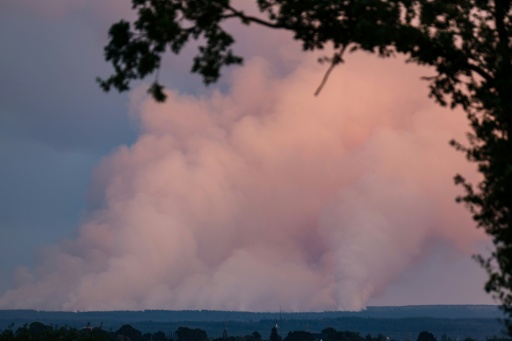
Im belgischen Naturschutzgebiet Hohes Venn nahe der deutschen Grenze breitet sich ein Waldbrand rasch aus. Die Flammen verwüsteten nach Behördenangaben bis zum frühen Samstagnachmittag mindestens 1600 Hektar Wald - rund 50 Kilometer entfernt vom Waldbrandgebiet in der deutschen Eifel bei Hürtgenwald. Die Löscharbeiten dauerten an...