


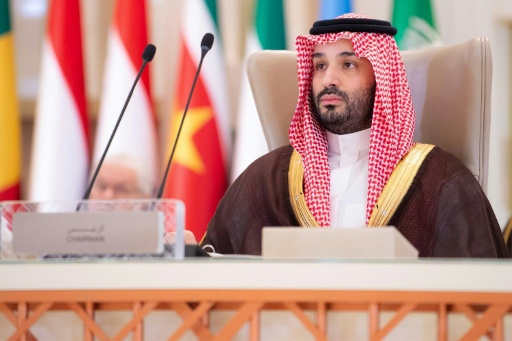
Saudi Arabia, Turkey and Pakistan signed a joint defence agreement on Friday amid violence in the region from Houthi attacks and the US-Iran war.
Riyadh is looking to strengthen its security ties against the backdrop of war between the United States and Iran, which has drawn in surrounding nations and disrupted shipping through the Strait of Hormuz and the Red Sea.
The war has emboldened Iran and its Houthi allies in Yemen, both of which have attacked Saudi Arabia, while analysts say Washington is now seen as an increasingly unreliable partner.
In a joint statement published by the official Saudi press agency and Pakistan's foreign ministry, the three countries announced the signing of the "Mecca Joint Defence Agreement".
They declared a "shared commitment to further strengthening their collective security and to promoting peace, security and stability in the region and beyond".
Pakistan's foreign ministry said the pact meant an attack on any member would be regarded as an attack on all, adding it was "intended to strengthen collective deterrence".
Ankara nonetheless said later that the agreement was "not aimed at any particular country", according to a post on X by the presidency's communications director.
Riyadh said "the agreement does not represent an effort to establish a military axis or a sectarian bloc".
"Nor is it linked to any nuclear ambitions or arms race, rather it is focused on building sustainable capabilities," Deputy Minister for Public Diplomacy Rayed Krimly said on X.
The "does not constitute a threat to the security of any country in the region", he added.
Since the onset of the regional war, Saudi Arabia has grown closer to Turkey, Egypt and Pakistan, which have been pushing for mediation and a resolution to the conflict.
Umar Karim, an expert on Saudi foreign policy at the University of Birmingham, England, said the alignment "is clearly oriented towards Iran and meant to address Iran's new strategic approach which is geared towards dominance of the broader Gulf region".
The fact that Turkey and Pakistan border Iran means they could "exercise a different kind of leverage" on Tehran, he added.
A source close to the Saudi military and government told AFP before the signing that although the agreement had been under discussion for a long time, "the latest developments in the region expedite it".
Andreas Krieg of King's College London said the deal showed a clear desire to diversify alliances beyond the United States.
"Saudi Arabia, Turkey and Pakistan are not trying to replace the United States," he said.
"They are building the capacity to protect their interests when Washington cannot or will not do so."
Riyadh, in particular, he added, "wants several layers of security rather than one American umbrella", after the shock of the Iran war.
The deal will support Saudi Arabia's ambitions to become an organiser of regional security and diversify its defence umbrella, said Krieg. Turkey and Pakistan gain political clout and access to potential Saudi investments, he added.
Turkish President Recep Tayyip Erdogan met Saudi Crown Prince Mohammed bin Salman in Mecca on Friday, the Turkish presidency said on X, sharing an image of the meeting.
Pakistani Prime Minister Shehbaz Sharif and army chief Asim Munir also travelled to the Gulf kingdom for the signing.
Saudi Arabia and Pakistan had already announced a mutual defence pact in 2025, a move that drew attention because Pakistan is the Muslim world's only nuclear-armed state.
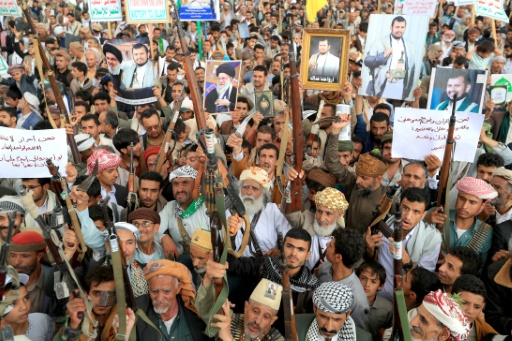
The deal also comes as a truce between Riyadh and the Houthi rebels in neighbouring Yemen has broken down, with the Houthis launching attacks on Saudi soil and declaring a maritime blockade against Saudi Arabia, which they have attempted to enforce by attacking Saudi tankers.
The Houthis, backed by Iran, have added pressure to Gulf energy exporters --- already under strain from Tehran's blockade of the Strait of Hormuz -- by threatening Red Sea shipping.
Saudi Arabia has led a military coalition backing Yemen's internationally recognised government against the Houthis since 2015.
A truce was agreed four years ago which largely held until hostilities broke out again in recent weeks.
On Thursday, the Houthis killed at least 58 Yemeni government troops in missile and drone attacks, a military source said, in one of the conflict's deadliest days in years.
Latest stories
Weltgeschehen Seltene Art: Entführter Kaiseradler zurück in der serbischen Wildnis
Nach mehreren Monaten in den Händen von Vogelschmugglern im Nahen Osten ist ein seltener Kaiseradler namens Feliks zurück in der serbischen Wildnis. Die Serbische Gesellschaft für Vogelschutz und -forschung teilte am Freitag mit, das Tier habe sich erholt und sei in dieser Woche freigelassen worden. Feliks hat...

Sports Schwimm-EM: Klippenspringerin Schmidbauer mit Medaillenhoffnung
Klippenspringerin Iris Schmidbauer kann bei der Schwimm-EM in Paris weiter von ihrer nächsten Medaille träumen. Die Titelverteidigerin, die sich 2022 zur ersten Europameisterin im High Diving gekrönt hatte, liegt nach den ersten beiden Sprüngen aus 20 Metern Höhe in die Seine mit 136,35 Punkten auf Platz vier...
Sports FC Bayern: "Positiver Eindruck" bei der Asientour
Der Start von Manuel Neuer in sein wohl letztes Jahr als Torwart des FC Bayern ist erfolgreich verlaufen. Der 40-Jährige kam mit dem deutschen Fußball-Rekordmeister zum Abschluss der Asienreise in Hongkong gegen Europa-League-Sieger Aston Villa...