





Stepping into the newly renovated Vilnius airport, visitors are greeted with a slew of billboards advertising products "Made in Lithuania", including cybersecurity giant NordVPN.
Rather than focusing on heritage or artisanal craftsmanship promoted in similar campaigns in Italy or France, Lithuania and its Baltic neighbours Estonia and Latvia are highlighting they are home to innovation.
The three countries have a growing number of startups recognised worldwide, such as online reselling platform Vinted, rideshare service Bolt and videotelephony pioneer Skype.
Despite a total population of just over six million people, the Baltic states possessed around 33,000 startups last year, according to data from Lursoft IT, a Latvian company specialising in business and financial databases.
They raised 20 percent more in funding in 2025 at 607 million euros ($700 million), according to Practica Capital and Firstpick's annual report on the sector.
The Baltic states now have 17 "unicorns" -- startups with a valuation above $1.0 billion.
Fewer than four decades ago Estonia, Latvia and Lithuania regained their independence but inherited inefficient factories from the Soviet Union's command economy.
"Regaining independence... unlocked the entrepreneurial spirit previously suppressed under Soviet rule," said Latvian-American entrepreneur Girts Graudins, who noted that the region has a history as a science and manufacturing hub going back to the turn of the 20th century.
The ruins of the Soviet command economy were also a crucible for innovation, said Kadri Ukrainski, who lectures on the subject at Estonia's Tartu University.
"Coming from (the) Soviet times, we didn't have very good telephone systems," she said, leading to the creation of Skype -- Estonia's first, and arguably its most famous, unicorn.
The app helped the once-behind country leap forward, she argued, "helping us to solve this very backward communication system".
Founded in 2003 by a couple of Scandinavian entrepreneurs along with four Estonian developers, Skype had 50 million registered users worldwide by 2005, when it was sold to online auction site eBay for approximately $2.6 billion.
European Union accession in 2004 also brought the Baltic states access to European markets.
Estonia, with a population of 1.3 million, now has 10 active unicorns -- the most per capita in Europe.
Although Skype is now defunct -- retired last year by Microsoft which bought the app in 2011, its legacy as the first Baltic unicorn can still be felt across the region.
Known as the "Skype mafia" effect, founders and early employees took the experience they gained from the company and went on to start their own companies, inspiring others to do the same.
Lithuania's first unicorn, second-hand clothing platform Vinted, has had a similar impact.
"Vinted's journey has certainly been intertwined with the broader development of Lithuania's startup ecosystem," said the company's vice president for corporate affairs, Jessie de la Merced, arguing that its presence has had a "multiplier effect".
Vinted, which became a unicorn in 2019, reached $8 billion in market valuation in April, and Lithuania now boasts a total of six unicorns.
Unicorns' effects can also be felt across the local economy, said Karolina Urbonaite, the head of Startup Lithuania, a government institution which supports the country's startup ecosystem.
"Our startups pay a lot of taxes. They create new jobs," she said, adding that Lithuanian startups employed over 20,000 people in total, paying high salaries and attracting foreign investment to the country.
A heavy focus on STEM education (Science Technology Engineering and Mathematics) in the Baltics is also helping forge the next generation of fintech entrepreneurs.
Baltic STEM students rank higher than those from France, Sweden, the United States and Norway in the OECD's latest Programme for International Student Assessment (PISA).
There has also been a change of aspirations.
"Before, the role models were artists and musicians," said Ronny Eriksson, founder of entrepreneurship studio New Nordic Way in Finland.
"But now it's actually startup people and you want to become those when you grow up".
Latest stories
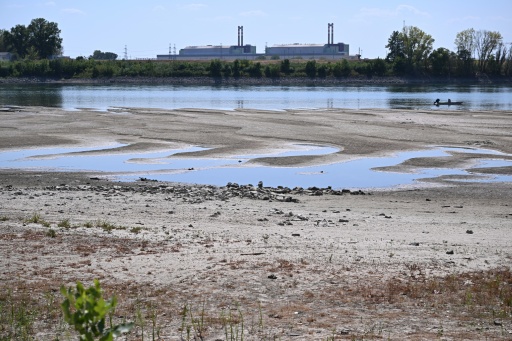
Wirtschaft Niedriger Donau-Pegelstand: Ungarn schaltet einziges Atomkraftwerk ab
Wegen niedriger Pegelstände der Donau schaltet Ungarn sein einziges Atomkraftwerk ab. "Am Sonntag um 1.30 Uhr" sei einer der letzten beiden Reaktoren des Kernkraftwerks in Paks heruntergefahren worden, wodurch die Leistung des Kraftwerks auf 240 Megawatt sinke, teilte Ungarns Regierungschef Peter Magyar am Sonntag im Onlinedienst X mit. Am Montag werde das Akw, das rund 130 Kilometer...

Sports Tennis: Gea feiert ersten Profisieg in Los Cabos
Der Franzose Arthur Gea hat sein erstes Turnier auf der ATP-Tour gewonnen. Der 21 Jahre alte Tennisprofi setzte sich im Finale von Los Cabos gegen den Kanadier Denis Shapovalov 6:3, 6:4 durch. Gea hatte bis zum Hartplatzturnier in Mexiko erst drei Matches auf...

Topthemen "Sopranos"-Darsteller Vincent Pastore mit 80 Jahren gestorben
Der aus der Mafia-Kult-Serie "The Sopranos" bekannte US-Schauspieler Vincent Pastore ist tot. Der Darsteller, der in der HBO-Erfolgsserie den Mafioso Salvatore "Big Pussy" Bonpensiero spielte, starb im Alter von 80 Jahren, wie sein Agent Robert Attermann am Samstag der Nachrichtenagentur AFP mitteilte. Medienberichten zufolge wurde...