


Cuba moved to open crisis-ravaged parts of the state-run economy to private firms Wednesday, as the communist government struggles to ease acute shortages resulting from a US energy blockade.
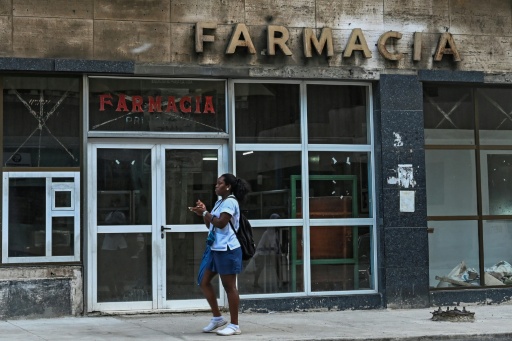
A lengthy decree lifted restrictions on a swath of sectors including gas distribution, electricity generation, trash collection and the manufacture and sale of medicines.
A US fuel embargo has upended daily life in Cuba, deepening rolling blackouts, water cuts and acute shortages of food and medicine.
The latest reforms seemed designed to target the most affected parts of daily life, and to provide a release valve for growing political pressure.
With piles of rubbish lining the streets of Havana, private firms will be able to operate waste collection and recycling services.
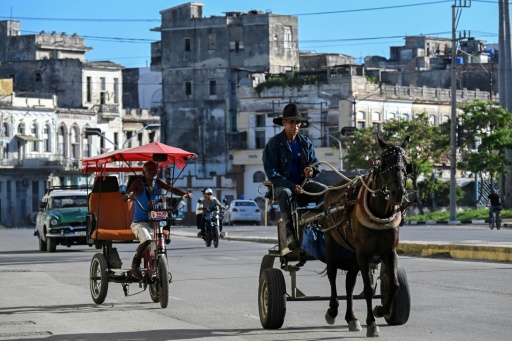
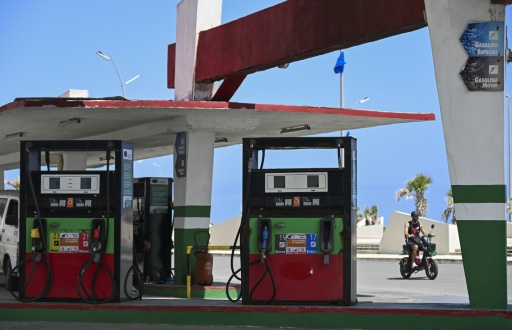
And with few buses or cars on the road due to fuel shortages, private firms will also be able to sell petrol as well as import and construct vehicles.
"Maybe it will be a good thing because, after all, right now there's nothing," said Ana Diago, 66, who retired and then returned to work at a port company.
"This is a critical moment and we have to find some solutions. The reality is that people are without medicines, without food and without many other things, and life has to go on."
Health care had long been a point of pride for Cuba's communist rulers, who were able to offer free care and highly subsidised medicines for all.
The reforms were discussed at a meeting of Cuba's National Assembly in Havana, where delegates repeated decades-old chants of "socialism or death!"
But the decree represents a significant loosening of decades-old communist doctrine.
The private sector will be allowed to operate everything from cargo terminals, to retirement homes, to golf courses.
"The results will be achieved gradually," Prime Minister Manuel Marrero said, backing reforms with the slogan "change is possible."
It was not immediately clear how these projects would be developed, but economist Daniel Torralbas said they would inevitably need injections of foreign capital.
Cuban small and medium-sized enterprises "currently do not have the financial capacity to invest in these sectors," he said.
Marrero said "the first foreign investment project for the importation, distribution and marketing of fuel has been approved," without offering details.
The island's Communist Party is trying to withstand its biggest crisis since the death of longtime leader Fidel Castro and the collapse of the Soviet Union.
Cubans who once feared government reprisals now readily criticize the country's leaders and have taken to banging pots and pans in regular nighttime protests.
The government, however, stressed its tight control over strategic sectors key to retaining power: education, telecommunications, media and defense.
Cigar sales will also remain under government control while oil and mining operations will be liberalized, subject to state license.
The United States has effectively blockaded fuel imports to Cuba for almost six months, leading to an acute shortage of fuel for transport and electricity generation.
That has pushed a system, already creaking under years of under-investment and trade sanctions, to the point of collapse.
The United States took control of Venezuela energy assets in late January, effectively cutting off Cuba's main source of oil supply.
Washington then threatened sanctions against other countries that exported oil to Cuba.
There have been at least five nationwide blackouts this year and countless localized cuts.
Most parts of the capital have electricity for only a few hours each day.
Cuba's state electricity provider said it would be able to generate only about 27 percent of expected peak demand on Wednesday, leaving the grid facing a 2,380-megawatt shortfall.
Latest stories
Topthemen Erstmals seit fast einer Woche: USA melden neue Angriffe auf den Iran
Erstmals seit fast einer Woche hat die US-Armee nach eigenen Angaben wieder Ziele im Iran angegriffen. Damit solle eine "kraftvolle" Antwort auf iranische Angriffsversuche auf US-Stützpunkte in der Region gegeben werden, teilte das zuständige Regionalkommando Centcom am Mittwoch (Ortszeit) im Onlinedienst X mit. Zuvor hatte...
Topthemen Städtetag: Wir brauchen "Milliardensummen" für Schutz gegen die Hitze
Angesichts der erneuten Hitzewelle in Deutschland hat der Deutsche Städtetag Bund und Länder aufgefordert, Klimaanpassungsmaßnahmen der Kommunen stärker finanziell zu unterstützen. Klimaanpassung sei "existenziell für unsere Zukunft", sagte Hauptgeschäftsführer Christian Schuchardt dem Redaktionsnetzwerk Deutschland (Donnerstagsausgaben). Für die Städte sei dies eine Daueraufgabe für Jahrzehnte. "Unterm Strich reden...
Topthemen Nach Selenskyj-Warnung vor "massiven" Luftangriffen: Explosionen in Kiew
Nur wenige Stunden nach der Warnung des ukrainischen Präsidenten Wolodymyr Selenskyj vor einem drohenden "massiven" russischen Angriff ist in Kiew Luftalarm ausgelöst worden. Ein Korrespondent der Nachrichtenagentur AFP berichtete in der Nacht zum Donnerstag...