


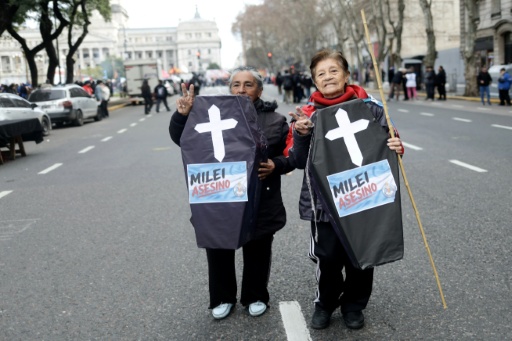
Thousands of people swarmed the streets of Buenos Aires Wednesday to protest President Javier Milei's austerity measures, as World Cup fever subsided in Argentina and public outrage returned.
Prior to the games, pensioners demanding higher payments and improved healthcare access held regular weekly demonstrations outside Congress, which were often dispersed by police.
After a month of national distraction by the World Cup's eventual runner-ups, the protests were reinforced Wednesday by trade unions grouped under the country's largest, the CGT, as well as leftist political parties and other sympathizers.
The huge mobilization momentarily blocked access to the capital on Wednesday morning, and there were clashes between demonstrators and police reported in Avellaneda on the city's outskirts.
"Twenty percent are becoming millionaires, and then the 80 percent of us down here stay the same, with a low salary," Raul Maldonado, 69, told AFP.
Almost half of Argentina's 7.8 million retirees receive the minimum pension, which paired with a bonus amounts to around $330 a month -- less than a third of what is required to cover seniors' basic needs.
CGT's social security secretary Hugo Benitez said the union would increase its presence at demonstrations from now on.
The South American country is going through a "critical situation for all workers," he said.
Over a two-and-a-half-year period, Milei's government has used austerity to reduce inflation from nearly 200 percent down to 33 percent.
Opponents have denounced the enormous social costs of such a strategy, which even Milei has acknowledged but insists "patience" is necessary.
As outrage at the economic reforms continues unabated, the government touts a fiscal surplus and an improved credit rating.
"We are creating the conditions for employment to improve, for wages to increase, and for the income of the entire population to rise," deputy economy minister Jose Luis Daza stated Wednesday.
But trade unionist Horacio Jerez counters that "the purchasing power of wages is falling."
"Macroeconomics is one thing, and the everyday social life of all Argentines is another," he told AFP.
Latest stories
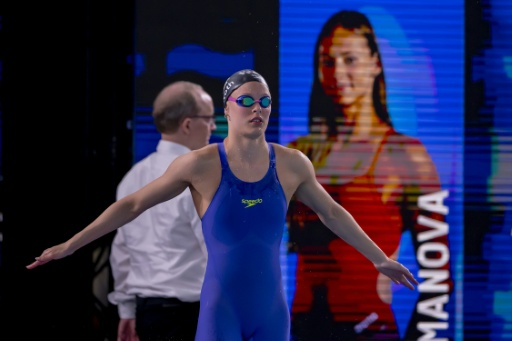
Sports Schwimm-EM: Roth Vierte über 200 m Freistil
Linda Roth hat bei der Schwimm-EM in Paris ihre erste Medaille auf der großen Bühne verpasst. Die 18 Jahre alte Magdeburgerin kam am Donnerstagabend im Centre Aquatique Olympique über die 200 m Freistil in 1:56,71 Minuten auf Platz vier. Knapp eine Sekunde fehlte zu der Britin Freya Colbert (1:55,81), die Bronze holte. Gold gewann die Tschechin...
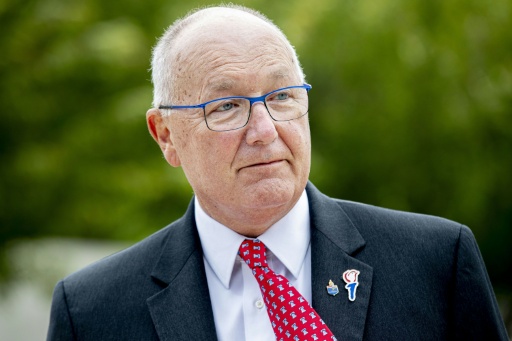
Topthemen Mehr als 110.000 Kanadier unterstützen Petition zur Ausweisung des US-Botschafters
In Kanada stößt eine Petition auf rege Zustimmung, wonach die Regierung US-Botschafter Pete Hoekstra zur unerwünschten Person erklären und ausweisen soll. Bislang unterzeichneten mehr als 116.000 Menschen das Bürgerbegehren, das noch bis zum 18. November läuft, hieß es am Donnerstag auf der Website des kanadischen Parlaments. Hoekstra ist ein unermüdlicher Verteidiger von US-Präsident Donald Trump, der wiederholt damnit gedroht...
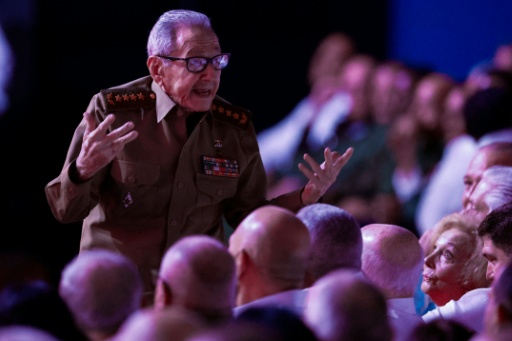
Topthemen Raúl Castro zeigt sich bei Gedenken an Bruder Fidel erstmals seit Monaten öffentlich
Kubas früherer Staatschef Raúl Castro hat sich erstmals seit mehreren Monaten wieder in der Öffentlichkeit gezeigt. Wie Reporter der Nachrichtenagentur AFP berichteten, nahm der 95-Jährige am Donnerstag in der Hauptstadt Havanna an einer Veranstaltung zum 100. Geburtstag seines...