


Human Rights Watch on Wednesday raised alarms over Nigeria's mass trials of alleged jihadists, saying many convictions were secured with minimal evidence and possibly under duress.
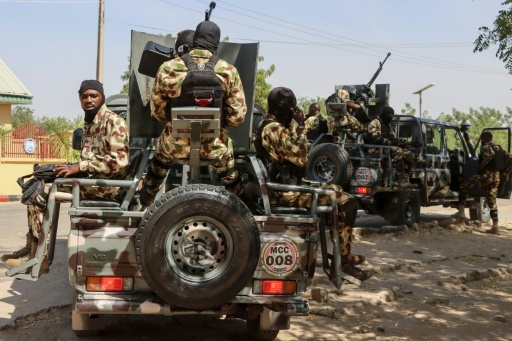
Africa's largest country has been battling a jihadist insurgency since 2009, with both militants and security forces accused of serious rights abuses.
But mass trials involving hundreds of alleged jihadists or their supporters speeding through the courts -- sometimes after defendants spend years in pre-trial detention -- "continue to target primarily low-level suspects and raise significant fair trial concerns" the rights group said in a new report.
Human Rights Watch observed court appearances in April, where more than 500 defendants were brought to the Federal High Court in Abuja in just a few days, and again in June.
The June trials, of some 600 defendants, marked the tenth phase of a series of mass trials that the government has said is necessary to combat "terrorism" amid a backlogged court system.
But many of the convictions were secured only with guilty pleas, and little to no other evidence, Human Rights Watch said.
In many of the dozens of cases the monitor observed, charges "were in some cases ambiguous and lacking crucial information like the specific date and details of the alleged offense."
When defendants pleaded not guilty, meanwhile, "the prosecution was unable to substantiate the alleged charges and withdrew them," the report said.
The reliance on guilty pleas raises concerns that many people are being hit with a slew of charges in order to be pressured into pleading guilty to at least some of the lesser ones, the report said.
It also raises the possibility that the most serious crimes, including those that could amount to war crimes, are not being pursued in court.
Responding to the report, the director of public prosecutions said the government was balancing the need to confront "terrorism" while also preserving "the constitutional rights of every person".
Human Rights Watch also said defence lawyers repeatedly "neither called witnesses nor presented evidence".
Cases involving "material support" for armed groups, meanwhile, appeared to sweep up people living under jihadist rule, whose defiance of militants could get them killed.
In one case, a defendant pleaded guilty to raising goats for Boko Haram. His defence lawyer, seeking leniency, argued he had been "forced to work for Boko Haram after the group invaded his village."
He was sentenced to 25 years in prison.
Latest stories

Wirtschaft Neuer US-Prozess wegen Social-Media-Sucht geplatzt
In den USA ist ein erneuter Prozess um die mutmaßliche Social-Media-Sucht eines Jugendlichen geplatzt. Der Teenager zog seine Klage gegen den Meta-Konzern mit seinen Diensten Instagram und Facebook am Mittwoch kurzfristig zurück, wie seine Anwälte mitteilten. Das Verfahren...

Sports Slalom-WM: Kanu-Männer holen Bronze
Deutschlands Slalomkanuten haben am dritten Wettkampftag der Weltmeisterschaften im US-amerikanischen Oklahoma City die erste Medaille eingefahren. Im Team-Wettbewerb der Männer fuhren Lennard Tuchscherer, Timo Trummer und Sideris Tasiadis mit +2,42 Sekunden Rückstand auf die Spitze zu Bronze. Gold...

Sports "Ohnmacht": Darts-Profi Menzies mit Kreislaufproblemen raus
Für Darts-Profi Cameron Menzies hat das World Matchplay in Blackpool ein bitteres Ende gefunden. Nachdem der Schotte überraschend den Weltranglistenzweiten Luke Humphries ausgeschaltet hatte, musste er am Mittwochabend im Achtelfinale aufgeben. Bei der Partie gegen Ross Smith hatte der 37-Jährige mit Kreislaufproblemen zu kämpfen, brach Würfe immer wieder ab und musste sich...