


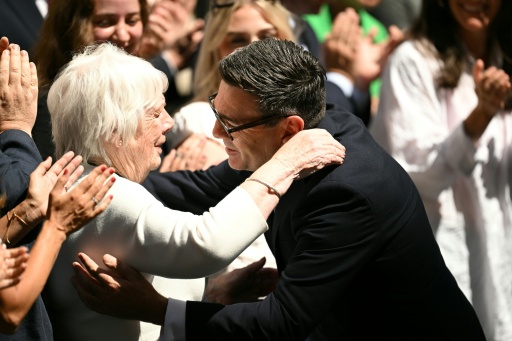
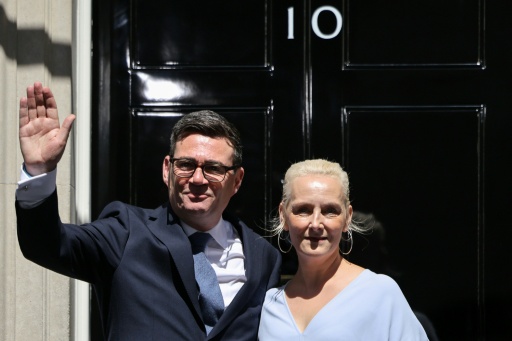
Andy Burnham projects regular man-of-the-people vibes, but behind the casual persona lies ruthless ambition and an ability for reinvention that has helped propel him to the pinnacle of British politics.
The 56-year-old veteran figure within centre-left Labour replaced Keir Starmer as prime minister on Monday, three days after becoming leader of the ruling party at the third time of trying.
Speaking without notes in front of 10 Downing Street, the ex-Greater Manchester mayor acknowledged "people at home are fed up with politics" and that the country's political class has "not been good enough".
"We need to be better. We will be," he vowed, pledging "the biggest changes in the last 40 years" and to "bring back hope".
During a successful nine-year stint as mayor, Burnham transformed himself from former government minister to political outsider -- best embodied by his ditching of a suit and tie for a T-shirt and casual jacket.
Seen as representing Labour's "soft left" wing, Burnham was a member of parliament between 2001 and 2017 and a senior minister under prime ministers Tony Blair and Gordon Brown.
He twice ran unsuccessfully for the Labour leadership -- in 2010 and 2015 -- before leaving Westminster to establish himself as one of Britain's most recognisable regional leaders.
Three successive election victories in Manchester and his staunch defence of the region earned him the nickname "King of the North".
Slick and slightly whimsical social media videos have added to his growing popularity -- in contrast to Starmer.
"Andy Burnham is better at communicating with the public ... he doesn't look and sound like a political obsessive," London School of Economics politics professor Tony Travers told AFP.
Andrew Murray Burnham was born in 1970 into a working-class family in Aintree, near Liverpool, and grew up in the village of Culcheth.
Catholic by upbringing -- he served as an altar boy at school -- he has previously spoken about faith informing his cultural identity.
A loyal Everton football fan, he enjoyed the "Madchester" party music scene of the late 1980s and early 1990s.
Burnham, who has a Dutch-born wife and three children, joined Labour as a teenager before studying English at the University of Cambridge.
He has said he often struggled with "imposter syndrome" as a student owing to his working-class background.
In 2009, as culture and sport minister under Brown, he was met by a wave of raw grief and anger at a Liverpool ceremony marking the 20th anniversary of the Hillsborough football tragedy.
It prompted him to push for a fresh inquiry into the deaths of 97 people in the devastating Sheffield stadium crush, after which the police attempted to shift blame for their own failings onto the fans.
As mayor, Burnham leapt to national prominence during the Covid pandemic, clashing publicly with prime minister Boris Johnson over lockdown funding for northern England.
The standoff cemented his reputation as an outspoken defender of regional autonomy.
He even has a worker bee tattooed on his arm, the long-standing symbol of Manchester.
There he continued an agenda already kick-started by local officials -- dubbed "Manchesterism" -- centred on long-term planning and spurring investment alongside prioritising policy areas like transport, housing and health.
Burnham has branded his political ideology "business-friendly socialism", stressing the need to respond to "the high-inequality, low-growth trap" he complains has dominated Britain since the 1980s.
"I'm feeling ready. I've had a long journey to this point, but I am ready to lead. I know what I want to do," he said Monday after visiting a homeless shelter and vowing to end "rough sleeping".
His move to the left after years as a more centrist government minister has led critics to claim he is a political chameleon.
In recent weeks he has had to U-turn on several previous positions.
Burnham wrangled with Starmer last year, urging him to adopt a more leftist vision for Labour and openly opposing him over welfare cuts.
Burnham now takes on the task of regaining support from Nigel Farage's hard-right Reform UK party, which has led Labour in opinion polls for about 18 months.
Burnham told reporters last week he would "grasp the nettle" of reforming England's social care system, saying he had personal experience of it because his father has Alzheimer's.
It meant his dad was not even aware he was becoming prime minister, he noted in an interview published Sunday.
Latest stories
Sports Spitze gegen Infantino: Blatter ruft zum Widerstand auf
Nach dem Ende der Fußball-WM hat der frühere FIFA-Präsident Joseph Blatter zum Widerstand gegen das Gebaren des Weltverbandes unter der Führung seines Nachfolgers Gianni Infantino aufgerufen. "Nun liegt es an den Fans, Spielern und nationalen Verbänden, den Fußball zurückzuerobern und ihn unter neuer Führung zu...
Weltgeschehen Abgesetzter türkischer Oppositionsführer Özel kündigt Gründung einer neuen Partei an
Der abgesetzte türkische Oppositionsführer Özgür Özel hat die Gründung einer neuen Partei angekündigt. "Die Partei, die wir gründen wollen, wird mit großem Abstand zur wichtigsten Oppositionskraft in der Nationalversammlung werden", zeigte sich Özel am Dienstag im Parlament in Ankara überzeugt. Die Türkei stehe "an einem...
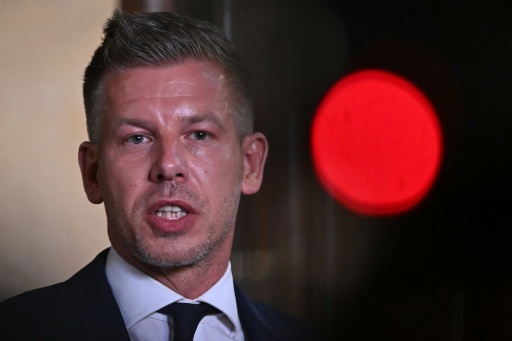
Weltgeschehen Durchsuchungen bei ehemaliger Regierungspartei Fidesz in Ungarn
In Ungarn ist die Fidesz-Partei des ehemaligen Ministerpräsidenten Viktor Orban Ziel einer Durchsuchung worden. "Die Staatsanwaltschaft des Verwaltungsbezirks Bacs-Kiskun führt in einem im Zusammenhang mit dem Nationalen Kulturfonds eröffneten Strafverfahren Ermittlungen wegen des Vergehens der Veruntreuung und anderer Straftaten", sagte eine Sprecherin der Ermittlungsbehörde am Dienstag...