


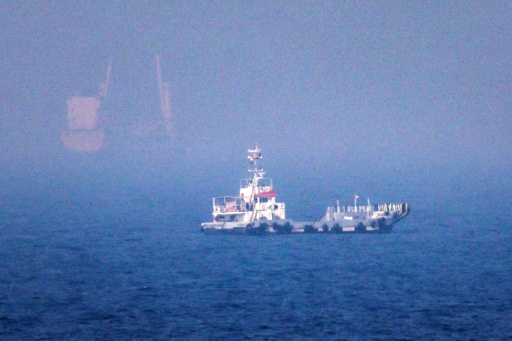
The United States launched a wave of strikes against Iran on Wednesday, after it reimposed a naval blockade in a return to war between the two foes.
Nearly a month after they signed a memorandum of understanding aimed at ending the Middle East war, the two sides resumed fighting with strikes on targets across the region.
Iran's Revolutionary Guards said they targeted the US Fifth Fleet in Bahrain, where the military said it had intercepted attacks against civilian targets, while Jordan's armed forces said they had downed three missiles from the Islamic republic.
US President Donald Trump, meanwhile, threatened to widen strikes next week to hit power plants and bridges unless Tehran returns to the negotiating table.
"Next week it gets really bad for them," he told Fox News. Despite renewed hostilities, mediated talks between the two sides have not formally ended.
At the heart of the resumption of hostilities has been the dispute over the Strait of Hormuz, a waterway that is crucial for global oil and gas flows.
- Agreement 'dismantled' -
Iran blockaded Hormuz after the war erupted with US-Israeli strikes on February 28, using the waterway for leverage against its foes for months.
The strait was briefly reopened after the US-Iran deal last month, before Tehran again vowed it would be closed "until the US ends its aggression".
Traffic through the waterway remained low, with maritime tracker Kpler reporting only 21 transits on Tuesday.
The US, in turn, has reimposed its own blockade of Iran's ports, though Trump has backed down on a planned 20 percent levy on ships using the strait.
Iranian Deputy Foreign Minister Kazem Gharibabadi said the renewed US blockade "has, in a way, dismantled the Islamabad memorandum", referring to the interim deal reached last month.
US Central Command (CENTCOM) said it launched "a wave of strikes... designed to further degrade military capabilities Iranian forces have used to attack commercial shipping in the Strait of Hormuz".
Iranian state media reported explosions near the port city of Bandar Abbas, on the island of Qeshm and on Bandar Imam Khomeini. It later said fresh US strikes hit the southern port city of Bushehr, home to the country's only civilian nuclear plant.
In the capital Tehran, there was no sign of a return to conflict, with ordinary Iranians thronging cafes to watch the France-Spain World Cup semi-final in huge crowds, AFP journalists saw.
But elsewhere in the country, anxieties ran high.
Khadijeh, 31, an artisan from Qasr-e Shirin in the southeast, said: "The little children are so frightened by the sound of explosions that they don't sleep until morning.
"The effects of war will stay in our lives and minds and mental health for a long time. If, God forbid, the war becomes more intense, then perhaps it will take several generations before we can get back on our feet."
Fears similarly abounded in Gulf countries hit repeatedly by Iranian strikes.
"Every day, I wake up wondering whether the situation will de-escalate or worsen," said Mustafa Mohamed, a 39-year-old Sudanese accountant living in Kuwait.
"It has become difficult to feel at ease or plan anything because uncertainty grips everyone."
- Trump scraps levy -
Since the war began, Iran has asserted its control over the Strait of Hormuz and opened fire on ships for taking routes it says are unauthorised.
"The retaliatory operations of the fighters will continue," the Guards said.
A Norwegian tanker was hit by an explosion caused by an unidentified device off the Omani coast early Tuesday, the crisis response company MTI Network said.
And Kuwait said one of its naval vessels was struck during an Iranian missile and drone barrage, wounding four crew members.
Trump meanwhile said he was scrapping a planned levy on ships passing through the Strait of Hormuz that he announced Monday, replacing the fee with trade deals with Gulf allies.
Since last week, renewed US attacks have killed at least 30 people in Iran, government spokesman Fatemeh Mohajerani said.
Separately, the military announced that seven of its personnel were killed in Wednesday's strikes on the southeast.
Israeli Prime Minister Benjamin Netanyahu, whose country has so far not rejoined the war, warned Iranian leaders on Tuesday that Israel would deal a heavy blow if they launched an attack on his country.
Speaking from Dimona, a southern town widely believed to house Israel's undeclared nuclear arsenal, he said: "Do not count on things remaining quiet if you attack us."
bur/jsa/amj
© Agence France-Presse
Latest stories
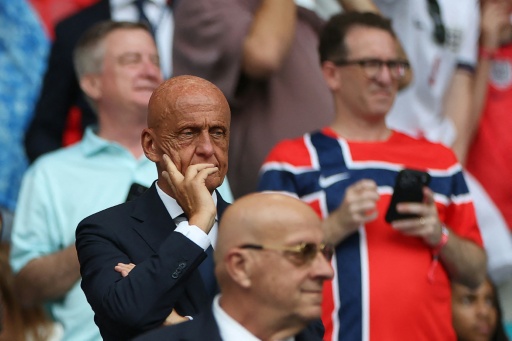
Sports Collina weist Kritik zurück: "Schiedsrichter sind weltklasse"
Die FIFA hat die Kritik von Frankreichs Nationaltrainer Didier Deschamps an Schiedsrichter Iván Barton aus El Salvador zurückgewiesen. Die Antwort des Weltverbandes auf die Bemerkung des französischen Trainers, der infrage gestellt hatte, ob Barton das Niveau für ein WM-Halbfinale besitzt, sei "eindeutig: Ja, selbstverständlich. Unsere Schiedsrichter...
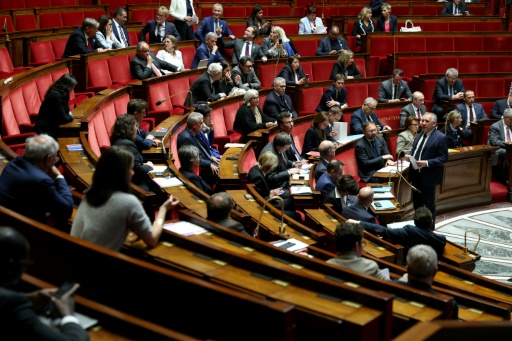
Topthemen Frankreich erlaubt Sterbehilfe für unheilbar Kranke
Unheilbar kranke Menschen haben in Frankreich künftig das Recht, sich unter strengen Auflagen beim Suizid helfen zu lassen. Die Nationalversammlung verabschiedet am Mittwoch mit 291 zu 241 Stimmen endgültig ein entsprechendes Gesetz, das eine "Hilfe beim Sterben" ermöglicht. Demnach können Patienten sich ein tödliches Medikament verschreiben lassen, das sie in der Regel selbst einnehmen. Nur falls sie körperlich nicht dazu...

Sports DFB informiert Gremien über Klopp-Fortschritte
Mit Zuversicht hat Verbandspräsident Bernd Neuendorf die Gremien des Deutschen Fußball-Bundes (DFB) über den Fortschritt der Bemühungen um den Wunschbundestrainer Jürgen Klopp informiert. Der 14-köpfige Aufsichtsrat der DFB GmbH & Co. KG und die vierköpfige Gesellschafterversammlung, zu der auch Neuendorf selbst gehört, schalteten...