


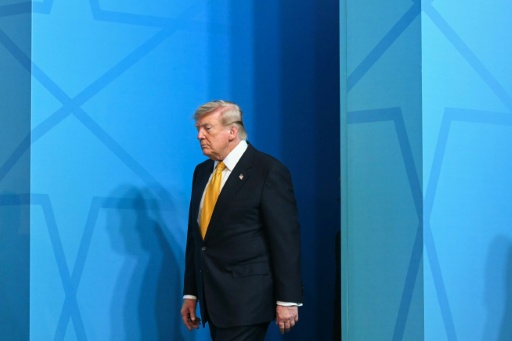
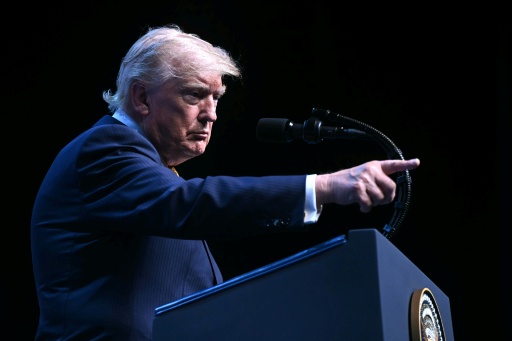
US President Donald Trump ordered new strikes on Iran on Wednesday and warned of "much worse" if Tehran continues to attack vessels in the Strait of Hormuz, the vital oil shipping channel.
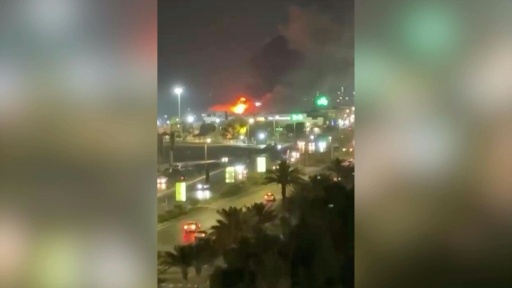
Iran state media reported explosions in multiple locations along the southern Iranian coast after US Central Command announced a new wave of strikes.
Warplanes were heard over Kish Island and explosions rocked the port cities of Bandar Abbas, Konarak and Chabahar, part of which lost electricity, Iran's official news agency IRNA reported.
"This is in retribution for yesterday's bombing of ships by Iran," Trump said in a post on Truth Social. "If it happens again, it will get much worse!"
While ordering retaliation against Tehran, the US president said earlier Wednesday that he expected the latest military flare-up to end quickly and left the door open to more talks.
CENTCOM said the strikes were carried out to degrade the ability of Iranian forces "to threaten freedom of navigation" in the strait, through which a fifth of the world's oil and liquefied natural gas normally flows.
"The United States is holding Iran accountable for recent unjustified aggression against commercial shipping," CENTCOM said on X.
Before ordering the latest strikes, Trump said the ceasefire with Iran was over, prompting mediators Pakistan and Qatar and the United Nations to call for de-escalation.
The Strait of Hormuz remains a flashpoint in the Middle East conflict, which began February 28 with US-Israeli strikes that killed Ali Khamenei, Iran's supreme leader, who is to be buried in his hometown of Mashhad on Thursday.
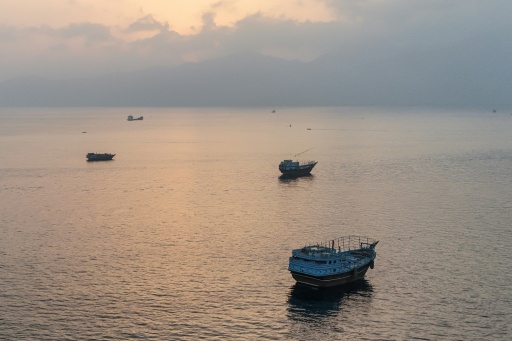
Since the attacks, Tehran has insisted on controlling the strait, saying it will charge fees for passage and threatening to hit vessels that deviate from its authorised route.
Its military struck at least three ships in recent days, prompting extensive US strikes against Iranian targets on Tuesday, followed by retaliatory attacks from Iran on Gulf countries.
"We're gonna hit 'em hard tonight," Trump said at a NATO summit in Ankara. "They violate the agreement every day."
He added later, however, that "anything that happens is going to be over very quickly."
Oil prices jumped eight percent after Trump's earlier comments that the ceasefire was "over."
- 'Maximum restraint' -
UN chief Antonio Guterres called meanwhile "on all parties to exercise maximum restraint" -- as did Pakistan, a key mediator in the US-Iran talks.
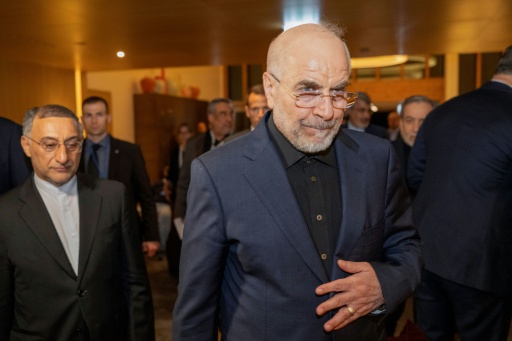
Iran said Foreign Minister Abbas Araghchi and Qatar's prime minister had spoken over the phone on Wednesday and "underscored the importance of using diplomatic means to resolve regional issues."
Both the United States and Iran said they had hit dozens of targets in the initial wave of attacks, which Iranian state television said had killed eight Iranian military personnel.
CENTCOM said its forces struck more than 80 targets on Tuesday, including Iranian air-defence systems, coastal radar sites and 60 Iranian Revolutionary Guards Corps small boats.
The Guards said they hit dozens of US military facilities in Kuwait and Bahrain.
Kuwait said it had intercepted two ballistic missiles and 13 drones, while the Iranian army said it had also attacked US forces at Sheikh Isa air base in Bahrain.
The latest attacks launched by Iran did not result in any American casualties or cause major damage to facilities, a US military official said on Wednesday.
"All missiles and drones fired by Iran were intercepted or failed to cause major damage," the official told AFP.
Nawal Saad, a Bahraini civil servant, lamented that "the spectre of war is looming once more," saying "I do not want to go through that experience of fear and anxiety again."
- Seafarers stranded -
Oman, which sits on the other side of Hormuz from Iran, condemned the targeting of Bahrain and Kuwait as well as the strikes on ships, but without blaming Iran.
The former mediator has not blamed Iran for attacks throughout the war, in an effort to maintain its neutrality, which is being tested by talks with Tehran over the administration of Hormuz.
Washington wants free passage for ships while Iran is insisting on fees and has refused to allow vessels to pass through Omani waters.
All three vessels recently struck were sailing close to Oman, which had proposed a temporary transit corridor hugging its coastline.
Maritime traffic had tentatively resumed after Washington and Tehran signed the deal to end hostilities last month.
But almost 6,000 seafarers remain stranded in the area, International Maritime Organisation chief Arsenio Dominguez said Wednesday.
burs/cl/sla
© Agence France-Presse
Latest stories
Topthemen Nach Niederlage: Trump fordert von Supreme Court Neuanhörung zu Staatsbürgerschaft
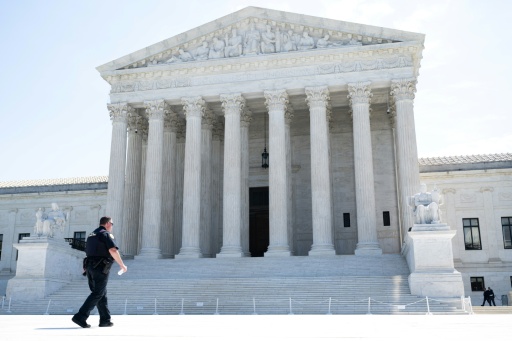
Nach seiner krachenden Niederlage vor dem Obersten Gerichtshof in der Frage der US-Staatsbürgerschaft fordert Präsident Donald Trump eine Neuanhörung. Das Urteil des Supreme Court gegen ein von ihm erlassenes Dekret sei "falsch" und "wahnwitzig", erklärte Trump am Mittwoch. "Ich werde beim Obersten Gerichtshof...

Sports Kommt "noch zu früh": Saibari fällt für Frankreich-Kracher aus
Afrikameister Marokko muss im WM-Viertelfinale gegen Frankreich ohne Ismael Saibari auskommen. Der neue Angreifer von Bayern München fällt für das Kracherspiel am Donnerstag (22.00 Uhr MESZ/ARD und MagentaTV) weiter wegen seiner Muskelverletzung aus. Dies verkündete Marokkos Nationaltrainer Mohamed Ouahbi auf einer Pressekonferenz am Mittwoch...

Deutschland Wadephul nennt Trumps Aussagen bei Nato-Gipfel in Ankara "irritierend"
Bundesaußenminister Johann Wadephul (CDU) hat die Aussagen von US-Präsident Donald Trump beim Nato-Gipfel in Ankara als "irritierend" bezeichnet. Die teilweise harten Vorwürfe von Trump gegen die Alliierten seien "irritierende Bemerkungen" gewesen, sagte Wadephul am Mittwochabend in den ARD-Tagesthemen. Insgesamt sei es aber so, dass die US-Vertreter "in allen Stäben, in allen...