


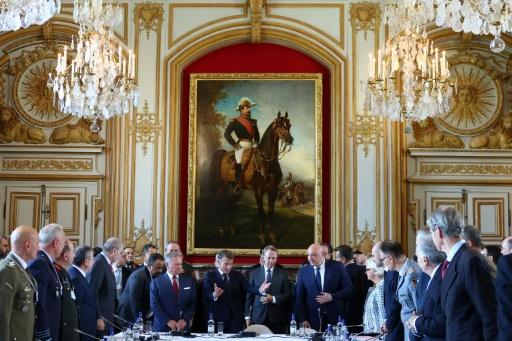
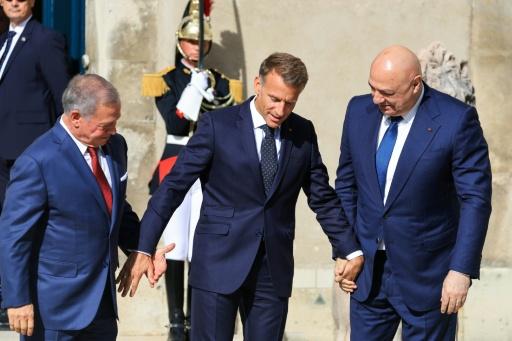
The leaders of France, Lebanon and Jordan on Thursday met in Paris to drum up international support for the cash-strapped Lebanese army which President Emmanuel Macron described as "indispensable" for bringing stability to the country.
Also on the agenda was the creation of a new force to succeed a longstanding UN peacekeeping mission in southern Lebanon, where Israel is locked in fighting with Iran-backed Hezbollah fighters.
Macron welcomed Lebanese President Joseph Aoun and King Abdullah II of Jordan to Paris for the talks. They were later joined by chiefs of defence staff from Lebanon, Jordan, France, Britain and Italy, as well as top US and Saudi officials, a French military source said.
Macron said that the talks aimed to "strengthen Lebanon's sovereignty and enable it to fully ensure its security", after years during which political factions, such as the Shiite militant group Hezbollah, wielded greater authority than the Lebanese state.
"A sovereign and stable Lebanon is a decisive step toward peace and stability for the entire region," Macron wrote in a statement on X.
Along with the Lebanese and Jordanian leaders and "in close coordination" with the US, Saudi Arabia and international partners, "we support the Lebanese Armed Forces, which are indispensable for asserting the authority of the Lebanese state across its entire territory," he added.
The French presidency said the aim of the Paris talks was to review a Lebanese armed forces deployment plan based on a "clear, credible and realistic" framework.
Paris said it wanted this as a prerequisite for what it hopes will be "robust" international support, whether in the form of financial assistance, equipment or training.
The poorly equipped Lebanese forces have struggled to carry out their mission of disarming Hezbollah in the south, which is a key condition for Israel's withdrawal from southern Lebanon.
Aoun has repeatedly mentioned his determination to disarm Hezbollah, but "without a confrontation".
In a statement, the Lebanese presidency said Aoun felt "deep satisfaction" with the progress achieved in Paris.
He "expressed his hope that the needs of the Lebanese army and Internal Security Forces... would receive the necessary response from brotherly and friendly nations and entities".
The talks also come as the mandate of the United Nations Interim Force in Lebanon (UNIFIL) ends this year after almost half a century of operations dating back to the Israeli invasion of 1978.
Last year, the UN Security Council, under US pressure, decided to end UNIFIL's mandate on December 31, 2026.
France and Italy have said they want to set up a multinational coalition to succeed UNIFIL. The force has just under 7,500 peacekeepers from 46 countries.
Aoun told AFP this week that Lebanon wanted a new force, European or otherwise, to prevent a security vacuum after the UN peacekeepers leave south Lebanon.
Israel and the United States attacked Iran in February, sparking a war that has spread across the Middle East.
Hezbollah dragged Lebanon into the wider conflict when it fired rockets at Israel in solidarity with the Tehran government.
Israel attacked south Lebanon and its forces continue to occupy what it calls a "security zone", a stretch of Lebanese territory about 10 kilometres (six miles) deep along the border.
In June, Israel and Lebanon signed a US-sponsored framework agreement that involves the disarmament of Hezbollah, a gradual withdrawal of Israeli forces from Lebanon's south and the deployment of the Lebanese army to the region.
Violence declined following the June agreement and a wider US-Iran deal, but Israel has pressed its attacks on Lebanon, while there has been a fresh upsurge in fighting between the US and Iran in recent weeks.
Iran hit US military targets in Jordan in response to new American attacks, while shipping remains restricted in the Strait of Hormuz and the Bab al-Mandab Strait off Yemen, which Houthi rebels have seized control of.
"Blockades have direct consequences on our daily lives. The French are feeling them at the pump, with prices that have become unbearable," said Macron, calling for "freedom of navigation" to be restored.
Latest stories
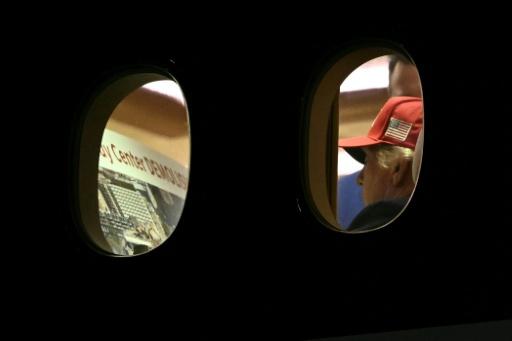
Weltgeschehen Wird Kennedy Center abgerissen? Trump-Fotos sorgen für Wirbel
Plant US-Präsident Donald Trump den Abriss des renommierten Kulturzentrums Kennedy Center in Washington? Fotos der Nachrichtenagentur AFP scheinen dies zu belegen. Auf den Bildern des Fotografen Brendan Smialowski ist Trump durch das Fenster der Präsidentenmaschine Air Force One mit einem Ausdruck einer Vorlage zu sehen, über der in roten Buchstaben...
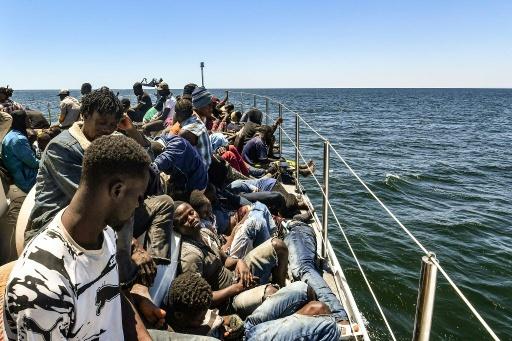
Weltgeschehen UNO: Weniger Migranten erreichen Europa über das Meer - doch mehr sterben beim Versuch
In diesem Jahr haben nach UN-Angaben bisher weniger Flüchtlinge und Migranten die Bootsüberfahrt nach Europa versucht, auf dem gefährlichen Seeweg sind aber mehr Menschen ums Leben gekommen. Die Internationale Organisation für Migration (IOM) gab die Zahl der Flüchtlinge per Boot bis Mitte September am Donnerstag mit 60.000 an - das entspricht einem Rückgang von 39 Prozent gegenüber dem Vorjahreszeitraum. Doch...
Sports Handball: Melsungen zahlt Champions-League-Lehrgeld
Neuling MT Melsungen hat in der Handball-Champions League bei seiner ersten Niederlage Lehrgeld bezahlt. Das Team von Nationalmannschaftskapitän Johannes Golla gab in seinem zweiten Vorrundenspiel beim polnischen Vertreter Wisla Plock in der Schlussphase eine 24:22-Führung aus der Hand...