


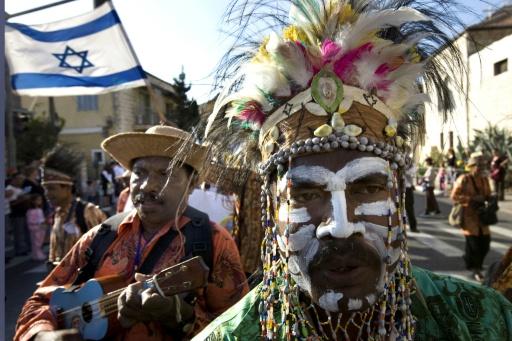
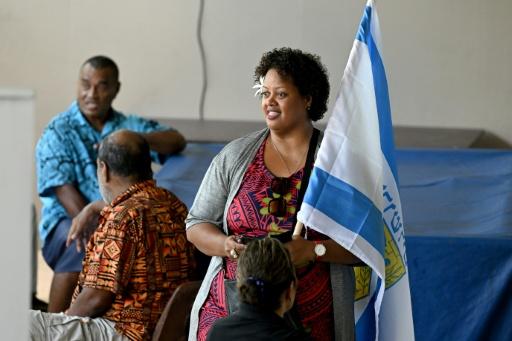
An ancient Biblical prophecy lies at the heart of a Pacific islands push to open embassies on contested ground in Jerusalem, experts and former diplomats told AFP.
Israel may seem an unlikely partner for the far-flung nations of the tropical South Pacific, sharing little in common by way of culture, language, food or sport.
And yet, Pacific island nations have often proven some of Israel's most steadfast supporters on the international stage.
Tiny Nauru opened an embassy in Jerusalem earlier this month, joining a handful of nations bucking international pressure to recognise Israeli sovereignty in the holy city.
Papua New Guinea and Fiji are already among just seven UN member-states to open embassies in Jerusalem, while Samoa has stated it will join them later this year.
Former Fijian diplomat Salote Tagivakatini said the moves were less about calculated statecraft and more about religious conviction.
"Christianity is the biggest underlying factor," she told AFP.
"Around 90 percent of indigenous Pacific islanders identify as Christians.
"Therefore, their interpretation of the Bible and reference to Jewish people as 'God's chosen people' obligates them to support Israel."
Waves of European missionaries sailed through the South Pacific in the 19th century, bringing evangelical Christian teachings that were adopted with enthusiasm.
Many parts of the Pacific today hold deep-rooted beliefs in Old Testament prophecy, which holds that Jews are destined to one day return to the Land of Israel.
There are pockets of Papua New Guinea, Solomon Islands and Fiji where some even identify as descendants from one of the "Lost Tribes of Israel".
Anthropologists have documented the Gogodala people of western Papua New Guinea singing Hebrew songs and hoisting the flag of Israel at tribal ceremonies.
Religion mixes freely with politics in the South Pacific, where many nations declare their Christian faith in their founding constitutions.
Fiji Prime Minister Sitiveni Rabuka is a former lay preacher in the Methodist church, while Papua New Guinea Prime Minister James Marape is the devout son of a Seventh-day Adventist pastor.
Samoan Prime Minister La'auli Leuatea Schmidt wore a Jewish prayer shawl when he was sworn in last year, entering the room to the sound of a ceremonial "shofar" horn.
"I stand for Israel, the land of God," he said at the time, according to local media.
"Samoa will stand up and support the holy land of God."
Despite such strong political statements, support for Israel is far from universal in the region.
A small group of demonstrators waving Palestinian flags awaited Israeli Foreign Minister Gideon Sa'ar when he visited Fiji earlier this year.
Most countries have kept their embassies in Tel Aviv on the grounds that Jerusalem's status will be settled in a final resolution of the Israeli-Palestinian conflict.
But US President Donald Trump shattered this consensus in 2018 by moving the US embassy to Jerusalem.
Only a handful of countries have followed suit: Fiji, Papua New Guinea and Nauru plus Guatemala, Honduras and Paraguay.
There is a long history of outside nations courting Pacific island states for diplomatic clout.
When Russia-backed separatists in northwestern Georgia tried to form a breakaway state in the early 2000s, Tuvalu, Vanuatu and Nauru were among the few nations to offer recognition.
Tuvalu, Palau and the Marshall Islands are among the only nations to maintain formal diplomatic relations with Taiwan.
China has in recent years persuaded Solomon Islands, Nauru and Kiribati to sever links with Taipei in favour of Beijing.
International affairs expert Shannon Brincat said it was easy to see what Israel gained from its Pacific friends.
"Symbolically those things are huge. By moving their embassies to Jerusalem, it normalises Israel's claim that it's the undivided capital."
It was less clear what these small nations received in return, Brincat told AFP.
Lowy Institute data showed Israel had given US$2 million for aid and development in the Pacific since 2015.
Major donors such as Australia and China have, by comparison, spent hundreds of millions of dollars.
Pacific security researcher Maima Koro said typical notions of give-and-take diplomacy missed the point.
"Israel are the people of God to them. And there's this promise that God made to Israel," Koro, from Adelaide University, told AFP.
"It's not transactional. The connection is spiritual."
Latest stories
La Une الهند تستضيف اجتماعا لقادة "بريكس" على وقع توترات دولية
تستضيف الهند في عطلة نهاية الأسبوع قادة بارزين من تكتل "بريكس"، بينهم رؤساء الصين وروسيا وإيران، في قمة تُعقد وسط اضطرابات جيوسياسية عالمية، من الصراع...
La Une تسجيل هزة أرضية في جنوب لبنان بعد إعلان إسرائيل تدمير بنى تحتية لحزب الله في تلة علي الطاهر
أعلنت إسرائيل الخميس أنها دمرت بنى تحتية تحت الأرض تابعة لحزب الله في تلة علي الطاهر بجنوب لبنان، حيث تم تسجيل هزة أرضية بقوة...

رياضة دوري أبطال أوروبا: بايرن يسحق بودو غليمت بخماسية
استهل بايرن ميونيخ الألماني مشواره في مسابقة دوري أبطال أوروبا لكرة القدم، بسحقه ضيفه بودو غليمت النروجي 5-0 الخميس ضمن الجولة...