


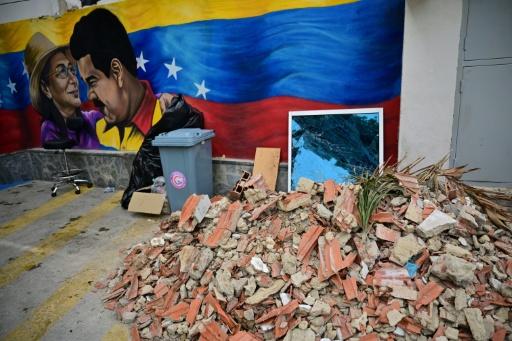
Eight months after US forces captured Venezuelan president Nicolas Maduro, the prevailing national mood is bittersweet as delight at his fall gives way to impatience about ongoing economic hardship.
The South American nation remains mired in crisis, with precarious wages and sky-high food prices the norm for ordinary people despite the interim government's attempts at reform.
Marbelis Daliz and her husband Arlindo Da Silva run a pastry shop, where hyperinflation and regular power cuts cast a long shadow over business.
Following Maduro's ouster, "we had such expectations and happiness," Daliz told AFP, hurriedly preparing food for a customer in a race to beat the next blackout.
"Unfortunately, reality crushed us."
The 54-year-old pastry chef has no intention of abandoning her business despite barely scraping by on its meager profit margins.
"The economy is a disaster," she said. "I hope that at some point this will pass and we will rise again."
The Venezuelan economy has been undergoing a de facto dollarization since 2019 due to the enormous devaluation of the bolivar.
Many were hoping for an influx of dollars after the US raid to depose Maduro, but annual inflation in bolivars is near 575 percent.
Price increases are "killing" Venezuelans, said activist Zaida Mujica.
Mujica had "high hopes regarding the actions of the United States when they took Nicolas Maduro away," the 61-year-old told AFP.
"They took away the dictator but not the dictatorship," she said, adding that "nothing has happened that benefits the people."
Interim leader Delcy Rodriguez, Maduro's former vice president, effectively governs under Washington's thumb.
She has opened several sectors up to foreign and private capital, and official figures show that daily oil production has increased by almost 29.8 percent since January.
"A political change was extremely important... but it is not enough to generate macroeconomic stability and growth," said Jose Manuel Puente, a professor at the Institute of Advanced Studies in Administration (IESA).
For as long as Venezuela maintains "the highest inflation in the world," he said, its problems are here to stay.
Javier Chacon and his wife Delia celebrated Maduro's capture on January 3 in their own home, fearful of the repression that had marked his 13-year rule.
"Naturally, we thought there was going to be a change," Javier told AFP in the bustling Quinta Crespo market in Caracas.
"Unfortunately, in Venezuela we're just surviving," the 44-year-old seamster said.
The already difficult situation worsened when two earthquakes struck northern Venezuela within a minute of each other on June 24.
The disaster killed over 6,500 people, injured thousands more and destroyed hundreds of buildings.
The home of 40-year-old Carmen Ramirez, who sells hygiene products at a market in Caracas, sustained heavy damage from the quakes.
"You have to go out and keep fighting," Ramirez said, sorting through merchandise from the back of a pickup truck.
Pastry chef Daliz noted one important difference: people are less fearful than they were under Maduro, who oversaw mass repression of dissent following his disputed re-election win in 2024.
This is cause for celebration, she said as the scent of freshly baked goods wafted through the air.
Before, "I didn't even dare to put up a post about politics on Instagram," she said.
"But now I do -- now I post, 'How cool that Maduro is gone!'"
Since Rodriguez took over, teachers, healthcare workers, relatives of political prisoners and even left-wing activists have marched for their rights through public spaces.
The interim government is also taking part in US-backed political transition talks with selected opposition figures, with a view to eventually holding elections.
But not everyone feels more at ease.
The government "continues to keep people in prison for having different opinions," said Jerry Ostos, a 56-year-old former political prisoner released in March.
Ostos served two years for displaying an anti-Maduro banner and must appear in court every month over ongoing assassination charges against him.
The government says it has released 1,046 political prisoners since January, but the NGO Foro Penal maintains that almost 400 remain behind bars.
"The monster is still alive," said Ostos.
Latest stories
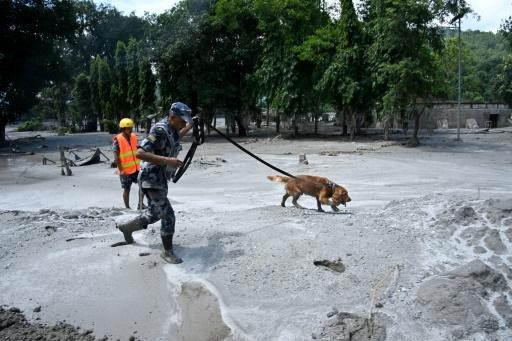
La Une النيبال والصين تتخوفان من تدفقات طينية جديدة
أعربت كل من الصين والنيبال الجمعة عن خشيتها من حدوث المزيد من الانزلاقات في منطقة هملايا حيث تسببت فيضانات مدمرة في مقتل 469 شخصا على الأقل وفقدان المئات، في...
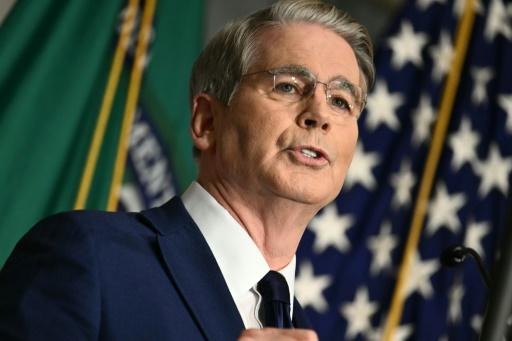
La Une واشنطن تضع حربها الاقتصادية ضد طهران في صلب قمة مجموعة العشرين
سيحض وزير الخزانة الأميركي سكوت بيسنت نظراءه على الانضمام إلى مساعيه الرامية لمواجهة إيران خلال قمة مجموعة العشرين المقبلة في الولايات المتحدة، وفق...

اقتصاد إدارة ترامب تجري محادثات للحصول على حصة أميركية في نفط فنزويلا (تقرير)
تجري إدارة الرئيس دونالد ترامب محادثات مع الحكومة الانتقالية في فنزويلا بشأن استحواذ الولايات المتحدة على حصة ملكية في الموارد النفطية الهائلة التي تملكها البلاد،...