


When Justin Pearson announced his bid for US Congress in his hometown of Memphis, the African American Democrat never imagined he would have to campaign more than 200 miles (300 kilometers) away, in the county where the Ku Klux Klan was founded.
In May, following a divisive US Supreme Court decision, Republicans in the state legislature dramatically redrew the boundaries of Tennessee's 9th Congressional District.
Majority-Black Memphis was split into three districts stretching across the state, diluting its heavily Democratic electorate.
Under the new map, the 9th District is now widely expected to favor Republicans.
So Pearson, 31, a Tennessee state lawmaker, asked himself: "Do I quit or stay in the fight?"
Republicans "never want to see Black political power. They never want to see us being able to choose representatives of our own," he told AFP in an interview last week.
In the end, Pearson chose to stay in the race.
The ruling by the conservative-dominated Supreme Court in April further weakened the Voting Rights Act, the landmark civil rights law protecting minority voting power.
Almost immediately following the ruling, several Republican-led Southern states, including Louisiana and Alabama, moved to redraw their congressional districts, extending a broader nationwide push by both Republicans and Democrats to redraw maps in states they control ahead of the midterm elections.
Raised in Westwood, a predominantly Black neighborhood in southwest Memphis, Pearson said that when the electoral map was redrawn, he went from representing a district covering "1.5 counties to 15 counties."
Instead of campaigning almost exclusively in Memphis, he now canvasses the sprawling district, meeting with farmers in the town of Savannah, Tennessee, one day, and then traveling some 150 miles the next day to the deeply Republican Giles County, where the Ku Klux Klan was founded in the 1860s.
"I've had to travel a whole lot more, go to communities I'd never been to before," Pearson said.
According to the University of Tennessee, 78 of the state's 95 counties are rural and generally vote Republican. Democrats have traditionally drawn most of their support from the state's two largest cities, Nashville and Memphis.
Steve Hickey, chairman of the Williamson County Republican Party, lives at the opposite end of the 9th District, roughly 190 miles from Memphis.
He dismissed claims that race drove the redistricting, describing it instead as a straightforward political calculation.
"Now there's a lot of consternation about that," Hickey acknowledged. "But I think it's very important to understand that this happens in every state."
He noted that Tennessee Democrats also approved a redistricting plan that favored them when they controlled the legislature in 2002.
"So I hate to talk about 'well they did it first,' but this is just a function of politics, and the party that is in power can make these rules."
Responding to criticism that the new district lumps together communities with little in common, Hickey argued that the United States itself is "a mix of different people," encompassing urban neighborhoods, affluent suburbs and rural communities.
"As a Republican, obviously I'm happy because we're hoping that we can provide another seat in the House of Representatives in Congress to support President Trump and the Republican majority in the House," he added.
Whether Democrats can overcome the odds in November will depend heavily on turnout.
Several voter outreach groups in Memphis told AFP that electing a Democratic representative would likely require turnout of around 75 percent.
The challenge is steep. In the 2022 midterm elections, turnout in Shelby County, where Memphis is located, was just 34 percent.
Latest stories

رياضة بطولة إنكلترا: الألماني يايسله يخلف هاو في قيادة نيوكاسل
أعلن نادي نيوكاسل الإنكليزي لكرة القدم الأربعاء، تعيين الألماني ماتياس يايسله مدربا جديدا للفريق، خلفا لإيدي...

رياضة بطولة إنكلترا: الألماني يايسله مدربا جديدا نيوكاسل (النادي)
أعلن نادي نيوكاسل الإنكليزي لكرة القدم الأربعاء، تعيين الألماني ماتياس يايسله مدربا جديدا للفريق، خلفا لإيدي...
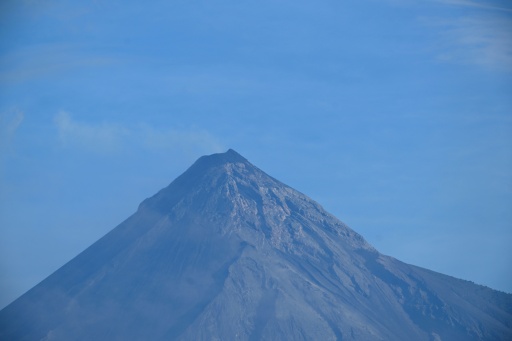
La Une نشاط بركان فويغو في غواتيمالا يتراجع مع بقاء التحذيرات (السلطات)
تراجع نشاط بركان فويغو في غواتيمالا قليلا الأربعاء، بعد ثوران قوي للحمم والرماد أجبر مئات الأشخاص على الفرار من منازلهم...